

By Dr. Joel Ademisoye, United States
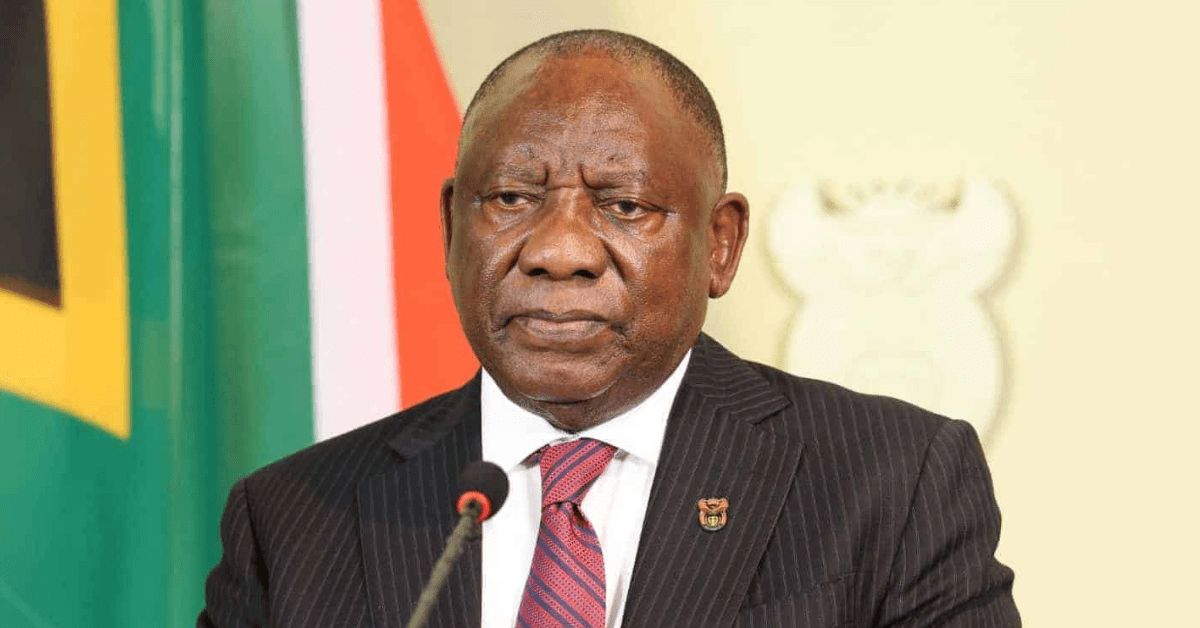
President of South Africa, Cyril Ramaphosa’s advice to the African leaders that the “Good Governance’ll Stop Your Citizens From Fleeing To SA”, which I consider to be an observation of the deplorable living conditions, poor political leadership and dysfunctional governance in the many African countries which are words on the marble and a good invocation to confront the presidents of the 49 African countries, in the Sub- Saharan Region of Africa, including President of Nigeria Bola Ahmed Tinubu, President of Ethiopia himself. Without mincing words, poor governance is the connecting line of the 49 countries that made up the Sub- Saharan Africa.
South Africa is one of the Sub- Saharan African region, which was wrestled, saved and redeemed from the brutal, violent and deadly Apartheid regime in 1994.
Since 1994, the history of governance and government in South Africa with the exception of the President Nelson Mandela period in office, the remaining era has been marked and marred by poor governance and corruption in the country. For example, 5 presidents – Nelson Mandela 1994- 1999; Thabo Mbeki 1999- 2008; Kgalema Motlanthe 2008- 2009; Jacob Zuma 2009- 2018 and Cyril Ramaphosa 2018- present), have served South Africa since its independence from the Apartheid regime in 1994. Under 5 Presidents in South Africa, the country has enjoyed and experienced by the checked and turbulent political history and corruption as reflected in the Mbeki and Zuma administrations.

Against this backdrop of political instability and corruption in South Africa, it is hypocritical, disingenuous and unrealistic for President Ramaphosa to advise the other African leaders to promote and engage in good governance in the country in order to stop the fleeing of the citizens to South Africa. For this writer, South Africa is not a Shining Example on the hill in the terms good governance for the African leaders to emulate and views as a role model. President Ramaphosa is still in running battles with the President of United States Donald Trump over the government’s land reforms and the allegation of genocide against the White farmers in South Africa.
about the push factors, broadly classified as political, economic, social and climate factors such as the poor governance, election rigging, political corruption, high unemployment rate, massive poverty, inadequate infrastructure/ social amenities, severe weather conditions- floods, etc. This combined political instability and deplorable living conditions have prompted me to ask the million dollar question, why don’t the U. S. or the U. K. Citizens are not undertaking mass migration to Nigeria? But , in some cases, they are just likely to be visiting Nigeria for the purposes of tourism or business ventures.
But, for the many Nigerian citizens, who are planning to migrate to the United States or the United Kingdom, they are economic migrants, who are seeking greener pastures in the two countries. Many of the trained professionals in the academics, university lecturers, medical and nurses, have left the shores of Nigeria to be employed in the foreign countries ‘ labor force, because the work conditions are more conducive and salaries are competitive, stable and consistent, whereas in Nigeria, the government workers are at the mercy of the state governors, who are in the habits of owing them a outstanding salaries of up to 6 months.
The bottomline is, if Nigeria has a good governance, developed economy and with the availability of adequate infrastructure, such as good roads, functioning clean drinking water and electricity supplies and sound and stable university education system, employment and business opportunities, many of the Nigerian citizens wouldn’t be compelled and forced to migrate to the developed nations like Germany, France, Netherlands or emerging countries like South Africa, Brazil, Saudi Arabia, United Arab Emirates (UAE) and India. A few years ago, I visited the UAE, I found out that its economy is heavily dependent on the foreign workers including the many Nigerians.
The poor governance, economic and social conditions in the many African countries are the compelling reasons for many Nigerians to migrate in order to seek a better life in the foreign lands like the South Africa.
President of South Africa, Cyril Ramaphosa has made some comments about the culture of Xenophobia in his country, which touched upon some nerves and generated public controversy as well. For example, Ramaphosa characterized the labeling of South Africa as Xenophobia is tantamount to “lazy analysis.” However, he further attributed the cause of mass migration in the African countries as “misgovernance.” According to President Ramaphosa’s comments on mass migration and its perceived cause, he has rocked the boat by challenging his fellow African presidents in identifying the root cause of migration and to undertake a better analysis of the more complex and complicated migration problems in South Africa.
Ramaphosa through his realistic response to the culture and practice of Xenophobia in South Africa, it seems that many of the African migrants- who are from Nigeria, Kenya, Mozambique, Ghana, just to mention a few nations, were not old enough to witness the conditions of South Africa’s Apartheid and brutal, oppressive regimes against the majority Black South Africans. Yes, it is truism that Nigeria with other African countries gave their strong and significant diplomatic, financial and moral support to the cause of emancipation, freedom and liberation from the yokes of brutality and oppression of the President Botha government. During this period of the Apartheid, the spirit and ideals of the PanAfricanism were shared among the African leaders, which influenced and shaped the political struggle against the apartheid regime in South Africa. Imagine that the leading political leaders of the ANC including Nelson Mandela were sentenced to the varying prison terms, which in the case of Mandela, who served 27 years in prison and was released in 1990, but after the expunge of the Apartheid regime and minority rule, Mandela of the African National Congress (ANC) was inaugurated the first Black President of South Africa in May 10, 1994. For 82 years, the ANC which was created in January 1912, was never elected power and to govern a predominantly Black country, because the majority Black South Africans were de-enfranchised by the White minority government. It is worth noting that the Black Africans in South Africa lived in the hell on the Earth, with the many of the atrocities committed against them- lynching, killing and the consfication of the Black arable lands by the minority White farmers in the country.
As a Graduate Student at Howard University in Washington, D. C., during the Apartheid regime in South Africa in the 1977- 1979, I had the historic opportunity to listen to and learn about the horrific and inhumane living conditions of the Black South Africans through my interactions and comradeship with some fellow students from the Soweto Township in Johannesburg of South Africa. It was horrible to learn that the Black South Africans lived in the restricted and separated townships from the White South Africans, who residents in the White only cities like Joanhnnesburg, Pretoria, that were fully supplied with the social amenities, security and recreational facilities/ beaches.
comments, but I think he speaking out about the poor governance, deplorable living conditions and Mass poverty in the many African countries like Nigeria, which is an oil producing and exporting country, but is characterized by the massive economic underdevelopment, insecurity, terrorism- Boko Haram and ISISWA, banditry and kidnappings which are the root causes of the mass migration from the Giant of Africa, Nigeria. Why are Nigerians not blaming their failed elected political leaders and politicians, who President Ramaphosa attributed to misgovernance, abuse of the political power and human rights, bringing about the ethnic violence and civil war in the Republic of Congo, Rwanda, Somalia, Sudan and religious genocide conflict that has plagued the millions of Africans in many African countries.
Imagine that many Africans undertake the treacherous, dangerous and deadly journey through the brutal, inhumane and severe temperatures of the Sahara Desert and the storms of the Mediterranean Sea, to seek the Golden Fleece of the political asylum and refuge in the European nations of Italy, Spain and Portugal. This brutal and dangerous journey by the many Africans, is revealing about their act of desperation to leave their “shit-hole” home country for a foreign country, which promises a better life for the African migrants.
Now, I returned to the Nigerians’ assertion and claims that Nigeria, gave the important and necessary diplomatic, financial and political support in the United Nations during the heyday of the Apartheid regime in South Africa, therefore, about 30 years later, that Nigerians deserve to be treated fairly, given favorable consideration and access to South Africa. However, the bitter truth is, that Nigeria and its citizens should shy away from the entitlement mentality and request for the special treatment by the South African government authority. Although, the honest truth is, that Nigerians cannot continue to be given the special treatment and permanent access to South Africa, because of the political, financial and materials investments made to liberate the country’s citizens during the Apartheid regime and its Dark Days!
Xenophobia and Migration to South Africa
Xenophobia in South Africa isn’t a recent phenomenon and socio- economic problems in the country, but dated back to 1994. It involves the use of violence, attacks and brutal means to evict or to remove the citizens of certain targeted African countries and migrants from Ethiopia, Nigeria, Mozambique and Zimbabwe or other Asian countries. 32 years after the birth of Xenophobia in 1994, this anti- African and Asian movement and behavior among the Black South Africans, is soaring in South Africa, because many Black African natives have been educated, well trained and skilled in occupying the various positions in the public and private sectors of the South African economy. But, today, migrants are providing the stiff competition for the Black South Africans in the work force- taking jobs and businesses from the native South Africans. Thus, Xenophobia in South Africa could be attributed to the high unemployment rate and the loss of the business opportunities by the Black South Africans in their own contrary, a social – economic conditions not acceptable to the native citizens. Why should the migrants from other African countries be allowed to keep the jobs and owned their businesses while the Black Africans are not getting the government funding assistance to establish their businesses in the country? I perceived this condition to be a contributing factor to the birth and development of Xenophobia in today’s South Africa. Xenophobia has resulted in 669 deaths and over 5,000 businesses looted between 1994 and March 2024 (Source: Internet). But, President Ramaphosa in his wisdom and understanding has characterized the incident of Xenophobia, as a “lazy analysis,” which is a form of social disorder, breakdown of law and order and conflict in the country, that President Ramaphosa has insignificantly reduced to the linear model of a “lazy analysis.” I want Ramaphosa to know that Xenophobia is more than a lazy analysis, because of its history, culture and wider implications for the migrants in South Africa. It should be noted that Xenophobia in South Africa is selective because it doesn’t target the White Afrikaners or White visitors to the country. So, why is the violent crime, brutal and deadly attacks and eviction directed at the fellow Africans from the other countries, that have invested huge political, financial capitals and materials into liberating the South Africa from the exploitative and oppressive yokes of the Apartheid regime in the 1970s (See: “Primer on what Nigeria have done for South Africa over the years,” which is circulating on social media)? I vividly recalled of my participation in the anti- Apartheid movement and protests at the South African Embassy in Washington, D. C., United States during my Graduate Studies at Howard University in the 1970s. Thus, I consider Xenophobia as an instrument of carrying out the discrimination, human rights abuses and injustice against the certain African migrants in the country. It is indeed horrible, unfortunate and a sad story that South Africa, is biting the fingers, which fed it and liberated the country from the Apartheid regimes of Botha and de Klerk respectively. It is on record that the Olusegun Obasanjo Military regime in Nigeria (1976- 1979), left no stone unturned in providing support, assistance and financial, diplomatic and logistical aid to the Anti-Apartheid movements and forces in South Africa like the African National Congress (ANC) and Pan Africanist Congress (PAC), in order to liquidate and expunge the Apartheid rule in South Africa. Oops! Also, the Obasanjo military government contributed $3.7 million to the South African Relief Fund (SARF).
Without mincing words, Xenophobia is a barrier to migration particularly for many migrants from the certain African countries like Ethiopia, Nigeria, Mozambique and Zimbabwe. Arguably, Xenophobia is a cog in the wheels of migration, free across border movements, African unity, integration, economic cooperation and development as well. Also, I likened Xenophobia in South Africa to a political suicide, which could lead to and spark a reciprocal and retaliatory actions by the other African governments and their citizens, resulting in the social unrest, violence and conflict in Ethiopia, Nigeria, Mozambique and Zimbabwe. For example, in Nigeria, the South African investors and business interests, such as the MTN Phone Company and ShopRite Department Store are popular businesses, which are in potential danger and at risk across the country.
I found this President Ramaphosa’s characterization of Xenophobia in South Africa as a “lazy analysis”, to be unfortunate, ludicrous and utterly a misrepresentation of what is dispiccable and reprehensible behavior by the Black South Africans, who are the members of the Operation Dudula and # Put South AfricansFirst movement and its destructive tendencies and with its negative impacts on the South African society’s image and peaceful coexistence among the diverse African migrant population in the country. For this writer, Xenophobia in South Africa, is a reflection of anti- foreigner sentiment, poor governance, weak political leadership and ineffective management by the President Ramaphosa government’s failure to addressing, controlling and managing the historic, chronic national social strife facing and affecting the country since 1994. Hence, 5 Presidents of South Africa including Ramaphosa have exchanged the Barton of political leaderships, but only offering political rhetorics and lip service to, taking bold, strong action to solve and end the uncivilized, barbaric and violent Xenophobia behavior, which is causing unnecessary, violent and unprovoked attacks on the migrants from Ethiopia, Nigeria, Mozambique and Zimbabwe, their property and businesses across the country. Question: Are foreigners the root cause of poverty, underdevelopment of the economy and high unemployment rate in South Africa? I think that the foreigners are being targeted, scapegoated and blamed for the government’s actions or inactions of the South Africa since 1994.
Undoubtedly, Xenophobia syndrome, is a serious problem, threat and danger to the humanity, the peaceful living in South Africa, the spirit and ideals of the African unity as espoused in the philosophy and principles of PanAfricanism in the African continent.
Through my research, I discovered that the election of the South African president, is quite different, arguably unique in the African context, because it is carried out solely by the members of the South African parliament, rather than the direct voting system and the election by the South African people. I questioned whether the election process of the South African president is really fair, corrupt free and meets the litmus test for democracy and democratic governance elsewhere in the world? It appears that the election process of the South African president, is not only robbing and denying the citizens of their democratic voting rights, but it is open to the political corruption, influence and manipulation as well.
Out of the 5 South African presidents, Jacob Zuma, according to the public record, he was notoriously and recklessly corrupt in office in the 32 years of the post Apartheid rule in the country. Other presidents like Mbeki and the incumbent President Ramaphosa were also accused of corruption too and faced official investigations into their official affairs, involvement and dealings as president.
In addition to the Xenophobic and political corruption problems in South Africa, there is the historic challenges involving the racial divide, polarity and inequality in South Africa as reflected in the disproportionate distribution of wealth, ownership of and access to land between the White and Black South Africans. The White South Africans owned a significant proportion of the arable land in the country under the Apartheid government in the country. But, in the post Apartheid period, first elected Black government took the gradual to the land policy reforms in order to transfer and make the arable land to the Black farmers in South Africa. Consequently, the White Farmers are profoundly resistant to and in opposition to the government land reform efforts and policies in South Africa. Another caveat to the ongoing land issues and government reforms in the country, is the President Donald Trump’s advocacy and intervention on behalf of the White Farmers in South Africa, which he accused President Ramaphosa of genocide against the White farmers. As a result, President Trump has established a special immigration category and immigrant status in the United States for the White South African farmers to migrate from their home country.
In addition to the negative impacts of Xenophobia on the migrants and the native South Africans as well, I observed a silver lining in it. Unequivocally, the Xenophobia syndrome and incidents in South Africa is a wake up call for and eye opener to the poor political leadership, incompetence, corrupt governance, downturned economic and living conditions, high unemployment rate and the mass poverty that serves as the Pushed Factors in the many African countries- Ethiopia, Nigeria, Mozambique, Zimbabwe, etc. it helps to explain why many citizens are fleeing these countries and migrating to seek a rewarding economic opportunity and better life in South Africa. By providing a good governance viod of corruption, appropriate economic development policies and programs and the provision of adequate infrastructure such as good roads, clean drinking water and reliable electricity supply, sound educational system, health care, employment opportunities, security, etc. in the country, why should the Nigerian citizens be migrating to and flooding into the South Africa, to seek a greener pastures? Obviously, Xenophobia in South Africa has imposed the Doctrine of Necessity on the African leaders such as the President Tinubu administration to undertake a paradigm shift in promoting and providing a competent political leadership, good governance and adequate infrastructure development and conducive living conditions for the Nigerian citizens at home. It appears that the Xenophobia problem in South Africa could not be solved through the bi-lateral and diplomatic channels of Ethiopia, Nigeria, Mozambique and Zimbabwe, why not engage the African leaders through the intervention of the African Union (AU), in bringing about a peaceful solution of the Xenophobia problems in South Africa? However, it is on record that the AU has intervened in the Xenophobia problem in South Africa, with its no success, but it is “condemning violence, promoting human rights, and encouraging the policy reforms to foster integration”on the continent.