By Okoi Obono-Obla
The Federal Government of Nigeria sponsored and placed under scholarship hundreds of thousands of South African young people to study in Nigeria. One of the institutions reserved for these South African students was the Federal School of Arts and Sciences, alongside the Federal Government Colleges.
The Federal Schools of Arts and Sciences were located in Ogoja, Ondo, Sokoto, Aba, Yola, and Victoria Island, Lagos. I happened to be a student of the Federal School of Arts and Science, Ogoja, Cross River State (now Federal Science College), where I enrolled for advanced-level studies. These schools were conceived to prepare students who had just completed their School Certificate to undertake two years of advanced-level studies, enabling them to gain direct admission into Nigerian universities without the requirement of writing the Joint Admission and Matriculation Board (JAMB) examination.
I vividly remember the South African students at the Federal School of Arts and Science, Ogoja. One of them, named Sipho, was my classmate in the Lower Sixth Class. He often spoke with a distinct South African accent and was particularly fond of foods like child and pickles, which seemed to be an obsession for him.

Beyond education, the Nigerian government also sponsored and hosted many leaders and cadres of the African National Congress (ANC), who fled South Africa to escape the surveillance of the apartheid regime’s intelligence network. It is little wonder that Nelson Mandela, after his release from the notorious Robben Island prison—where he spent 27 years—chose to visit Nigeria to thank its people and government for their tremendous support of the South African liberation struggle.
I vividly recall that Calabar, Cross River State, was one of the cities Mandela visited in 1990. In his honor, a street in Calabar was named after this iconic figure.
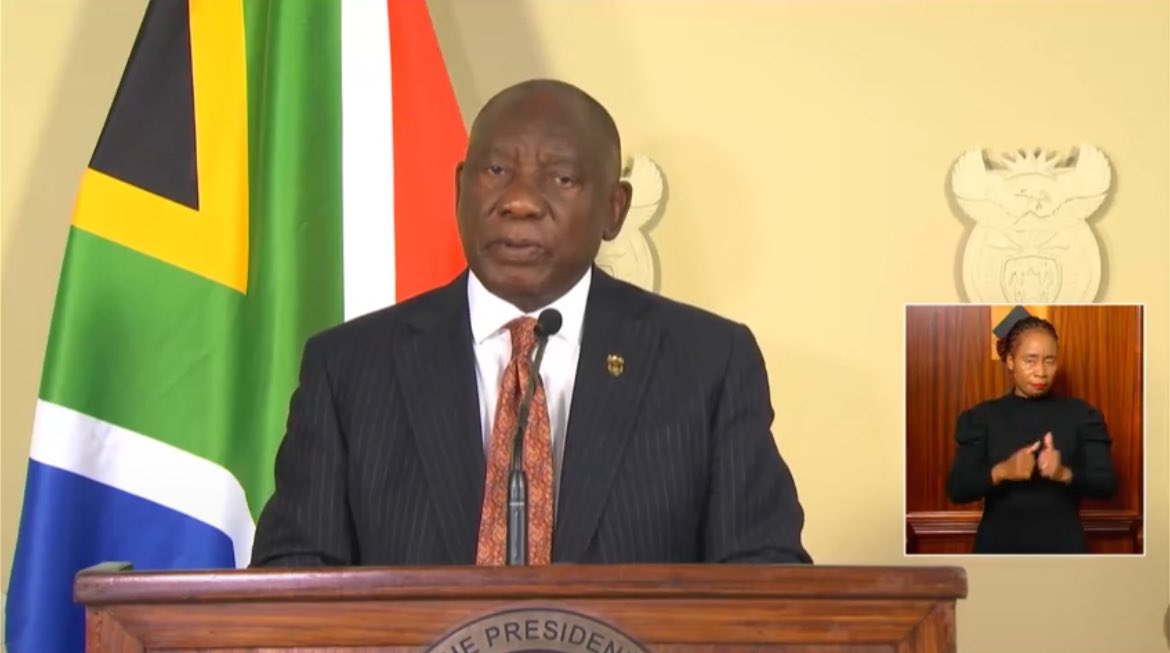
Sadly, today’s generation of South Africans may not be fully aware of Nigeria’s pivotal role in ending apartheid and securing majority rule in their country. Instead, Nigerians living in South Africa have, at times, become targets of xenophobia, subjected to hatred and violence as outlets for frustration and anger.
This reality is deeply disappointing. South Africa, once liberated with the support of allies like Nigeria, has in some ways turned its back on those who stood by it during its darkest hours of humiliation, bondage, discrimination, and oppression—conditions imposed for nearly five centuries by the Boers who migrated there from the 15th century.