

By Great Imo Jonathan
Lagos did not become Lagos by accident. Lagos became Lagos because it was built by many hands, many peoples, and many visions. And among those builders, Ndi Igbo have played a central, historic, and undeniable role long before the Tinubu era, and long before the present politics of exclusion and ethnic hatred.
To tell the story of Lagos without the Igbo is to tell a lie. To erase the Igbo from Lagos history is to erase a major part of the foundation on which modern Lagos stands.
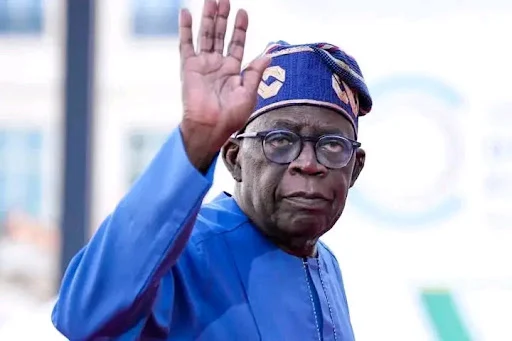
The other day, Mr. President addressed what he believed to be a gathering of Igbo people in Lagos and literally told them he was unhappy with them for not voting for him in the last election.
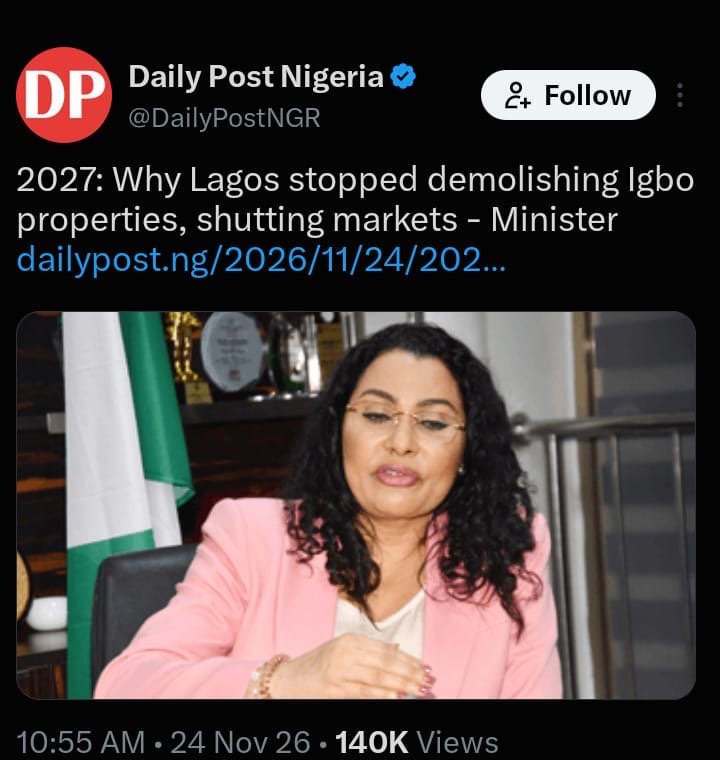
What followed were allegations of selective demolitions of properties belonging to Igbo people in Lagos. Even property owners who reportedly had all the necessary documents and permits were not spared. We also witnessed recurring fire outbreaks in predominantly Igbo markets across Lagos.
It is difficult to imagine any other major ethnic group in Nigeria being subjected to this level of hostility.
The headline essentially suggests that the demolition was deliberate. A confirmation of what many had already suspected. That is tribalism directed against Igbo people, particularly in Lagos by Tinubu.
But Tinubu long after he has gone Igbos will continue to prosper because Igbos were a success before there was a drug dealer called Tinubu. Tinubu owe Igbos, Igbos does not owe him shit.
Long before the current dispensation, Igbos were already governing, legislating, and shaping Lagos.
Mazi Mbonu Ojike, the famous nationalist, orator, and author of _My Africa_, served as Deputy Mayor of Lagos. At a time when Lagos was the capital of Nigeria and the centre of national politics, Ojike represented competence, Pan-Nigerian vision, and service. He was not appointed because he was a stranger begging for favour. He rose because of his intellect, his courage, and his capacity.
His presence in Lagos leadership proved that Lagos was built as a Nigerian city, not an ethnic enclave.
Rear Admiral Ndubuisi Godwin Kanu served as Military Governor of Lagos State from 1977 to July 1978. A man of discipline, vision, and integrity, Kanu governed Lagos at a critical period when the state was still the federal capital and was rapidly expanding.
Under him, Lagos administration was known for order, accountability, and a commitment to public service.
Commodore Ebitu Ukiwe succeeded Kanu and served as Military Governor of Lagos State from July 1978 to October 1979. He completed the transition work that led Lagos into the Second Republic. His tenure is remembered for steady governance and for handing over a functional state.
Two Igbo men governed Lagos back-to-back before the modern political class even emerged. Lagos history cannot be rewritten.
Dr. Nnamdi Azikiwe, the great Zik of Africa, represented Lagos in the Western House of Assembly in the early 1950s under the NCNC, serving as Leader of the Opposition. Lagos people voted for him. Lagos trusted him. His leadership gave Lagos a national voice.
Hon. E. Ebubedike represented the Ajeromi/Ifelodun/Badagry constituency of Lagos in the Western House of Assembly during the 1962 regional crisis. Again, an Igbo man, elected by Lagos people, to speak for Lagos people.
These were not appointments by favour. These were elections won on individual capability, competence, and trust.
Lagos became the commercial capital of Nigeria largely because of Igbo enterprise.
Sir Louis Ojukwu was the richest Nigerian of his era and one of the greatest investors in Lagos history. He built businesses, transport networks, real estate, and commercial empires that employed thousands and moved the economy of Lagos.
He built the first major seaport wharf facilities and invested heavily in shipping, transport, and infrastructure at a time when few Nigerians had the capital or courage to do so. Lagos port did not just happen. Men like Ojukwu invested in it, believed in it, and built around it.
As Senator Adeseye Ogunlewe himself admitted in 2013, it was pragmatic: _“The Igbo had the skill and the industry, and Lagos was the seat of the Federal Government of Nigeria and its major port.”_
The Igbo brought skill. The Igbo brought industry. The Igbo brought capital. Lagos benefited.
From Balogun, to Idumota, to Alaba, to Ladipo, to Trade Fair, to Computer Village, to Lekki, to all the major markets and business districts, Igbo traders, importers, manufacturers, and builders turned Lagos into the economic heartbeat of West Africa.
They built houses. They built plazas. They built schools. They built hospitals. They built churches. They built industries. They paid taxes. They employed Yoruba, Hausa, Igbo, and people from every part of Nigeria.
When Lagos was choking in filth, disorder, and slums, it was Chief Ozumba Mbadiwe, the great nationalist and minister, who led the clearing and re-planning of Lagos slums and the improvement of the Lagos environment.
Mbadiwe understood that a capital city must look like a capital city. He championed urban renewal, environmental sanitation, and orderly development. His work helped transform Lagos from a congested colonial town into a modern city worthy of being Nigeria’s capital.
Many Lagosians today walk on roads, live in layouts, and enjoy neighbourhoods that were opened up and planned through the vision of men like Mbadiwe.
Over the decades, many Igbos have been elected in Lagos as councillors, local government chairmen, members of the Lagos State House of Assembly, members of the House of Representatives, and Senators, not because of ethnic quota, but because of their individual capabilities and competences.
Lagos people voted for them because they delivered. They built roads in their constituencies. They built schools. They empowered youths. They served without discrimination.
That is the true Lagos spirit: a city that rewards competence, not tribalism.
By 1999, Tinubu did not regard Igbos. But in 2003, because Igbos gave him support to overcome the Obasanjo South-West sweep, Tinubu was forced to appoint Igbos as compensation and not charity. It was payment for political support, not love for Ndi Igbo.
In 2015, Tinubu and the Oba of Lagos thought Igbos had become their commodity and slaves, and threatened that if Igbo did not vote for Ambode, they would perish in the lagoon.
That threat made Igbos support Jimi Agbaje, an original Lagosian and a true cerebral Yoruba man. Tinubu got mad since then. Jimi is Lagosian and Yoruba, but Tinubu and his group do not see any other Yoruba as important except those who submit to their gang.
And for supporting another Yoruba man and not the APC gang, Tinubu has sponsored ethnic hatred against Ndi Igbo.
But he and his gang are too small. Because Igbos are a positive force and a people blessed by God, and those who come against them get disgraced.
Anybody Igbo has not supported in Nigeria ended up being a bad leader. Igbos are blessed.
This is not arrogance. It is history. Igbos support competence. Igbos support justice. Igbos support merit. When you reject merit and embrace tribalism, you end up with failure.
Igbos have supported Lagos with their blood, their sweat, their money, their intellect, and their votes. From Ojike to Azikiwe, from Kanu to Ukiwe, from Louis Ojukwu to Ozumba Mbadiwe, from Ebubedike to the countless traders and professionals of today, the story is the same.
No threat can erase that. No propaganda can erase that. No ethnic hatred can erase that.
Lagos belongs to all Nigerians who built it, and Ndi Igbo are among its foremost builders yesterday, today, and tomorrow.
Great Imo Jonathan