
by Emmanuel Adebanjo
Has Democracy Become a Battlefield?
Let us ask ourselves some fundamental questions as citizens and stakeholders in the affairs of our nation.
1. Is politics a do-or-die affair?
2. Should the language of war become the language of politics?
3. Is democracy a war between political opponents?
4. When did campaign rallies become platforms for the mobilisation of sticks, intimidation, threats and death slogans?
These are questions that deserve serious reflection.
Politics, by its very nature, is about leadership, governance, representation and the management of public affairs. It provides an opportunity for individuals and political parties to present their ideas, programmes and visions for society.
Democracy, on the other hand, provides citizens with the freedom to choose who governs them through an established electoral process.
Why, then, should the pursuit of political power become a matter of life and death?
A candidate contests an election, and another candidate contests against him. One presents a manifesto, another presents a different manifesto. Citizens listen, examine their records, evaluate their proposals and make their choices.
That is democracy.
Political opponents are not enemies of the state. They are fellow citizens who may have different opinions about how the country should be governed.
Why should supporters of different political parties regard one another as enemies simply because they support different candidates?
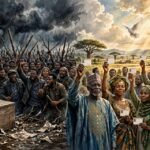
What exactly are we teaching our younger generation when political mobilisation begins to resemble military mobilisation?
Should we be teaching our youths to defend political manifestos with ideas or defend politicians with sticks and dangerous weapons?
A political office is temporary. The lives of citizens are precious. No political position is worth the blood of an innocent Nigerian.
Today, you may be in power. Tomorrow, someone else may occupy that same office. The country, however, must continue to exist beyond individual ambitions and political interests.
Our political leaders, party executives, candidates and supporters must understand that the language they use matters. Words can encourage peaceful participation, but irresponsible rhetoric can also create an atmosphere of hostility and confrontation.
We need political competition, not political warfare.
We need constructive arguments, not threats.
We need mobilisation of ideas, not mobilisation of violence.
We need citizens who can disagree without becoming enemies.
My appeal to political leaders and their supporters is simple:
Let your manifesto speak for you. Let your achievements speak for you. Let your policies convince the electorate.
Do not turn political campaigns into a contest of intimidation, violence and threats.
Remember, you may defeat your political opponent at the ballot box, but you must never destroy the country in the process.
Democracy should give citizens the freedom to choose their leaders, not make them afraid to participate in choosing them.
A nation is bigger than any political party, and the lives of its citizens are more valuable than any political ambition.
Let us build a political culture where the winner wins with dignity and the loser accepts the people’s decision with dignity.
That is the kind of democracy worth preserving.
Emmanuel Adebanjo
Author & Public Awareness Advocate