
By Ozodi Osuji Ph.d
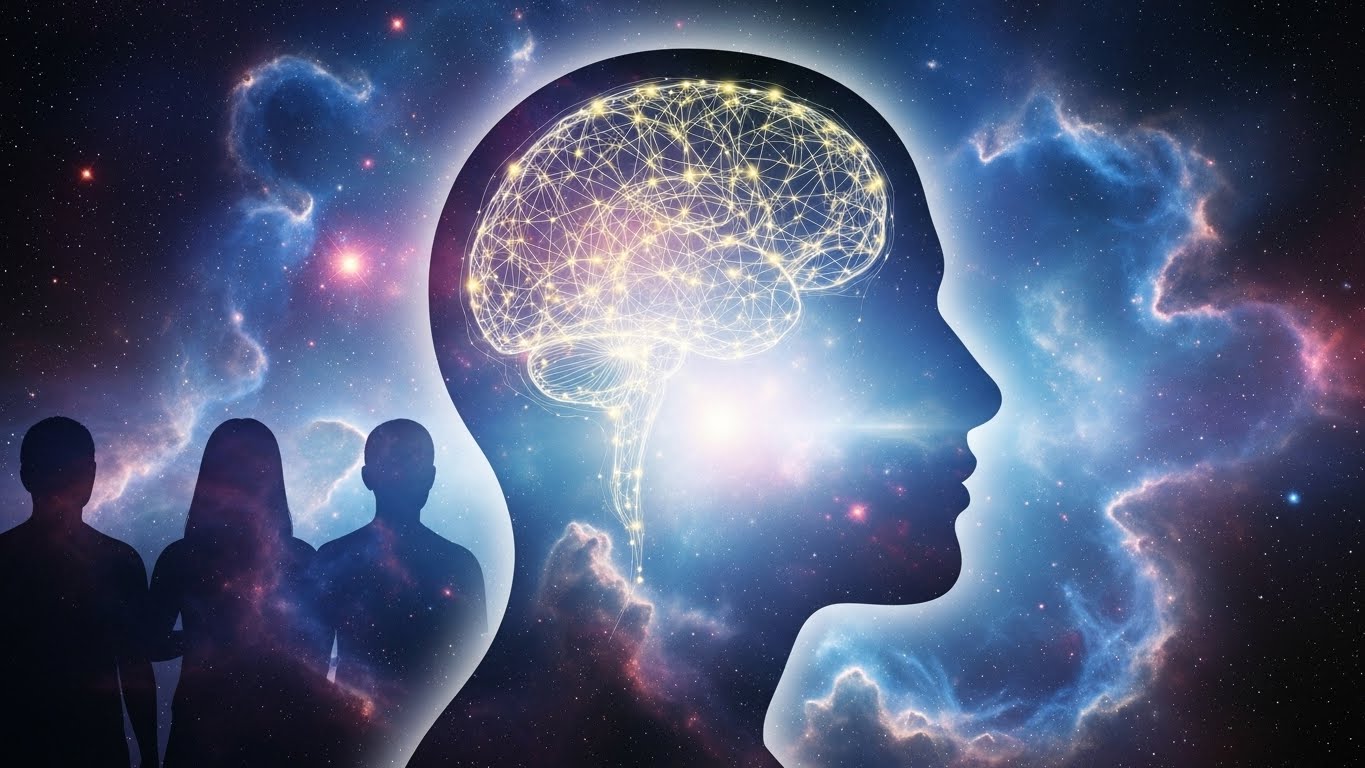
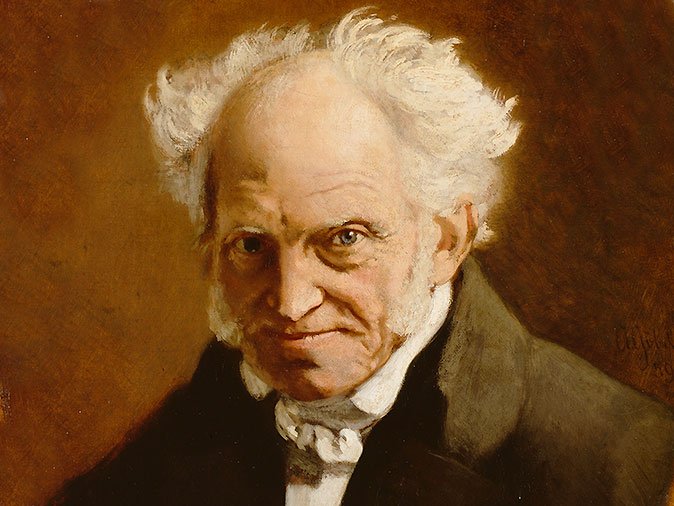
Arthur Schopenhauer (1788-1860)’s basic thesis, elaborated in his magnum opus, The World as Will and Representation (1819), and his Parerga and Paralipomena (1851) is that the universe has a blind Will and acts as if there were a purpose and plan to it, but it is really meaningless. There is a universal Will. We can visualize it like a universal mind. That universal mind is unknown to us; it works like our mind when we sleep and dream; it is like what psychoanalysts call the unconscious mind. It drives our lives, and how it does so, we do not understand.
The conscious part of our minds is only the tip of the iceberg; most of the mind is unconscious.
Consider dreaming. At night, we go to sleep, and a part of our mind that we have no conscious understanding of how it works dreams through us. It pictures a world that looks like our day world and fills it with people, animals, plants, planets, stars, everything we see in our day world.
The mind writes a script/play and assigns roles to people, animals, and things to dramatize the script. It does not first write the script and then look for people to dramatize it. It dramatizes it as it writes it. It plugs people with personalities called for by each role in the script to play the roles called for by the script. These people play their parts, and as long as one is sleeping, the dream seems real; then one wakes up and realizes that it is not real; it was only a dream.
Schopenhauer says that our day world is also a dream. There is a universal dreamer; the universal dreamer writes the script, populates it, and dramatizes it. As in our nightly dreams, the script and dramatization of it is done at the same time.
During the day, we see adults with their children in families; the adults go to work to earn their families’ daily bread; the kids are fed and housed, go to school, learn, play with their peers, and have teachers and professors teaching them about their world. We see our world, and it all seems as if it is planned and sensible.
Then we look around us, people are suffering all kinds of diseases; accidents kill people; people die from old age; what had seemed like joy during our youth becomes dreadful suffering in our old age.
So why does the world exist? Why would a rational person bother creating this world? Only an irrational force would create people and have them suffer and then die. What is the point to it all?
That universal force plants into each person a will to live and fear death, a desire to be socially important. Each person works to make a living, to survive, and has a wish to be socially important, significant, and powerful, and the effort to meet those wishes, conscious and unconscious, drives him to work hard.
Adolf Hitler is given a body and early childhood experience that apparently makes him feel inferior and weak, powerless, and he compensates with a desire for superiority. He wants himself and his German people to seem superior to other groups of people; they work hard and amass military weapons, become powerful, and embark on killing their neighbors. They killed over fifty million people before they were stopped. They gassed six million Jews to death. What is the point? Despite killing people to seem powerful, they too will die. Where is Hitler today? He killed himself, and his body was cremated and dumped as manure in the flower bed by the side of his Führer bunker. The universal leader ended up as manure for plants. Was he really superior or merely deluded that he was superior? He was a superior fertilizer!
In the contemporary USA, a disgustingly fat, unintelligent blob called Donald Trump feels inferior to black and brown people and tries to seem superior to them. He mobilizes his white people, tells them that they are superior to other people; they maltreat black and brown people. His mind tells him that he is going to succeed and get away with it.
But the black and brown people he maltreated have stored that maltreatment in their minds, and in the future, when an opportunity presents itself, they will gladly pull down the civilization that treated them badly. This is the story of human civilizations.
A group becomes powerful and treats other groups badly; those treated badly eventually become powerful and destroy the group that treated them badly. This way, we have many civilizations, all of them now in the dustbin of history.
Sumer, Egypt, Persia, Greece, Rome, Britain, France, Russia, each was a great empire, but today is insignificant.
The current world hegemon, the USA, is on track to be superseded by a world hegemon, China. And China, too, will be superseded by other empires.
That is how these things work out. Nothing in our world is permanent; it is an ephemeral and transitory world, but those seized by the delusion of superiority forget their fate.
It is the Greek story of the tragic hero; the hero has a character flaw that motivates him and pushes him to the top of his society, and that flaw in his character, such as desire for superiority and treating people in an insulting manner, guarantees his fall, because those he insults work for his fall. The tragic hero always falls.
But like the story of Sisyphus, other people keep rolling stones uphill only to see them roll right back down. This is our human story; we struggle to succeed and seem to succeed only to disappear from history.
“Tomorrow, and tomorrow, and tomorrow,
Creeps in this petty pace from day to day,
To the last syllable of recorded time;
And all our yesterdays have lighted fools
The way to dusty death.
Out, out, brief candle!
Life’s but a walking shadow, a poor player
That struts and frets his hour upon the stage
And then is heard no more.
It is a tale told by an idiot, full of sound and fury,
Signifying nothing.”
Act V, Scene V in Shakespeare’s Macbeth

Donald Trump seems the man of the hour, but like all tragic heroes, he is destined for a dramatic fall. He just got a rude awakening, a reality check, in the recent midterm election (November 3, 2026) where nonwhites swept most of the relevant positions contested. It is only a matter of time before he is swept to the garbage heap of history, as is all of us. His nouveau riche castle, Mara Lago, an ugly piece of architecture, will be overrun by the Florida Everglades!
In the meantime, Will makes each of us feel special and encourages us to do what we do, which brings suffering to those around us. The Will is blind and irrational, and though it seems rational, as in plotting the novels called our dreams, it is ultimately pointless and irrational.
The physical universe is expanding. In trillions of years, it would overexpand, and the stars would lose heat and die. Every object in space and time dies and decays to the elements that they are formed of, and those decay to subatomic particles of electrons, protons, and neutrons, and those decay to radiation, light, and heat, and disperse in the cold. The Big Chill is the fate of our universe or is it the Big Crunch?
The universe will eventually become one cold, dark place without stars, planets, plants, and people. So, why would a rational person bother bringing the universe and people into being?
Only an incredibly intelligent but irrational force could bring this universe about, project people who seem rational, and have them do what they do on Earth, die, and return to formless energy. Life is a bummer; it is pain, and then we die.
Pure reason would ask for the universe not to exist because it is pointless. But an irrational Will bent on manifesting its Will is doing so in what is occurring in the universe.
The Will cannot help itself but must do what it does: dream through the billions of us and non-organic things.
In each of us, Will gives the illusion that we are separated and doing rational things when all we are doing is dreaming, engaged in pointless activities.
Even when we recognize that all that we do adds up to nothing and that life is meaningless, the universal Will will not leave us alone; it insists on us having desires and acting on our desires, such as working to become billionaires, powerful, and leaders of our human groups. It all seems rational except that when you pause and evaluate what we are doing, you realize that it is pointless and ought not be done. Nevertheless, we are condemned to do these things.
Pure reasoning cannot make us stop doing these silly things. Consider sex. Pure reason tells us that it is an animal act and is actually a very ridiculous act. But the irrational force behind life insists on reproduction and thus makes us have sex despite our best intentions not to have it. We are addicted to sex, overeating, alcohol, drugs, and working hard. There is no reason to do any of these things except that the force behind life makes us do them, does them through us.
Since we cannot willfully stop doing these irrational things, we have to deny the will to live in us. We have to do what monks do, negate the desire for any of the things that actuate us in our daily lives. We have to reject the desire for fancy clothing, fancy cars, fancy houses, fancy food, and the desire for most things, and crawl into a cave and make our minds blank and not allow egoistic wishes to motivate us to do anything.
We have to do what Hindus do in meditation: empty their minds of all sense of separated ego and desire nothing and attain a blank mind and in that blank mind stop all desires and die to the will to live as we do on earth.
We must do what Buddhists do: go into meditation and deny all desires, deny our ego-separated selves, negate our wish for a self, be emptied of all self-concepts, self-images, and egos; we have to deny the sense of I in us; we have to deny even the desire to live as human beings and sit there like zombies, die to the ego, and achieve inner silence (silence of the dead).
In effect, we have to negate the will to live for us to know peace and not be slaves to the Will’s irrational grasping for everything.
“Arthur Schopenhauer’s radical philosophy of denial of the will to live is the ethical and metaphysical conclusion of his system in “The World as Will and Representation “. He argued that the ultimate reality is a blind, aimless Will — a constant striving that is the source of all suffering — and that the only way to escape this condition is to deny the will and renounce life.” Philopedia.org.
Schopenhauer said that he reached a philosophy that seems similar to Advaita Vedanta, Hinduism, before he read the Hindu philosophical treatise called the Upanishads.
In Hindu philosophy, there is God, called Brahman. God is oneself but has one son called Atman. Brahman and Atman are the same; it is kind of like one coin with two sides, a head and a tail. God is the head, and Atman is the tail.
Somehow Atman, the son of God, wanted to seem separated from God but cannot do so in reality; as it were, Atman cast Maya, illusion, on his mind and went to sleep and, in his sleep, dreamed a world of space, time, matter, and energy, a world where he sees himself now in infinite selves, animals, trees, and the entire universe.
Atman forgets that he is Brahman and lives as if he is separated from Brahman; he is now a separated self, called Ahankara, a false, illusory ego self.
The goal of Hinduism is for the sleeping son of God, Atman, to stop sleeping and dreaming that he is separate from God, keep his mind blank, and let his unified reality, Brahman, dawn on his mind.
When this happens, he has overcome Maya in Moksha and experienced Samadhi, oneness with God; he is now illuminated and enlightened to his true self, not the separated self, ahankara, he had thought that he was.
In his reality, he is not in a body; he is pure spirit, one unified spirit self with Brahman.
Those in the phenomenal world, our earth, have divided, separated minds and cannot understand the nature of a unified mind, Brahman. They have to desist from using their divided minds in thinking and make their minds blank to be able to experience Brahman.
In Hinduism, the experience of Brahman, oneness with God, aka self-realization, is liberating; it gives us peace and happiness, and in it we know that we are eternal, permanent and changeless.
On the contrary, in Schopenhauer’s philosophical system, attaining a blank mind is not God realization but realization of our nothingness. It does not lead to God, as Hinduism does. Schopenhauer’s philosophy leads to an escape to nothingness, the acceptance of our nothingness, our nonbeing. We are a lit candle; we blow it out and thus end our suffering.
Hinduism gives hope in eternity, whereas Schopenhauer is nihilistic. Schopenhauer was an atheist. You die, and you die out; there is no heaven or hell. Indeed, the universe, you, all of us, see, is a mistake made by the universe.
That mistake is to be corrected by eradicating us and our activities; better still, corrected by blowing up the entire universe because it should not have existed and should not have produced us and made us suffer.
However, there is a positive interpretation of Schopenhauer. He says that the universe does not exist. This means that you and the people you see on Earth and everything that you see on Earth do not exist.
There is a part of you, the unconscious mind, which sleeps and, in its sleep, sees a world with people in it. There is no outside world; there are no other people. Only the dreamer, the universal Will, is sleeping and, in his dream, produces the world.
In effect, you project out the world you see; the people you see do good or terrible things to your dream self. Since the people who did good or bad to you were produced by your mind, they did not do anything good or bad to you.
Your one mind did all the things, good or bad, to you, done on earth, but made it seem like other people did awful things to you.
One, you are attacking yourself by seeming like other people. You must be insane to be attacking yourself.
That is correct, the producer of this universe is attacking himself through the many people he projected into it and had them attack each other; and thus, he is insane.
You make yourself sane by stopping your unconscious dreaming that produced this nightmarish world; you do so through your mind by radical negation of the Will in you, and thereafter the world no longer exists for you; you no longer exist, other people no longer exist for you; and the madness is corrected, is over, nothingness exists for you (but still exists for those who still have desire for their egos, bodies and the world of separated people to exist for them).
If you have read Helen Schucman’s A Course in Miracles, you can easily see the influence of Schopenhauer in her book. She studied philosophy for her undergraduate studies before studying psychology for her doctorate. Her book is a mixture of Plato’s cave allegory, Gnosticism, Schopenhauer, and Christian mysticism.
NIETZSCHE’S AFFIRMATION OF THE WILL TO LIVE
As a 21-year-old university student, Friedrich Nietzsche (1844-1900), at a used bookstore, saw a copy of Schopenhauer’s book, “The World as Will and Representation,” and bought it. He read it and felt like he had found the solution to all his life’s problems. Life needs to be negated, and in doing so, one lives in peace of mind and body. Nietzsche has found his life’s calling, and he became a disciple of Schopenhauer.
Later in his short life, he decided that Schopenhauer is negating the Will to live and that that denial is a sign of defeatism and nihilism. Instead, he wrote his own philosophy that called on people to affirm the will to live.
Yes, our strivings eventually lead to nothingness, but enjoy the ride, flow with it, assert your will to power. Try to become whatever life wills through you. Be yourself and do whatever will be done through you; do not exterminate it. Affirm the particular manifestation of Will in you.
What else would you be doing on earth if you did not try to actualize your potential? Life is good when one is seeking to attain one’s potential; self-realization and self-actualization, the humanistic psychologist Abraham Maslow called it.
You have a unique body and talent; that talent and body are designed for you to express it, will, in a particular manner, so go for it with gusto.
If you enjoy physics, chemistry, biology, that is science, go for them and empirically study the universe with the scientific method, even though your study will show you that the universe is nothing, that it will end in nothingness.
A medical doctor ought to heal sick bodies even though those bodies will sooner or later die and decay and return to nothingness.
Do not cry over spilled milk. Follow the trajectory of your life. Live like Zarathustra, who is bent on conquering the world, a world that will return to ashes despite his efforts. Build pyramids, although those massive stone buildings will in time, decay back to sand.
Affirm the will in you and do not try to negate it and become a vegetable like Hindu saints who live in terrible squalor, with disease-ridden bodies while talking about how they have overcome their egos, conquered all desire, and are happy in living like vegetables.
Many philosophers and psychologists embraced Schopenhauer. Sigmund Freud accepted Schopenhauer’s notion of our lives as driven by irrational unconscious forces. He called it the Id. The id forces make us rapacious and aggressive, and desire sex with all men and women. Some men actually want to have anal sex with other men! This absurd desire apparently seems rational to them. The Will in such people makes what seems foolish seem reasonable to them (or perhaps they simply cannot resist Will’s irrational manifestation in them).
Freud wants to use social mores, internalized rules of society, the superego to humanize the irrational forces of the Id and use the Ego, acting as a referee, to balance the two competing forces in our minds. Freud does not want to completely repress the Id and allow the superego to make us good but imbecilic boys. Balance of id and superego, primitive man and civilized man, is what Freudian psychoanalysis seeks.
Carl Jung believed that our unconscious minds contain not only the irrational forces of the Id but also spiritual forces that are not known to our conscious mind.
All that humanity has done in the past to adapt to their world is stored in their Collective Unconscious Mind, and those appear as archetypes in our dreams.
Jung spawned off into oriental spirituality combined with Western religion and came up with an interesting soup of spiritual psychology. He wrote about such phenomenon as synchronicity, how an idea one is thinking about could be manifested by an aspect of nature around us (if you are thinking about an insect, you could see one insect perched on your window), indicating that the universe appears to have connections and shows us what we need to see and moves us in certain directions.
Joseph Campbell in his book The Power of Myth, talked about how Arthur Schopenhauer said that in our old age, when we look back at our life, we tend to see a pattern where most of things that happened to us that at the time they happened seemed unconnected now appear to be connected, to not be accidents but like a plot by a novelist that all things and behaviors work together to enable the dramatis personae to achieve his goal.
Each of us has a pattern to his behavior, to what he does, right from the moment when he was born until he dies; folks can say that the pattern is learned in childhood and becomes our personalities and characters.
Schopenhauer would simply say that Will works in each person in a discernable specific pattern, works differently in different people, have patterns that in tandem move towards the accomplishment of a universal goal; a goal that is unconscious in us.
The universe has its goal that it is intent on accomplishing; the goal is tragic and comedic; it uses us to accomplish its seemingly blind and chaotic goals that lead to the death of the individual and the universe.
We think that we are individually in charge of our lives, but the Will is in charge; it is merely using us to accomplish the universal goal of keeping us and the universe around to play with; we are the plaything of the satanic force in charge of this world.
Since the goal of the universe gives us pain and suffering, we ought to not allow ourselves to be used by the universe to accomplish its seemingly rational goals that always turn out causing us suffering.
For example, it seems rational to produce children. They provide their parents with a sense of continuity. But when you detach from the goal of family and social continuity, what you see are people who bring children into the world of suffering, and it would have been better if the children were not brought into the world.
Schopenhauer was world weary, he believed that he had seen through the pointlessness of human existence and the existence of the universe and wanted to get out of it and wanted all of us to get out of it and wanted the universe to end.
If you think about it, the so-called saviors of the world did not produce children probably because they realized that the world is a place of pain and suffering and they wanted to end that suffering.
Buddha and Jesus Christ did not have children (Buddha had a son but abandoned him in search of enlightenment). Producing children is mostly done by thoughtless people who are not aware that all they are doing is dragging children from the void to a place of suffering and death.
Hinduism and Buddhism are thinking religions and see through the masks of living as happy human beings. To be a human being is to suffer. To stop suffering, we must stop desiring to live as human beings.
On the contrary, Western civilization appears to be the civilization of the ego; the ego desires to live as a separate self and, in doing so, gives us pain and suffering; it hides the suffering implicit in living as separated selves who are born to die. The West and its Christian religion tell people to go and have children, conquer the world and transform it to their will, build great monuments, do science and technology, explore the stars and everything.
The West is Nietzschean in the sense that it knows that life is pointless and still chooses to affirm it, to give itself unnecessary suffering rather than ending it. Interestingly, in understanding nuclear fission and fusion, the West has produced nuclear weapons with which they can end humanity in a flash. They want to affirm life and since the Will underlying this universe is irrational, it has made them make destruction of all human life inevitable and Schopenhauer would say that is the nature of the workings of the irrational Will in our lives.
Whatever seems good and we do it eventually turns bad for us. President Donald Trump thought that his racism was rational and good for the race he identified with, white people; so, he struggled to stop non-white people from entering the USA. In the very first election held after being in office for two years, non-white folks won elections everywhere. It seems that the universe does not want to help him gratify his particular delusion that his race is superior to other races.
The universe is bent on having the people of the different races live together. They live, suffer, and die together; there is no escape from their suffering; you cannot make life on Earth an El Dorado for your group by keeping out other groups of humanity; one force, the universal Will, is in charge; your individual ego is not in charge, so relax, chill out, and be part of our train to nowhere.
DISCUSSION
Schopenhauer studied Western philosophy and, in his writings, examined most of what we call philosophers. He was particularly vicious towards George Hegel, his contemporary, who was the darling of academic philosophers. He saw the man as full of stifling air and considered his own writing the true philosophy for all ages.
If you try reading Hegel’s magnum opus, The Phenomenology of Spirit/Mind, you will probably feel that you are reading something written by a schizophrenic; it is all over the place and makes no sense. What did he say? He appears to have said that history appears to have a goal, an objective. What is that goal? The unification of the various German principalities and princedoms into one German nation. That could be said without subjecting the reader to hundreds of pages saying nothing. Karl Marx said that he stood Hegel on his head when he extrapolated from him his idea of Dialectical Materialism.
According to Marx, history seems to move in stages, beginning with primitive communism where all property was owned by all people; thereafter, a few strong men took what belonged to all people and established slavery and private ownership of land. The slaves struggled against the slave owners; the result was aristocracy, where a few owned the lands and the serfs worked for them; the Serfs struggled against the aristocrats, and the result is the emergence of the bourgeoisie class, the current top dogs in the Western world. The proletariat is struggling against the owners of capital. The war between thesis and antithesis result in a synthesis of both of them, a new political and economic system.
There is some truth in Marxian assertions. Right now, the billionaire oligarchs rule the USA and have convinced the people that this oppressive system that has eliminated the middle class and returned Americans to serfdom is good for them.
Elon Musk, the king of the billionaires’ heap, feels like the world is his personal estate (the kings of France used to say that the state belongs to them. L Etat c’ est Moi). Ah, his body is food being prepared for worms, as Hamlet said in Shakespeare’s Hamlet. That arrogant boy from South Africa needs his buttocks spanked; he needs common sense beat into his prideful head.
Schopenhauer liked Immanuel Kant and took from him certain ideas and reinterpreted them to suit his own philosophical system. In A Critique of Pure Reason, Kant essentially posited that we can study and understand the phenomenal world but cannot understand the noumenal world… Noumenon is the Kantian idea of “thing in itself” and is unobservable by our senses and unknowable to us, whereas the phenomenal world is what we can perceive with our five senses; it is observable and knowable.
The thing in itself is beyond our ego-separated mental understanding. Schopenhauer saw the thing in itself as the Will that seems to be operating in this world and in us, making us do what we do. The will, the thing in itself, is awful and insists on manifesting through us and making us its playthings, and we seem unable to escape from its grip.
Schopenhauer and other philosophers temporarily find surcease from the Will by escaping into the arts. This is the Christmas season. Go see Tchaikovsky’s Ballet, The Nutcracker; go to a symphony orchestra and watch folks perform Handel’s Messiah. And make time for listening to the immortals of classical music, such as Bach, Mozart, Beethoven, Hyden, Vivaldi, and others.
Enjoy human beings at their best, in art, music, and aesthetics, but do not try to understand why they exist and the foolish things that they are doing because that is beyond our understanding, they are the realm of the irrational will.
The USA has accumulated a debt of $40 trillion; instead of repaying it, the mentally challenged, proud fat boy goes to a war of choice in Iran, spending additional billions of dollars. The Will makes him do so because it aims at bankrupting the country and relegating it to the garbage heap of history…and causing people suffering…the money spent on unnecessary warfare could be used to provide all Americans with publicly paid health care and education at all levels. But the will wants people to suffer, not enjoy their lives.
CONCLUSION
What do I think of Schopenhauer’s effort to negate the universal Will dreaming through us? In my philosophy, I talked about the son of God’s desire to separate from his father; a part’s effort to seem independent of the whole, and how that desire pushes us to form our world and behaviors. The part cannot separate from the whole. But the part can have the illusion of seeming separated from the whole and other parts of it.
My life appears to be on a trajectory, as every other person’s life appears to be on his own trajectory.
The compendium of my biological constitution and childhood experience predisposes me to develop my specific personality and character and do what I do. The same seems true for each person.
My trajectory is to discover a universal spiritual psychology that is based on science plus the unknown aspect of us.
Each person is doing what his body and character dispose of him to do; the universe dreams through each of us.
Each person is suited to do certain things well but not others. What I can do well you may not be able to do well at, and what you do well at I may not be able to do well at.
The universe makes each of us have a certain body and character and uses us to engage in the universal play called our lives.
Each of us is destined by his body and ego to do what he must do, and it is an illusion to talk about making rational choices when our rational and conscious intellect is less than one percent of our mind; ninety-nine percent of our mind’s activities are unconscious to us, unknown to us.
I am me and cannot be you; you are you and cannot be me. In this sense, there is a certain determinism in my worldview, a view similar to Schopenhauer’s fatalism.
However, unlike Schopenhauer, I believe that after we die on Earth and our bodies dissolve into matter and energy, to photons, there is a spiritual aspect of us that does the dreaming through us and that it continues to live after we are dead. I have not understood that spiritual aspect of us, yet.
I hope that this pedestrian take on the profound pessimistic philosophy of Arthur Schopenhauer has helped you to understand what the man is trying to say through his philosophy.
His magnum opus, The World as Will and Representation, is a must-read, much like Plato, Aristotle, Kant, Hegel, Nietzsche, Shankaracharya, Buddha, Confucius, Lao Tse’s Tao the Ching, Bhagavad Gita, etc. for anyone interested in philosophy.
FURTHER READING
Schopenhauer, Arthur (1819). The World as Will and Representation.
Schopenhauer, Arthur (1851). Parerga and Paralipomena.
Ozodi Osuji
November 7, 2026
Note
Hinduism says that people can be classified into five groups: Jnana, Bhakta, Karma, Raja and Tantra Yogis. Four of these groups are happy with this world and essentially do not think. It says that only one percent of the people is capable of serious thinking, philosophy, the Jnana Yogis. If you are a fellow Jnana Yogi, I wrote this article for you. If you are the here and now type person who finds thinking, philosophy, boring, be who you are, this article is not for you. As Schopenhauer, a Jnana Yogi, would say, if one out of one hundred people can read and understand his writing, he is happy.