by Ademola Rabiu
Abuja | 8 November 2026
“You cannot carry out fundamental change without a certain amount of madness.” – Thomas Sankara
Some lives are measured in years, and others in the length of the shadow they cast.
Some men arrive like the harmattan, quiet at first, then suddenly in every room, every lung, every conversation.
Kano gave us such a man on a November morning, and history has not finished reading him.

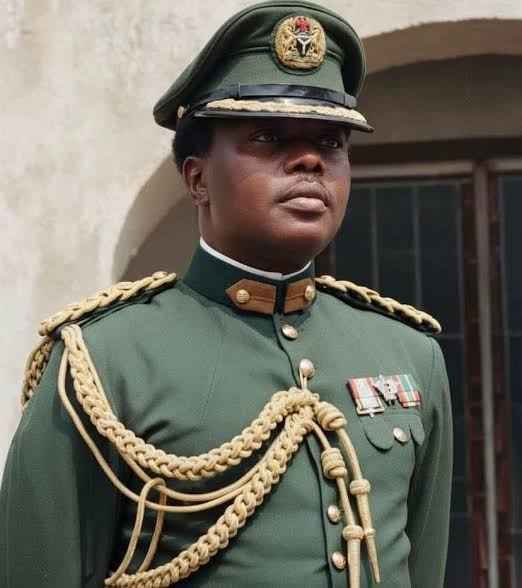
Born on this day, 8 November 1938, in the Kurawa Quarters of ancient Kano City, to Risqua Muhammed and Uwani Ramatu, Murtala Ramat Muhammed was not born into privilege. No silver spoon. No royal lineage. Just the raw earth of northern Nigeria and a boy with a soldier’s heart.
He grew up among scholars and men of faith, studied at Barewa College, and trained at Sandhurst. His uncle Inuwa Wada sat in the First Republic cabinet, so comfort was always within reach. He chose the barracks, and later the open road, over the drawing room.
Then came the 200 days.
He enlisted in the army in 1958, young, hungry, and unpolished. He later trained abroad, sharpened himself through the ranks, fought in the civil war, and by July 1975, when a disillusioned nation needed a man of steel, he stepped forward. On the 29th of July, 1975, he became Head of State. And then – barely 200 days. Six months and change. That’s all the time fate gave him. And yet. Look at what he did with it.
Most leaders spend that long arranging furniture. Murtala spent it unsettling a nation’s conscience. He purged the civil service and the armed forces of dead weight – no sacred cows, no mercy for mediocrity. He ordered new states to be created, and set Nigeria on the road to a new capital that belongs to no single tribe, a decision that reshaped the geography and politics of our dear nation forever.
General Murtala laid out a definite, credible timetable to hand power back to civilians – and he meant it. He said exactly what he meant, always. No pretence. No games. A man planning to stay forever does not write the date of his own departure. It tells you what he believed power was for. He was very philosophical about power – he understood that authority borrowed from the people must be returned to the people. That was not rhetoric. That was his operating system.
The people loved him because he seemed to belong to them. He drove to work without a convoy, without sirens, without a wall of rifles between him and the street. The clerk and the market woman saw someone who sat in the same Lagos traffic and shared their frustrations and anger at waste and deities in public offices. This is populism in its honest form. He stood among the crowd and never talked down to it.
“Africa Has Come of Age”
Then Addis Ababa. On 11 January 1976, at the Extraordinary Summit of the OAU in Addis Ababa, Murtala Muhammed stood before the continent and delivered the speech that echoes to this day. He told the world that Africa has come of age, and that the continent would settle its own affairs without orders from Washington, London, Brussels or anyone else. Nigeria had been polite for too long. Now it picked a side.
He rejected dictation. Rejected intimidation. Rejected the idea that Africans must ask permission to choose their own friends and fight their own enemies. When U.S. President Gerald Ford sent a letter pressuring African leaders to abandon Angola’s MPLA, Murtala did not bend. He threw Nigeria’s full diplomatic, financial and material weight behind Agostinho Neto’s MPLA – the liberation movement that just won the general election. He refused to back the Western-backed UNITA rebels propped up by Washington and Pretoria.
He condemned the South African apartheid regime’s armed meddling in Angola – on African soil – and called on every OAU member state to recognise the MPLA as Angola’s legitimate government. His courage was the courage of focus. Every decision seemed to answer one question: does this make Africa answerable to itself? He saw neo-colonialism clearly, named it plainly, and resisted it courageously. For him, Pan-Africanism was a duty to act and never a slogan for anniversaries. Angola’s freedom and Nigeria’s dignity were one project.
A people that lets others decide who may govern its neighbours has not finished being colonised. Angola was his gift to Pan-Africanism – proof that Africa’s biggest country could stand up to the world’s biggest powers and not flinch. That is anti-imperialism with blood in its veins. That is Pan-Africanism with teeth.
The Man Who Set the Clock
What made him legendary was not just policy – it was presence. He did not live in a palace. He did not surround himself with a fortress of convoys, sirens and soldiers. He lived among Lagosians. He drove through ordinary traffic. He waved. He stopped. People felt he was theirs. That grassroots appeal – that refusal to separate himself from ordinary Nigerians – made him beloved, and it made him vulnerable.
And he did something only very few soldiers who seize power dare: he promised to leave. He drew up a definite timetable to hand Nigeria back to civilian rule. History being cruel, Murtala never lived to see it fulfilled. His deputy, General Obasanjo, carried the promise to completion in October 1979, relinquishing power to the civilian government of Alhaji Shehu Shagari. But make no mistake: the handover began with Murtala’s timetable. A soldier who came in through the barracks, and yet drew up his own exit – that was revolutionary.
He died as he lived – exposed, unpretentious, unafraid.
The simplicity that made him dear also made him reachable and vulnerable. On the morning of Friday, February 13, 1976, exactly 50 years ago, his unarmored, untinted black Mercedes – with its little staff flags – stopped in the predictable bottleneck of traffic near George Street in Ikoyi, on his way to Dodan Barracks. The assassins knew his route. They knew there would be little resistance, because he moved without the “accoutrement of security overload.” They knew – because his accessibility was not a secret. It was his character.
On that fateful morning, he was ambushed near the Federal Secretariat in Ikoyi by soldiers in the Dimka coup attempt. They shot him through the head, the chest, and the belly. His driver and his ADC, Lt. Akintunde Akinsehinwa, died with him. It was his 200th day in office. He was just 37. He died as he lived – exposed, unpretentious, unafraid. A leader who will not hide from the people may pay with his life, and a nation must ask whether it wants leaders who hide or leaders who stand in the open.
The Family He Left Behind
At the time he departed, Murtala left behind his beloved wife, Hafsah Ajoke Muhammed – the quiet, graceful First Lady whom he met in 1961 while she studied dental hygiene in Lagos – and married in 1963. She would later honour his memory with botanical gardens and the Murtala Muhammed Foundation.
He also left behind five children – among them his daughter Aisha, who would grow up to carry the family name into Nigeria’s highest offices, and his young son Abba, whom the family photographs preserve as the little boy beside his mother in 1970. His mother, Uwani and his uncle, Inuwa Wada, survived him as well. They carried the private cost of a public greatness, and Nigeria owes them its gratitude. They lost a husband. They lost a father. Nigeria lost a promise.
The Legend
So today we celebrate a man who gave Nigeria just 200 days – and gave Africa an eternity of inspiration. We celebrate his clarity. His courage. His contempt for hypocrisy. His love for the common man. His dream of a united, sovereign Africa that answers to no one but itself.
The Forum draws from his example one conviction above the rest: governance is a moral act, and it must answer to the people it claims to serve. He never got time to finish.
Perhaps that is why the work still hums in the soil he walked on.
A flame cut down at noon does not become darkness.
It becomes a question left burning in the road: who is this nation for, and to whom does it answer?
He was cut down in traffic. But he was never stuck. He moved – fast, honest, unhesitating – and in 200 days, he travelled further than many leaders travel in 20 years.
Happy Birthday, General. The morning you were reaching for is still ours to build. Africa has come of age. And so, in the people’s memory, have you.
Some fires do not go out. They wait for hands. Continue to sleep in peace, the People’s General, Comrade Leader: Allahummaghfir lahu, warhamuhu, wa ‘afihi, wa ‘fu ‘anhu.O Allah, forgive him, have mercy on him, grant him safety, and pardon him.”
Signed,
Ademola Rabiu, CEng
Strategic Communications Directorate
Transformative Governance Forum
www.tgf.org.ng
Abuja, 8 Nov 2026