


By Ibrahim Bunu
ibrimbunu2520@gmail.com
30 October 2026
An in-depth examination of Israel’s electoral landscape, Netanyahu’s political trajectory, the internal contradictions of Israeli politics, the governing coalition, national security, the Palestinian question, and the strategic calculations shaping Israel’s future.
INTRODUCTION: WHY ISRAEL’S NEXT POLITICAL CHAPTER MATTERS
Israel is approaching another defining moment in its political history.

The country’s political conversation is no longer confined to ordinary competition between political parties. It involves national security, the future of the Israeli-Palestinian conflict, the consequences of the October 7, 2023 attacks, the regional confrontation involving Iran and its allies, the relationship with the United States, the future of Gaza, the question of hostages and national accountability.
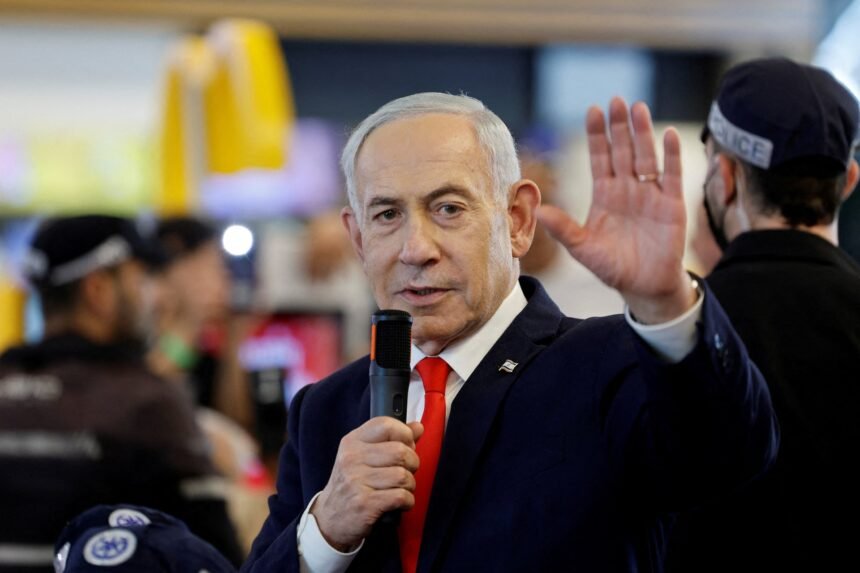
At the center of this complicated political environment stands Benjamin Netanyahu, Israel’s longest-serving prime minister.
His political career has become inseparable from the country’s contemporary history. He has governed through multiple political cycles, survived repeated electoral challenges, navigated coalition crises, and remained central to debates over Israel’s security and international relations.
Yet his leadership remains deeply contested within Israeli society.
Supporters emphasize his experience, security doctrine, international relationships, and familiarity with the country’s strategic challenges. Critics question his government’s handling of the October 7 security failure, the war’s direction, the conduct of coalition politics, the judicial reform controversy, and his political accountability.
Both perspectives are essential to understanding the current political moment.
The central question is not simply whether Netanyahu remains politically relevant. It is how Israel’s political institutions, security establishment, electorate, and competing political movements are negotiating the country’s future under extraordinary pressure.
This analysis examines that question while distinguishing documented developments from political interpretations and competing arguments.
ISRAEL’S 2026 GENERAL ELECTION: WHAT THE RESULTS ACTUALLY REVEAL
Israel held its general election on 27 October 2026. The election produced a complicated political outcome: Netanyahu’s Likud emerged as the largest party, but his governing bloc failed to secure the parliamentary majority needed to form a government independently.
The final count The Jerusalem Post reported on 30 October put Likud at 27 seats. Netanyahu’s political bloc was left short of the 61 seats required for a Knesset majority.
This distinction is fundamental.
Winning the most seats as an individual party does not automatically mean you can govern.
Israel operates a proportional parliamentary system. The Knesset has 120 members, and a government requires support from at least 61.
Consequently, a party can finish first but still struggle to form an administration.
The key development is that Netanyahu has retained substantial political support but lost the parliamentary certainty his previous coalition enjoyed.
This is a serious political setback, but it is not necessarily the end of his political career.
The emerging political balance
Political actor
Electoral significance
Likud – Benjamin Netanyahu
Largest individual party, with 27 seats
Gadi Eisenkot’s opposition alliance
Central challenger in government-formation negotiations
Arab-led political parties
Increased parliamentary significance and potential coalition leverage
Ultra-Orthodox parties
Their support remains important to Netanyahu’s traditional coalition
Right-wing nationalist parties
Their positions complicate the possibility of a more moderate coalition
The final political balance is more complicated than a conventional government-versus-opposition contest.
The opposition faces its own problem: some of its leaders have resisted relying on Arab-led parties to form a government, even though the parliamentary arithmetic may require precisely that cooperation.
Reuters reported that Netanyahu’s bloc had about 53 seats, while the opposition’s path to government depended on cooperation across ideological and political boundaries.
This is where the Israeli election becomes particularly interesting.
The country is not simply choosing between Netanyahu and his opponents. It is confronting a fundamental question about the character of its democracy, the legitimacy of political partnerships and the place of Palestinian citizens of Israel within national political institutions.
NETANYAHU’S POLITICAL SURVIVAL: WHY LOSING A MAJORITY DOES NOT AUTOMATICALLY END HIS LEADERSHIP
To understand Netanyahu’s position, one must separate three different forms of political power.
Electoral power: The number of citizens and constituencies willing to support his political movement.
Parliamentary power: The number of Knesset members prepared to support his government.
Institutional power: The authority and political relationships associated with occupying the office of prime minister.
Netanyahu’s latest electoral position demonstrates that these three forms of power do not always move together.
His party remains the largest individual party. His right-wing constituency remains substantial. But his coalition no longer has an assured parliamentary majority.
This creates several possible political scenarios.
A national unity government
Netanyahu could attempt to bring Gadi Eisenkot or other opposition figures into a broad government, potentially offering an arrangement that shares political responsibility or even rotates the premiership.
The Jerusalem Post reported on 29 October that individuals close to Netanyahu were exploring a unity-government arrangement with Eisenkot, potentially without the ultra-Orthodox parties.
The difficulty is that Eisenkot has political commitments that complicate serving under Netanyahu.
A minority government supported by Arab-led parties
The opposition could attempt to establish a government with support from Arab-led parties, including Ra’am and the Joint List.
This would represent a major political development in Israel.
However, some Jewish opposition parties’ ideological resistance to such an arrangement could make it difficult to sustain.
A renewed right-wing coalition
Netanyahu could try to attract individual legislators from rival parties, negotiate with smaller factions, and rebuild a parliamentary majority.
Such an arrangement would require considerable political bargaining.
Another election
If the parties cannot reach an agreement within the constitutional timetable, Israel could face another election.
Reuters’ 29 October examination of the possible outcomes identifies these different routes and the difficulties attached to each.
The important point is that Netanyahu remains a central participant in the negotiations even though his bloc lost its previous majority.
His continued role as caretaker prime minister should not be confused with a new electoral mandate.
THE EISENKOT FACTOR: THE CHALLENGER AND THE POLITICS OF NATIONAL RECONSTRUCTION
One of the major developments in the 2026 election is the emergence of Gadi Eisenkot as the central figure in the opposition’s attempt to replace Netanyahu.
Eisenkot is a former chief of staff of the Israel Defense Forces. His military background gives him a distinctive position in a country where security considerations occupy an unusually prominent place in political debate.
His political appeal is connected to several issues:
* National security and the credibility of military and intelligence institutions.
* Accountability for the October 7, 2023 security failures.
* The relationship between political leadership and professional security institutions.
* The future of military conscription, particularly exemptions for ultra-Orthodox communities.
* The restoration of public confidence in government institutions.
Eisenkot’s challenge is not simply to oppose Netanyahu.
He must demonstrate that an alternative political arrangement can govern a deeply divided country.
This involves reconciling different constituencies: centrist voters, secular Israelis, religious voters, former military officials, liberal constituencies, and potentially Arab political representatives.
These groups may oppose Netanyahu without agreeing on Israel’s future direction.
That is the opposition’s central contradiction.
Removing a prime minister is an electoral objective. Building a durable government is a separate political achievement.
Netanyahu understands the importance of that distinction.
If his opponents cannot agree on a governing arrangement, his political position may remain consequential even after the electoral setback.
THE ARAB VOTE: THE MOST IMPORTANT POLITICAL DEVELOPMENT THAT DESERVES CLOSER ATTENTION
One of the most consequential developments in the election has been the increased participation and parliamentary significance of Palestinian citizens of Israel.
Arab-led parties have emerged as potential kingmakers in the government-formation process.
This is particularly important because Palestinian citizens constitute approximately one-fifth of Israel’s population, yet their political participation has historically faced considerable social and political barriers.
The latest election has brought that contradiction into sharper focus.
The Guardian reported on 29 October that Palestinian-led parties had increased their influence and that their potential parliamentary support could determine whether Netanyahu’s opponents could form a government.
This raises an important democratic question.
If Arab parties win parliamentary representation through a lawful election, should their votes count when determining the composition of government?
The principle of parliamentary democracy suggests that elected representatives should be able to participate in forming government through constitutional procedures.
Yet some Israeli political leaders have resisted cooperating in this way.
Netanyahu’s campaign reportedly framed the contest around a choice between a right-wing government and a government dependent on Palestinian political support.
Critics have argued that this approach deepens divisions between Jewish and Arab citizens.
President Isaac Herzog also urged restraint in political rhetoric surrounding Palestinian voters, warning against tarnishing an entire community.
This issue has implications beyond Israel.
It touches the relationship between citizenship, ethnicity, political participation and democratic representation.
Israel’s democratic institutions will face an important test in how they accommodate the electoral influence of citizens whose political identities and national aspirations differ from those of the Jewish majority.
Electoral arithmetic alone cannot be resolved.
It requires a broader conversation about equality before the law, political inclusion and the constitutional character of the state.
THE INTERNAL POLITICS OF NETANYAHU’S GOVERNMENT: THE COALITION THAT SHAPED ISRAEL’S DIRECTION
To understand Netanyahu’s political difficulties, we must examine the coalition that sustained his administration.
His government has depended on cooperation among several ideological groups:
* Likud: Netanyahu’s conservative nationalist political movement.
* Religious Zionism: A nationalist religious political current associated with Bezalel Smotrich.
* Otzma Yehudit: The hard-right movement associated with Itamar Ben-Gvir.
* Ultra-Orthodox parties: Political organizations whose priorities include religious education, community autonomy and military-service exemptions.
These parties have not always shared identical objectives.
Netanyahu’s challenge has been to maintain their cooperation while managing national security, international diplomatic pressure, domestic legal disputes and the demands of competing political constituencies.
This is an important feature of Israeli parliamentary politics.
A prime minister may possess considerable personal influence but still depend on smaller parties whose support is necessary for parliamentary survival.
The Ben-Gvir and Smotrich question
Itamar Ben-Gvir
Ben-Gvir represents a hard-line nationalist position, particularly on policing, internal security, Palestinian issues, and the administration of occupied territories.
Bezalel Smotrich
Smotrich represents religious nationalism and supports policies with significant implications for settlements, territorial governance, and the future of the West Bank.
Their political influence has helped define the ideological character of Netanyahu’s coalition.
However, this relationship has also created difficulties.
The prime minister must balance the preferences of his more ideologically committed coalition partners against the demands of international diplomacy, military considerations, and Israel’s wider economic and security interests.
These tensions matter because Netanyahu’s political survival has often depended on keeping these factions together.
His opponents argue that this arrangement has given smaller ideological parties disproportionate influence over national policy.
His supporters argue that coalition government requires compromise and that the prime minister must respect the mandates of elected partners.
Both arguments reveal the structural realities of Israel’s parliamentary system.
THE OCTOBER 7 QUESTION: THE POLITICAL WOUND THAT CONTINUES TO DEFINE NETANYAHU
No serious examination of Netanyahu’s leadership can avoid the events of 7 October 2023.
The Hamas-led attack exposed profound failures in Israel’s security and intelligence arrangements.
The attack resulted in the deaths of approximately 1,200 people in Israel and the abduction of hostages into Gaza.
It fundamentally changed Israel’s national security environment.
For Netanyahu, the attack created a political problem that goes beyond military strategy.
It raised questions about:
* Intelligence assessments and early warnings.
* Border security and military preparedness.
* The government’s understanding of Hamas.
* Political responsibility for the security failure.
* The relationship between the prime minister’s office and security institutions.
* The absence of a sufficiently clear political endgame for the subsequent war.
The central accountability question is whether the political leadership should bear responsibility for the conditions that allowed such a catastrophic security failure.
Netanyahu’s critics have argued that an independent state commission of inquiry is essential.
The demand is not simply to investigate operational military failures. It also demands accountability at the highest political level.
The election demonstrated that these questions remain central to the public debate.
Netanyahu’s supporters, meanwhile, point to the complexity of Israel’s security environment and the subsequent military and diplomatic challenges.
But we must maintain an important distinction.
The ability to conduct military operations after an attack is not the same as answering questions about why the attack was possible in the first place.
Military action and political accountability are separate responsibilities.
A country can defend itself against external threats while simultaneously investigating failures within its own institutions.
Indeed, a democratic security system’s credibility depends partly on its ability to investigate its own mistakes.
THE IRAN FACTOR: WHY TEHRAN REMAINS CENTRAL TO ISRAEL’S STRATEGIC CALCULATIONS
Iran remains one of the most consequential factors in Israeli strategic thinking.
For Netanyahu, the Iranian nuclear program, ballistic missile capabilities, and relationships with armed groups across the region have long been central national security concerns.
Israel’s security doctrine has traditionally treated the possibility of a hostile regional power acquiring nuclear weapons as an existential strategic threat.
Netanyahu has repeatedly argued that preventing Iran from acquiring nuclear weapons must remain a priority for Israel and its international partners.
His approach has involved several components:
Military deterrence: Maintaining the capability to respond to threats against Israeli territory.
Intelligence cooperation: Developing intelligence relationships with international partners to monitor Iranian military and nuclear activities.
International diplomacy: Seeking American and European support for measures intended to constrain Iran’s nuclear capabilities.
Regional alliances: Strengthening security relationships with countries that share concerns about Iranian regional influence.
However, the effectiveness of this strategy must be judged against actual outcomes, not simply the forcefulness of its rhetoric.
Military confrontation carries substantial risks.
It can trigger retaliation, threaten civilian populations, disrupt international energy markets, and widen an existing conflict.
A comprehensive Israeli security strategy therefore must address both deterrence and the diplomatic conditions needed to prevent repeated escalation.
The American relationship
The relationship between Israel and the United States remains a key pillar of Israeli foreign policy.
American support has strategic dimensions:
* Military assistance and weapons cooperation.
* Missile defense and technological development.
* Intelligence sharing.
* Diplomatic support in international institutions.
* Regional security coordination.
* Economic and technological partnerships.
Netanyahu has invested heavily in maintaining relationships with American political leaders across different administrations.
His relationship with President Donald Trump has been particularly important to his diplomatic approach.
However, the relationship is not without complications.
Washington must consider American domestic opinion, regional stability, the security of American forces, and the wider implications of prolonged Middle Eastern conflict.
Israel must also recognize that American support is no substitute for a coherent long-term regional strategy.
The relationship is strategically important to both countries, but their interests do not always align.
For Netanyahu, maintaining American support while protecting Israel’s freedom to make strategic decisions is a central diplomatic challenge.
THE PALESTINIAN QUESTION: THE BIGGEST UNRESOLVED POLITICAL ISSUE
Israel’s political future cannot be analyzed without examining the Palestinian question.
The war in Gaza has created an enormous humanitarian crisis, intensified international criticism of Israeli military operations, and deepened disagreements about the future of Palestinian governance.
The central unresolved issues include:
* Who will govern Gaza after the war?
* What security arrangements will prevent renewed attacks?
* What will happen to Hamas’s military and political structures?
* How will displaced Palestinians return to their communities?
* What role will the Palestinian Authority play?
* Will negotiations toward a two-state settlement become politically possible?
* What will happen to Israeli settlements and Palestinian communities in the West Bank?
Military operations have not resolved these questions.
Netanyahu has historically opposed several proposed arrangements that would establish a fully sovereign Palestinian state under the conventional two-state framework.
Some of his coalition partners advocate even more restrictive approaches to Palestinian territorial sovereignty.
By contrast, many international partners continue to support a negotiated two-state framework.
This disagreement is not merely diplomatic.
It affects Israel’s international relationships, long-term security environment, regional integration and domestic political identity.
A sustainable security arrangement must address the legitimate security concerns of Israelis while recognizing the rights, dignity and political aspirations of Palestinians.
The absence of a credible political settlement risks perpetuating cycles of violence.
THE JUDICIAL REFORM CONTROVERSY: ISRAEL’S STRUGGLE OVER THE LIMITS OF GOVERNMENT POWER
One of the most important ideological battles in Israeli politics concerns the relationship between the executive government, parliament and the judiciary.
Netanyahu’s coalition has pursued changes to increase elected politicians’ influence over judicial appointments and reduce certain powers of judicial oversight.
Supporters of the reforms argue that Israel’s judiciary exercises excessive authority over elected representatives.
Opponents argue that weakening judicial independence would undermine the checks and balances necessary to protect democratic institutions.
This controversy became one of the largest protest movements in Israel’s recent history.
The political dispute remains significant in the 2026 election.
The Times of Israel reported that the outgoing coalition had advanced key elements of its judicial agenda, while opposition parties had promised to reverse some legislation. The next Knesset could therefore face renewed confrontation over judicial appointments and the Supreme Court’s powers.
This matters because Israel lacks a single, fully codified constitution.
Its Basic Laws perform important constitutional functions.
The balance between parliamentary authority and judicial review is therefore central to the country’s institutional stability.
The debate is not simply whether Netanyahu should be permitted to implement his electoral program.
It is whether a parliamentary majority should possess the power to weaken the institutions that provide independent oversight of government.
That question has implications far beyond Netanyahu’s political career.
THE ULTRA-ORTHODOX MILITARY SERVICE CRISIS
Another major source of political division is military conscription.
Israel has compulsory military service, but ultra-Orthodox communities have historically benefited from exemptions and deferments associated with full-time religious study.
This arrangement has become increasingly controversial, particularly as Israel faces prolonged security demands.
Many secular and religious-nationalist Israelis argue that military service should be shared more equitably.
Ultra-Orthodox political parties, however, defend the religious study arrangements and resist measures that would undermine their communities’ established institutions.
This has created a difficult political contradiction for Netanyahu.
His traditional coalition partners include ultra-Orthodox parties whose support is essential to his governing arrangements.
Yet opposition to military-service exemptions matters to parts of the electorate, including reservists and families whose members have experienced extended military deployment.
The issue is not merely about conscription.
It concerns how national responsibility is distributed, equality of citizenship, religious autonomy, and Israel’s future social contract.
A government that cannot find an acceptable arrangement risks deepening divisions across Israeli society.
WHY NETANYAHU’S SUPPORTERS STILL CONSIDER HIM THE RIGHT LEADER FOR ISRAEL AT THIS MOMENT
Your question about why Netanyahu remains the best option at this moment deserves examination through the arguments his supporters advance, the political realities surrounding his leadership, and the weaknesses his opponents identify.
There are several reasons his supporters continue to regard him as indispensable to Israel’s political and security establishment.
His experience in national security and international diplomacy
Netanyahu has served multiple terms as prime minister and has extensive experience dealing with American presidents, European leaders, regional governments and international security institutions.
His supporters consider that experience valuable in an environment involving Iran, Hezbollah, Hamas and wider regional instability.
His understanding of Israel’s strategic relationships
His political career has been closely associated with the US-Israel relationship and the expansion of regional diplomatic engagement.
The Abraham Accords, signed in 2020 between Israel and several Arab states, remain an important part of his diplomatic legacy.
His supporters view those agreements as evidence that Israel can expand diplomatic relationships without first resolving every aspect of the Palestinian conflict.
However, the long-term sustainability of regional normalization depends on broader political and security developments.
His emphasis on military deterrence
Netanyahu has consistently promoted a security doctrine centered on preventing hostile regional actors from acquiring capabilities that could threaten Israel.
His supporters argue that this approach reflects the country’s difficult geographical and security environment.
Critics question whether military deterrence, without a credible political settlement, can deliver lasting security.
His ability to maintain a national political constituency
Despite substantial opposition, Netanyahu’s Likud remains Israel’s largest individual party following the October 2026 election.
That result shows his political movement still commands substantial support, although it does not give his bloc a parliamentary majority.
His political experience in coalition management
Netanyahu has repeatedly navigated complex parliamentary negotiations.
That experience may help during the current government-formation crisis, although the latest results show that coalition management has not guaranteed parliamentary stability.
These are the strongest arguments supporting his continued political relevance.
But there are also serious counterarguments.
His critics point to the October 7 security failures, the prolonged conflict, the absence of a settled post-war strategy for Gaza, the judicial reform controversy, and the unresolved corruption proceedings.
The International Criminal Court also issued an arrest warrant for Netanyahu in November 2024, concerning alleged crimes against humanity and war crimes. Those are allegations under international criminal law, not a criminal conviction.
A balanced assessment must consider these matters alongside his diplomatic and security record.
The intellectually defensible conclusion is that Netanyahu has considerable experience and an established political constituency, but Israel’s democratic institutions and electorate must decide whether he should remain prime minister.
THE POLITICAL FUTURE OF ISRAEL: WHAT HAPPENS NEXT?
The election has produced several possible directions for Israel.
Netanyahu negotiates a unity government
A broad coalition with centrist and right-wing opposition figures could reduce dependence on the most ideologically demanding coalition partners.
The challenge would be persuading opposition leaders to abandon their commitments not to serve under Netanyahu.
Eisenkot forms an alternative government
This would require cooperation between Jewish opposition parties and Arab-led parliamentary representatives, or another arrangement that produces the required majority.
The challenge would be maintaining ideological cohesion and parliamentary stability.
Netanyahu reconstructs his right-wing coalition
Individual lawmakers and smaller factions could become central to negotiations.
The difficulty would be reconciling competing demands concerning military conscription, judicial reform and national security.
Israel returns to another election
Failure to form a viable parliamentary majority could lead to another election.
This would prolong political uncertainty while the caretaker government continues its responsibilities.
Reuters reported on 29 October that the president’s consultations and the coalition-formation timetable would determine the next stage. President Isaac Herzog has an important constitutional role in identifying the legislator most likely to form a government.
THE FOREIGN INTERFERENCE CONTROVERSY: A NEW DIMENSION OF ISRAEL’S ELECTION
Another important issue emerging from the election concerns allegations of foreign interference.
Netanyahu and political figures associated with his camp raised concerns about possible foreign involvement in the electoral process.
Qatar rejected accusations that it had interfered in Israel’s election. The Guardian reported that Israeli opposition figures and police also challenged aspects of the allegations.
These claims should not be treated as facts without independent evidence.
This controversy matters because allegations of foreign interference can seriously undermine public confidence in elections.
A democratic election requires transparent procedures, credible investigations, and respect for verified results.
Political actors must not use unsubstantiated allegations to undermine voters’ legitimacy or entire communities.
The integrity of Israel’s electoral institutions will be important as the next government forms.
THE STRATEGIC LESSON FOR AFRICA AND NIGERIA: WHAT CAN BE LEARNED FROM ISRAEL?
Israel’s political experience offers several useful institutional lessons, particularly for countries facing difficult security environments and complicated coalition politics.
National security requires institutional coordination.
Military strength alone cannot guarantee national security. Intelligence, civilian leadership, accountability, and inter-agency cooperation matter just as much.
Political experience is valuable, but it cannot replace accountability.
Long-serving leaders may possess considerable institutional knowledge. However, experience does not exempt them from public scrutiny or responsibility for government failures.
Coalition politics requires negotiation.
Israel’s election shows that winning the most seats does not automatically produce a government.
Political parties must negotiate, build relationships, and find common ground.
Democratic institutions must accommodate political diversity.
The increased parliamentary importance of Arab-led parties demonstrates why citizenship and electoral participation must be respected, even when political differences are substantial.
Foreign policy must balance military and diplomatic instruments.
Security partnerships, regional diplomacy, economic cooperation, and credible deterrence should operate within a broader strategic framework.
For Nigeria, these lessons are particularly relevant to discussions about national security, political inclusion, federal relations, and managing competing political interests.
THE FINAL ANALYSIS: NETANYAHU, ISRAEL’S POLITICAL CONTINUITY AND THE QUESTION OF LEADERSHIP
Benjamin Netanyahu remains one of the most consequential political figures in the contemporary Middle East.
His experience, international relationships, security doctrine, and enduring political constituency explain why he remains central to Israel’s political calculations.
But the October 2026 election has exposed the limitations of his existing coalition.
His Likud party remains the largest single political force, yet his bloc no longer has the parliamentary majority it once enjoyed.
His opponents can form an alternative government, but they face their own ideological contradictions, particularly over cooperating with Arab-led parties.
This is the real political drama unfolding in Israel.
It is not simply a contest between Netanyahu and Eisenkot.
It is a contest over the country’s political identity, the limits of executive power, the relationship between Jewish and Arab citizens, the future of military service, the Palestinian question and the meaning of national security.
Netanyahu’s supporters see him as an experienced leader who understands Israel’s strategic dangers.
His critics see his continued leadership as part of the political problem that must be addressed following the October 7 failures and the country’s subsequent internal divisions.
Both positions must be evaluated against evidence and political outcomes.
My central observation is that Israel’s next chapter will depend on whether its political leadership can reconcile security with accountability, national unity with democratic inclusion, and military deterrence with a credible political vision for the region.
A country cannot build a sustainable future on military capability alone. Nor can it secure lasting stability through political leadership that is insulated from accountability.
Netanyahu’s historical significance is already established. The question now is what political settlement Israel’s electorate and institutions will produce after this election.
The answer will have implications far beyond Jerusalem.
It will influence the Middle East, America’s regional strategy, international energy security, relations with Arab governments, and the wider geopolitical environment.
For that reason, Israel’s 2026 election deserves sustained international attention.
By Ibrahim Bunu
International Affairs | Geopolitics | Strategic Political Analysis
30 October 2026