

By Ibrahim Bunu
ibrshimbunu2520@gmail.com
30 October 2026
A critical examination of his Channels Television interview, ARISE News coverage, his confrontation with Governor Hope Uzodimma, and the ideological choices confronting the South-East ahead of 2027 and beyond.
THE RETURN OF ROCHAS: WHEN A POLITICAL INTERVIEW BECOMES A DECLARATION OF INTENT
In Nigerian politics, some interviews stop being an ordinary exchange between a politician and a journalist. They become political announcements, contests over legitimacy, and attempts to redefine the balance of power.

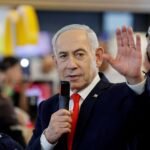
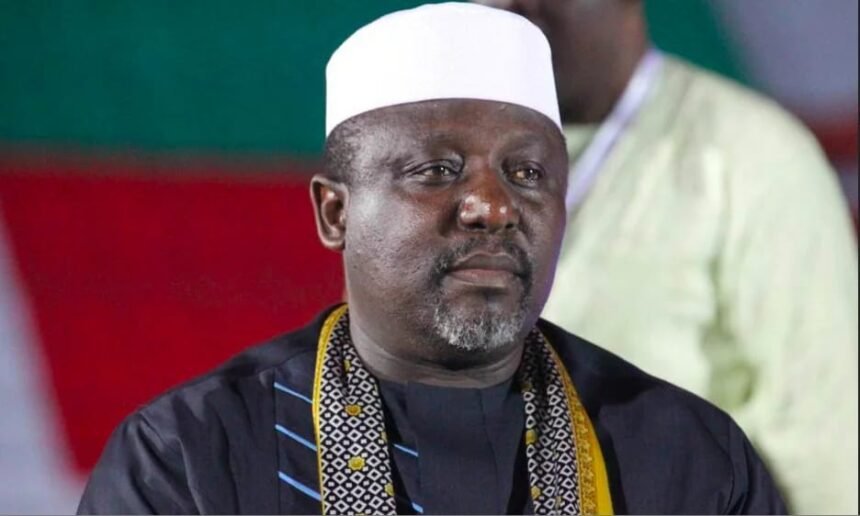
Rochas Anayo Okorocha’s appearance on Channels Television’s Politics Today on Thursday, 29 October 2026, belongs to that category.
At first glance, the former governor of Imo State appeared to be celebrating a judicial victory in his struggle for the All Progressives Congress senatorial ticket for Imo West. But a closer examination of his statements reveals something more consequential.
Okorocha was not merely discussing a senatorial election. He was making a broader argument about the Igbo political future, the limits of emotional politics, the importance of alliances, and the difference between holding governmental authority and commanding electoral influence.
His message contained three interconnected propositions.
The South-East must begin to distinguish political aspiration from political strategy. Political relevance cannot depend solely on holding public office. And the Igbo presidential ambition requires a national coalition capable of translating regional sentiment into electoral victory.
These propositions deserve serious examination, not because Okorocha is necessarily correct in every respect, but because they confront a question that has troubled South-East politics for decades: how can a region with enormous entrepreneurial capacity, educational achievement, commercial influence and a distinguished political history convert those advantages into sustained bargaining power within the Nigerian federation?
The question is larger than Okorocha. It is larger than Hope Uzodimma. It is even larger than the 2027 presidential election.
It concerns the architecture of Igbo political power.
And this is precisely where Okorocha’s recent intervention becomes particularly interesting.
WHAT OKOROCHA ACTUALLY SAID: SEPARATING HIS WORDS FROM THEIR POLITICAL IMPLICATIONS
An intellectually responsible analysis must distinguish what Okorocha said from what an observer believes he intended.
Channels Television’s reporting of the interview highlights several key points.
Okorocha described support for President Bola Ahmed Tinubu as a strategic alliance for the South-East, arguing that the region should approach electoral politics through calculation rather than emotion.
He challenged Peter Obi’s proposed one-term presidential arrangement, describing a four-year presidency as a political gamble.
He further asserted that his own appearance on the APC ballot for Imo West would strengthen Tinubu’s chances in Imo State.
Most provocatively, he questioned Governor Hope Uzodimma’s ability to deliver for the state politically and said he would work toward a broader coalition of politicians from different parties.
These statements matter because they operate at the personal, state, regional, and national levels.
At the personal level, Okorocha asserts his continued political relevance.
At the state level, he challenges the incumbent governor.
At the regional level, he is offering a different approach to the Igbo question.
At the national level, he is presenting himself as a potentially useful political intermediary between the South-East and the presidency.
This is not simply political commentary. It is political positioning.
However, the available material does not show that electoral evidence has validated every aspect of his argument. The recent Channels interview and related ARISE reports provide a basis for analysis, but they should not be mistaken for a complete verified transcript of every television appearance.
That distinction matters because serious political writing must never convert an analyst’s interpretation into a politician’s supposed quotation.
THE COURTROOM VICTORY AND THE STRUGGLE FOR POLITICAL LEGITIMACY
Okorocha’s interview followed the Federal High Court’s reported 29 October 2026 judgment on the APC primary for Imo West.
According to ARISE News, Justice Obiora Egwuatu ruled that Okorocha secured the majority of votes in the disputed primary and directed the APC to forward his name to the Independent National Electoral Commission. The ruling also restrained Governor Uzodimma from presenting himself as the party’s candidate for that election.
But the controversy has a complicated history.
Earlier in October, INEC officials had raised concerns about an allegedly fictitious primary-election result document and referred the matter to security agencies. Separate reports also recorded conflicting accounts between the police and Okorocha concerning his alleged arrest.
The October 29 judgment is therefore an important legal development. Still, it would be premature to treat every allegation exchanged during the dispute as a judicially fact or to assume that further legal proceedings are impossible.
The dispute’s deeper political meaning is that it exposes a fundamental question about Nigerian party democracy.
Who ultimately determines political legitimacy: the party establishment, the courts, or the electorate?
A political party may recognize a preferred candidate. A court may determine that its nomination process violated applicable rules. Yet voters ultimately hold the electoral mandate.
These sources of authority are related but not interchangeable.
As reported, Okorocha’s legal victory strengthens his claim to the party ticket. It does not automatically establish that he commands more votes than Uzodimma, nor does it guarantee victory in a general election.
Nevertheless, it gives him a chance to turn a legal dispute into a broader political narrative: a former governor, pushed away from the center of party power, remains capable of challenging the incumbent political establishment.
That narrative may prove more politically valuable than the judgment itself.
In Nigerian politics, perception often determines who gets an invitation to the negotiating table long before the final electoral arithmetic is settled.
ROCHAS OKOROCHA’S POLITICAL TRAJECTORY: THE MAN WHO LEARNED TO OPERATE BEYOND REGIONAL BOUNDARIES
To understand why Okorocha remains politically relevant, one must examine his career trajectory rather than merely the controversy surrounding his latest interview.
Okorocha belongs to a generation of Nigerian politicians who understood early that regional popularity, although valuable, is insufficient to acquire national power.
His political history shows an unusual willingness to cross party lines, build relationships beyond his immediate constituency, and seek influence within national political structures.
He pursued the All Nigeria Peoples Party presidential nomination in 2003. He established the Action Alliance in 2005, explored leadership opportunities within the Peoples Democratic Party, and subsequently joined the All Progressives Grand Alliance, under which he won the Imo governorship in 2011.
In 2013, he joined the emerging APC coalition and became one of the key South-East figures associated with the party’s formative period. He later served as governor until 2019 and represented Imo West in the Senate from 2019 to 2023.
His presidential ambitions also preceded the current political cycle, including his publicly declared interest in the 2023 contest. ARISE News documented this longer trajectory in its February 2022 interview coverage.
This history reveals a distinctive political characteristic.
Okorocha has consistently treated political parties as instruments for pursuing broader ambitions, rather than as permanent ideological homes.
That approach has advantages and weaknesses.
Its advantage is adaptability. A politician who understands several political organizations can build relationships across competing power blocs and survive changes in the political environment.
Its weakness is ideological ambiguity. Frequent party movement can make it seem as though political advancement matters more than coherent policy commitments.
Both conclusions must be considered.
It would be intellectually careless to describe every political defection as evidence of superior strategy. Equally, it would be simplistic to dismiss every political realignment as opportunism.
Political judgment depends on the purposes such movements serve, the principles they retain, and the public benefits they ultimately deliver.
What makes Okorocha interesting is that his political career has repeatedly returned to one central ambition: relevance within the national distribution of power.
His governorship was one stage of that ambition, not necessarily its final destination.
His latest interview suggests that he still sees himself as a participant in the larger national political contest.
WHY OKOROCHA MAY NOW APPEAR MORE POLITICALLY VISIBLE THAN GOVERNOR HOPE UZODIMMA
One of the interview’s most provocative implications concerns the relationship between formal authority and political visibility.
Governor Hope Uzodimma possesses the institutional authority of an incumbent state governor. By contrast, Okorocha currently operates without the same executive powers.
Yet Okorocha’s recent legal dispute, television appearances, and pronouncements on national political alliances have put him at the center of the public conversation.
This raises a question.
Can a politician outside executive office exercise greater influence over political debate than a sitting governor?
The answer is yes, though visibility and actual power are not the same.
A governor controls an executive administration, participates in intergovernmental institutions, influences state-level political organization, and benefits from incumbency.
A former governor may have a different kind of influence: name recognition, political relationships, public familiarity, historical networks, and the freedom to speak more confrontationally.
Okorocha’s present strategy appears designed to maximize these advantages.
He has placed himself at the intersection of three politically sensitive questions: the APC nomination dispute, Tinubu’s re-election prospects, and the future of Igbo presidential aspirations.
That combination gives his intervention a national dimension that an ordinary state-level dispute would not necessarily command.
Uzodimma currently possesses executive authority. Okorocha is attempting to reclaim political initiative.
The distinction is important.
The governor may have greater institutional leverage, but Okorocha is trying to define the terms by which that leverage should be judged.
His reported claim that Uzodimma lacks the grassroots strength required to deliver Imo for Tinubu is therefore not an incidental insult. It directly challenges the governor’s usefulness within the national ruling coalition.
In practical terms, Okorocha is asking national political actors to reconsider a familiar assumption: that the incumbent governor must automatically be the state’s most effective political organizer.
That is a serious challenge.
But it remains an assertion requiring evidence.
Political visibility can be measured through public attention. Political organization requires a different assessment: functioning ward structures, credible candidates, committed supporters, electoral records, campaign capacity, and actual votes.
Until those indicators are examined, it would be premature to conclude that Okorocha has surpassed Uzodimma in overall political strength.
The more defensible conclusion is that Okorocha has demonstrated an ability to compete for public attention and national relevance despite being outside the governor’s office.
That achievement alone makes his political trajectory worth examining.
THE 2019 SUCCESSION CRISIS: THE CONTRADICTION OKOROCHA CANNOT ESCAPE
A serious assessment of Okorocha must also examine the weaknesses in his own political history.
His confrontation with Uzodimma began before the 2026 senatorial primary.
Their rivalry traces back to the succession struggle at the end of Okorocha’s governorship.
Okorocha supported his son-in-law, Uche Nwosu, as his preferred successor. That decision drew accusations of dynastic politics and fuelled a bitter contest for the APC governorship ticket.
Nwosu eventually pursued his governorship ambition on the Action Alliance platform, while Uzodimma emerged as the APC candidate.
This episode complicates any attempt to portray Okorocha as an uncomplicated defender of internal party democracy.
A politician who argues that party nominations must reflect legitimate procedures must also be willing to confront questions about his own past use of political influence.
That is the test of consistency.
His supporters may argue that he was entitled to support a candidate of his choice. His critics may respond that attempting to transfer political power to a close family member weakened the credibility of his democratic commitments.
Both arguments deserve consideration.
The larger lesson is that political movements built too heavily around individuals often become vulnerable as succession approaches.
If Okorocha intends to establish himself as a credible architect of future South-East political influence, he must demonstrate that his ideas can survive beyond personal ambition, family relationships and disputes with political rivals.
A politician’s historical importance is not established merely by the offices he occupied, but by the institutions he leaves behind.
That standard must apply equally to Okorocha, Uzodimma and every other South-East political leader.
THE MOST IMPORTANT STATEMENT: WHY OKOROCHA WANTS THE IGBO TO RECONSIDER THEIR POLITICAL METHOD
Perhaps the most consequential part of the Channels interview was Okorocha’s insistence that the South-East should approach national politics strategically, not emotionally.
This statement should not be reduced to a campaign slogan.
It raises a difficult question about political bargaining within Nigeria’s federal system.
The South-East has repeatedly produced nationally influential politicians, entrepreneurs, professionals and public intellectuals. Yet its presidential ambition continues to encounter formidable obstacles within the country’s competitive electoral system.
No single narrative explains the reasons.
They include the historical consequences of the Nigerian Civil War, the federation’s structure, patterns of party competition, regional mistrust, the distribution of electoral strength, and the difficulty of sustaining broad national coalitions.
The question of representation also remains.
A region may possess considerable economic influence without exercising equivalent control over national political institutions.
Commercial networks do not automatically translate into electoral coalitions.
Educational achievement does not automatically produce political bargaining power.
Cultural solidarity does not automatically translate into majority support across a diverse federation.
These distinctions are fundamental.
Okorocha’s argument seems to be that the South-East should stop assuming that the moral strength of its presidential claim will, by itself, create the political conditions needed to achieve it.
There is considerable analytical merit in that proposition.
But it must be taken further.
The solution cannot simply be to support whichever political coalition currently controls the presidency.
That would replace emotional politics with dependency politics.
A genuine strategic alliance requires clearly defined public objectives, reciprocal commitments, credible institutions and measurable outcomes.
Without those elements, an alliance risks becoming an arrangement that lets political elites secure personal advancement while ordinary citizens get little structural benefit.
Any serious interpretation of Okorocha’s proposal must confront this weakness.
THE PETER OBI QUESTION: IS A FOUR-YEAR PRESIDENCY REALLY A POLITICAL GAMBLE?
Okorocha’s criticism of Peter Obi’s proposed one-term presidency represents another major ideological disagreement.
According to Channels Television, Okorocha argued that the South-East should not gamble on a four-year presidency and should instead seek a chance to exercise meaningful, sustained presidential authority.
His argument rests on the distinction between symbolic representation and effective political power.
A presidency of limited duration might satisfy a demand for inclusion, but would it necessarily create sufficient time for structural reforms, economic transformation, and institutional consolidation?
Not necessarily.
However, the opposite proposition matters as much.
A president who serves four years may accomplish more than one who serves eight, depending on administrative competence, legislative cooperation, policy choices, and implementation.
The Constitution permits a four-year presidential term, with a maximum of two elected terms. It does not guarantee any president a second term.
Therefore, the political value of a presidency cannot be determined solely by its proposed duration.
A credible assessment must consider what a candidate intends to achieve, whether those commitments are feasible, and whether the proposed administration can build the coalition needed to govern effectively.
Obi’s political argument, as represented in the debate, emphasizes the possibility of a limited-term commitment.
Okorocha’s argument emphasizes the risks of accepting a shortened political opportunity.
Neither proposition resolves the larger question of how a South-East candidate can assemble a winning national coalition.
The strategic weakness of reducing Igbo presidential aspirations to one individual’s political fortunes is that it risks confusing representation with institutional power.
A region’s political future should not depend entirely on one presidential candidate’s success or failure, however popular.
But the same warning applies to those who would make support for an incumbent president the sole foundation of regional strategy.
The South-East needs political options that can survive the careers of both Tinubu and Obi.
THE TINUBU ALLIANCE: STRATEGIC REALISM OR POLITICAL DEPENDENCY?
Okorocha’s declaration of support for President Bola Ahmed Tinubu is one of the most revealing aspects of his recent political positioning.
It suggests that he sees participation in the incumbent national coalition as a potentially useful route toward greater South-East influence.
From a political realism perspective, such reasoning is understandable.
National politics involves negotiations among competing regional interests, parties and influential actors. Groups that entirely exclude themselves from governing coalitions may have limited ability to shape policy and secure institutional representation.
Yet it is easy to confuse proximity to power with power itself.
A politician may enjoy access to the presidency without securing meaningful benefits for his constituents.
A region may provide electoral support without receiving the institutional reforms it considers essential.
And a party may accommodate influential individuals without addressing the wider grievances of the communities they claim to represent.
Consequently, the question is not simply whether the South-East should support Tinubu.
The more consequential question is what any national alliance should deliver for the region and for Nigeria as a whole.
That requires a serious policy framework encompassing infrastructure, security, economic development, federal representation and constitutional governance.
For example, South-East leaders could assess any proposed national partnership against transparent commitments concerning major transport corridors, industrial infrastructure, port access, reliable electricity, investment conditions and equitable access to federal opportunities.
Those commitments would need measurable milestones and public reporting.
Such an approach would transform the language of alliance from personal loyalty into accountable political negotiation.
It would also protect citizens from the assumption that prominent officeholders’ political interests necessarily coincide with the interests of the communities they represent.
The ultimate measure of a political alliance should be its contribution to public welfare, not merely the number of appointments it produces.
THE RAINBOW COALITION: OKOROCHA’S MOST INTERESTING POLITICAL SIGNAL
One of Okorocha’s most strategically revealing statements was his endorsement of a Rainbow Coalition associated with Federal Capital Territory Minister Nyesom Wike.
He reportedly proposed bringing together politicians from different parties in Imo State to support Tinubu’s re-election, even suggesting that some political actors might sacrifice individual ambitions for a shared objective.
The significance of this statement extends beyond Imo.
It reflects an increasingly visible feature of Nigerian politics: alliances operating across formal party boundaries.
Under such arrangements, political actors may keep different party affiliations while cooperating around specific candidates, elections, or government objectives.
This raises important questions about how Nigeria’s party system is evolving.
Are political parties becoming weaker as ideological institutions?
Are personal networks replacing formal party structures?
Is electoral competition increasingly organized around influential individuals rather than coherent programs?
What happens to democratic accountability when voters cannot clearly distinguish competing parties’ policy positions?
These are not abstract questions.
If parties become interchangeable vehicles for political elites, citizens may find it increasingly difficult to hold governments accountable for broken promises.
A broad coalition can reduce political fragmentation and facilitate cooperation.
Its danger is that it can weaken meaningful opposition and reduce electoral competition.
Okorocha’s Rainbow Coalition proposal therefore deserves scrutiny beyond its immediate electoral objectives.
To represent a constructive political development, it would need a clear public program, transparent agreements, and safeguards against the concentration of political influence.
Otherwise, it may become another elite bargain whose benefits are concentrated among its organizers.
THE FIVE DEEPER REASONS SOUTH-EAST POLITICS CONTINUES TO FACE STRUCTURAL DIFFICULTIES
The central problem confronting the South-East is not an absence of political talent.
The difficulty lies in translating political talent into durable institutions and broad national influence.
Several underlying issues deserve examination.
The absence of a consistently coordinated regional development agenda.
South-East governors and political leaders operate within different party structures and political alliances. This pluralism is not inherently negative, but it can make coordination difficult where infrastructure, security, and economic development require cooperation across state boundaries.
The tendency to personalize political leadership.
Too much political discussion focuses on individual personalities rather than institutions, public policy, and succession systems. The rivalry between Okorocha and Uzodimma illustrates how conflicts among political elites can dominate the public agenda.
The tension between regional solidarity and national coalition-building.
Strong regional identity can generate political participation, but presidential elections require support beyond any single geopolitical zone. The challenge is to preserve legitimate regional interests while developing nationally credible programs.
The weakness of institutional continuity.
Projects and policies may lose momentum when political administrations change. Long-term economic development requires predictable institutions that can survive electoral transitions.
The relationship between security and economic opportunity remains unresolved.
Insecurity, disrupted commercial activity, and uncertainty over the operating environment undermine investment and public confidence. Political leaders cannot credibly discuss regional transformation without confronting these problems.
These difficulties are not unique to the South-East. They reflect wider weaknesses in Nigerian governance.
However, their consequences are particularly significant for a region whose economic strength depends heavily on enterprise, mobility, commercial connectivity and investment.
THE FUTURE OF IGBO POLITICS: THREE POSSIBLE PATHWAYS
The coalition pathway
South-East leaders deepen participation in national governing alliances and seek greater influence through cooperation with political actors from other regions.
This may improve access to decision-making, but it risks producing dependency unless accompanied by transparent public commitments.
The independent electoral pathway
Regional political movements focus on developing presidential candidates, strengthening political organizations, and building nationwide support for alternative governing programs.
This preserves political independence, but its success depends on substantial coalition-building beyond the South-East.
The institutional development pathway
Political leaders prioritize economic coordination, constitutional reform, regional infrastructure, public accountability, and sustained engagement with the federation, regardless of which party controls the presidency.
This offers a potentially more durable foundation for influence, although it requires patient cooperation and may deliver fewer immediate political rewards.
These pathways are not mutually exclusive.
Indeed, a mature political system should permit competition between different electoral strategies while maintaining agreement on fundamental development objectives.
The South-East does not require uniform political allegiance to pursue common economic and institutional interests.
It requires a clearer distinction between legitimate political competition and the long-term public interests that should transcend party rivalry.
BEYOND 2027: THE SOUTH-EAST MUST THINK IN GENERATIONS, NOT ELECTORAL CYCLES
The 2027 presidential election will matter enormously for the future of Nigerian politics.
But it should not become the sole horizon through which South-East leaders assess the region’s future.
A more durable approach would begin with an honest assessment of the region’s economic and institutional strengths.
The South-East has important commercial centers, manufacturing clusters, universities, skilled professionals, and extensive business networks.
Its economic prospects are closely connected to national transport systems, energy supply, financial markets, security, and access to domestic and international trade.
Sustained investment in these foundations would strengthen the region’s political influence.
An industrial economy that creates employment, attracts capital, and supports innovation produces a form of national relevance that electoral defeat cannot easily erase.
Similarly, effective state institutions, credible public finances, and predictable regulatory environments increase political leaders’ capacity to negotiate from a position of strength.
This is why the debate about Igbo political strategy must move beyond who becomes president.
The deeper questions are whether the region can expand its productive capacity, improve public services, strengthen democratic accountability, and contribute to a more functional Nigerian federation.
Presidential representation remains a legitimate political aspiration.
But regional development cannot wait indefinitely for a preferred presidential outcome.
THE IDEOLOGICAL CONTRADICTION AT THE HEART OF OKOROCHA’S ARGUMENT
Okorocha’s interview contains an important tension.
He appears to advocate strategic political thinking over emotional attachment, yet his immediate political confrontation with Uzodimma is deeply personal.
He presents national coalition-building as a route to greater South-East influence, while simultaneously challenging a governor’s political authority within his own party.
He argues for Ndigbo’s long-term interests, but his current political calculations are inseparable from his attempt to return to elected office.
These contradictions do not automatically invalidate his arguments.
Politicians frequently advance ideas that serve both personal ambitions and broader public interests.
Serious political analysis must separate the two.
Therefore, evaluate Okorocha’s proposal on its merits, independent of his political rivalry.
His claim that the South-East needs strategic national relationships deserves consideration.
His assertion that he personally offers a stronger electoral vehicle than Uzodimma requires evidence.
His criticism of a proposed one-term presidency deserves debate.
His own record in government deserves scrutiny.
And his support for Tinubu should be judged by the public policies and outcomes associated with that position, rather than by the mere existence of an alliance.
This is how political analysis avoids becoming political advertising.
CAN OKOROCHA RE-EMERGE AS A MAJOR NATIONAL POLITICAL FIGURE?
The possibility cannot be dismissed.
His career demonstrates political persistence, name recognition, experience in multiple party formations, and an enduring interest in national politics.
His latest interview also shows he understands that the contest for political relevance is fought partly through public narrative.
By discussing the future of the South-East while challenging an incumbent governor, he is attempting to move the public conversation beyond the immediate legal dispute.
But a political comeback is not established.
Its credibility will depend on whether Okorocha can rebuild effective political relationships, maintain a viable electoral organization, address the controversies associated with his previous administration, and articulate a convincing program for public governance.
His relationship with the APC establishment will also matter.
So will the final legal and administrative resolution of the Imo West nomination dispute.
A politician may win a court case and still struggle to secure a functioning electoral coalition.
Conversely, a politician who loses formal control of party structures may retain considerable influence among voters.
The outcome remains uncertain.
What we can reasonably say is that Okorocha has reinserted himself into a significant national political conversation.
Whether that visibility develops into lasting political authority remains to be seen.
THE OKOROCHA–UZODIMMA RIVALRY: A TEST OF TWO DIFFERENT SOURCES OF POWER
The contest between Okorocha and Uzodimma is especially instructive because it exposes the difference between historical political capital and current institutional authority.
Okorocha can draw on his experience as a two-term governor, former senator, and long-standing participant in national party politics.
As incumbent governor, Uzodimma commands the administrative authority and political relationships associated with his office.
Each possesses advantages that the other cannot simply dismiss.
The relevant question is not which politician speaks more forcefully on television.
It is which can demonstrate a stronger record of governance, more credible public support, and a greater ability to build institutions that serve citizens.
Okorocha’s reported criticism of Uzodimma’s electoral history must also be understood in context.
Uzodimma became governor following the Supreme Court’s January 2020 judgment concerning the 2019 Imo governorship election. That controversial outcome remains central to public debate about his political legitimacy. However, it would be inaccurate to ignore his subsequent declared victory in the 2023 governorship election when evaluating sweeping claims that he has never won an election.
Political criticism must be precise to remain credible.
Similarly, Okorocha’s electoral achievements cannot erase legitimate questions about governance controversies during his own administration.
Neither politician should be granted immunity from scrutiny merely because he is challenging the other.
Imo State citizens deserve a contest based on evidence, performance, and public interest, not endless personal confrontation.
THE REAL POLITICAL QUESTION: WHO SPEAKS FOR NDIGBO?
One of the dangers in Nigerian political commentary is the tendency to treat entire ethnic communities as though they possess a single political opinion.
Ndigbo are not politically homogeneous.
They include supporters of different parties, advocates of constitutional restructuring, supporters of regional autonomy, proponents of stronger national integration, and citizens whose main concerns are employment, security, education, and economic survival.
No individual politician can credibly claim exclusive ownership of this diversity.
Neither Okorocha, Obi, nor Uzodimma can speak for every Igbo citizen.
Political leadership must be earned through persuasion, accountable representation, and demonstrable service.
This distinction matters because a regional political strategy built on the assumption of unanimous ethnic allegiance will inevitably encounter difficulties.
The future of Igbo politics should therefore allow vigorous democratic competition while encouraging cooperation on shared public concerns.
A political movement that requires citizens to surrender independent judgment in the name of regional solidarity would ultimately weaken the democratic values it claims to defend.
Equally, a political alliance that dismisses legitimate regional grievances as mere emotionalism would fail to address the historical and institutional questions underlying those grievances.
The challenge is to reconcile political realism with democratic principle.
THE FINAL VERDICT: OKOROCHA HAS REOPENED AN IMPORTANT DEBATE, BUT HIS OWN RECORD REMAINS PART OF THE TEST
Rochas Okorocha’s recent intervention should not be dismissed as the frustration of a former governor struggling for relevance.
His political history, national relationships, and willingness to challenge established power arrangements make him worth watching.
But his arguments should not be accepted uncritically.
His political trajectory demonstrates adaptability, ambition, and persistence. It also raises questions about ideological consistency, succession politics, and the relationship between personal influence and institutional development.
His criticism of emotional politics is intellectually significant because it forces the South-East to confront the limits of symbolism without effective coalition-building.
His proposed alliance with Tinubu raises important questions about political bargaining and the price of participation in national governing coalitions.
His confrontation with Uzodimma exposes the continuing struggle between incumbency and historical political networks in Imo State.
And his criticism of Obi’s proposed four-year presidency opens a wider debate about the difference between occupying the presidency and achieving meaningful political transformation.
The ultimate lesson, however, is larger than any of these personalities.
The South-East’s political future cannot be secured by grievance alone, but neither by uncritical loyalty to whoever occupies the presidency.
It requires credible institutions, principled alliances, economic development, national coalition-building and political leaders willing to submit their records to public examination.
Okorocha may yet regain significant influence. His recent political visibility suggests that he has not abandoned that ambition.
But political relevance is not the same as political redemption.
A successful political comeback is not necessarily a successful public legacy.
History will ultimately judge him not simply by whether he defeats Hope Uzodimma in a political contest, but by whether his ideas, alliances and actions contribute to better governance.
The same judgment will apply to his rivals.
The South-East doesn’t just need politicians who know how to enter the corridors of power. It needs political institutions that ensure power produces lasting public benefit.
That is the difference between winning an election and shaping a generation.
And that is the larger ideological challenge hidden beneath Rochas Okorocha’s latest television intervention.
By Ibrahim Bunu
Political and Governance Commentary | 30 October 2026