

By Otunba (Dr.) Abdulfalil Abayomi Odunowo
*A response to Olu Fasan’s “What Future for the Yoruba After Tinubu’s Presidency?”*
Why political accountability must be protected, ethnic generalisations resisted, and President Tinubu assessed on evidence rather than emotion.
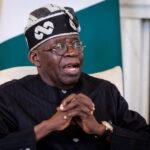
In his 22 October 2026 article, Olu Fasan raises a legitimate question: what happens to the Yoruba after President Bola Ahmed Tinubu leaves office? The concern itself is reasonable. But the conclusions he reaches rely on selective assertions and broad ethnic claims that do not stand up to close examination.

Fasan contends that Tinubu has presided in a Yoruba-centred manner, that the Yoruba have largely set aside their tradition of political accountability because one of their own is in Aso Rock, and that the group may forfeit the moral standing to challenge future governments. Ethnic bias and selective silence should indeed be criticised. But the Yoruba are not a political party, and no entire people can fairly be made collectively answerable for the decisions of a single administration.
**1. The Yoruba predate Tinubu and will outlive his presidency**
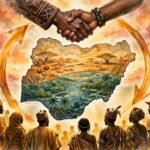
The future of a civilisation cannot be tied to the term of one president. Yoruba political structures, trading systems, and intellectual traditions existed centuries before modern Nigeria. The Oyo Empire, for example, developed advanced restraints on royal authority through the Oyomesi council. City-states such as Ijebu and Egba also sustained their own separate institutions. In the Western Region, Chief Obafemi Awolowo’s government introduced free primary education, led regional industrialisation, and set out a clear federalist programme that continues to influence national debate.
From 1999 to 2023, Nigeria spent sixteen years under non-Yoruba presidents. Throughout that period, the South-West maintained its commercial vitality, educational prominence, and political relevance. No ethnic group secures its future through indefinite control of the presidency. Nigeria belongs equally to all its citizens. The Independent National Electoral Commission states that the next presidential election is set for 16 January 2027. Whether Tinubu leaves office then or in 2031, the Yoruba will remain.
**2. The 80 per cent figure has not been substantiated**
Fasan’s most serious allegation is that people with Yoruba-sounding names occupy at least 80 per cent of key federal positions in the economy, security, and justice sectors. That is a grave claim. Yet in the published article, he supplies neither a verifiable list of the offices included nor a transparent method for determining ethnicity or the relevant time frame. As a result, the figure should be treated as an unverified assertion rather than an established fact.
A name does not equal ethnicity. Nigeria’s federal leadership includes the Vice-President, the entire cabinet, service chiefs, heads of regulatory agencies, and constitutionally created commissions. Section 14(3) of the 1999 Constitution provides that the composition of the federal government must reflect Nigeria’s federal character so that no small number of states or ethnic groups dominates it. Section 147(3) also requires the President to appoint at least one minister from each state. Those are constitutional duties, separate from arguments about what may be politically desirable or convenient.
If there are real concentrations in sensitive offices, they should be demonstrated with evidence and corrected. The proper standards remain competence and constitutional balance, not the ethnic background of the appointing president.
**3. Backing a president is not the same as abandoning accountability**
It is true that some Yoruba elites have spoken less forcefully under Tinubu than they did under earlier presidents. Partisan attachment and ethnic loyalty can soften criticism; that is real and regrettable. But political inconsistency is not peculiar to one group or one government. Across Nigeria’s history, backers of successive administrations have interpreted national developments through both regional and partisan filters.
The Yoruba are not politically monolithic. Journalists, activists, politicians, and ordinary citizens still argue over Tinubu’s performance. The fact that Fasan himself has published a critical article is evidence that dissent has not disappeared. Hostility toward criticism is a national problem that needs correction; it is not proof of shared ethnic culpability.
No Nigerian should face threats for criticising a president from their own ethnic group. By the same token, no Nigerian should be presumed dishonest simply for supporting policies they consider necessary. Accountability requires room both to criticise and to defend, so long as both are grounded in fact.
**Judging the record by evidence**
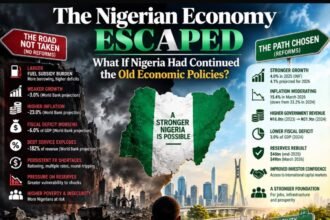
Tinubu’s economic measures fuel subsidy removal, exchange-rate unification, and fiscal restructuring were aimed at long-standing distortions that had burdened public finances and encouraged arbitrage. But the fact that such reforms may have been necessary does not mean that every design choice or the sequence of implementation was correct. High living costs, and the strain on households and small businesses, remain valid grounds for scrutiny. The test of success should be productivity, real incomes, employment creation, food affordability, and service delivery—not the president’s ethnicity or the zeal of his supporters.
Claims of quiet regionalisation must likewise be examined through constitutional procedure. Any major restructuring of Nigeria requires the process set out in Section 9 of the Constitution, involving the National Assembly and the necessary approval of state legislatures. Calls for stronger federalism, clearer fiscal responsibility, and better security arrangements are not uniquely Yoruba; they have circulated across the federation for decades. Constitutional requirements must not be confused with arguments about political desirability.
The 2023 Muslim-Muslim ticket properly raised concerns about political sensitivity in a multi-religious society. The Constitution does not mandate that candidates come from different faiths. The relevant standards remain fairness in governance, protection of religious liberty, and equal treatment of citizens, whatever the personal identities of those in office.
Separatist agitation, like other expressions of political dissatisfaction, grows out of grievance, insecurity, and economic hardship. Its visibility may rise or fall with changing political conditions. The Yoruba cannot be treated as identical with every activist who claims to speak in their name, just as no other nationality can be reduced to every movement active in its region.
**What remains after Tinubu**
The Yoruba will go on taking part in Nigeria’s democratic life, just as they did before 2023. Their future will rest on education, enterprise, strong institutions, effective state governments, and constructive relationships across the country not on permanent residence in Aso Rock or lasting control of strategic federal appointments.
Political accountability must never hinge on who holds the presidency. It is dishonest to denounce a policy under one leader and applaud the same policy under another purely because of ethnicity. It is just as wrong to excuse failure or misrule because the president comes from one’s own community. The same standard must apply to Buhari, Jonathan, Obasanjo, Tinubu, and every president yet to come.
The true danger is not the period after Tinubu. It is the conversion of national accountability into an ethnic question. The Yoruba are not in the dock because Tinubu is president. Nor is Tinubu beyond scrutiny because he is Yoruba. A people’s dignity and political credibility depend on the institutions they build, the opportunities they expand, and the consistency of the standards they maintain before, during, and after any individual presidency.
A presidency lasts four or eight years. The contribution and credibility of a people must last for generations.
By Otunba (Dr.) Abdulfalil Abayomi Odunowo
Public Affairs Commentator and Advocate for Good Governance, Accountability and National Development.