By Ahmed Afolabi Muritala
A university certificate is important. It shows that a student has completed a course of study and acquired knowledge in a particular field. However, as competition for jobs and opportunities continues to grow, one question deserves attention: is a certificate alone enough to prepare Nigerian students for life after graduation?
Every year, thousands of students enter Nigerian universities with the hope of graduating and building a better future. They attend lectures, write examinations, complete assignments and work towards obtaining their degrees. For many, graduation is the main goal. Yet, the real challenge often begins after leaving the university.
Some graduates discover that the knowledge they gained in the classroom is not enough to meet the demands of the workplace. Others struggle to identify opportunities, communicate their ideas, work with people or turn what they have learnt into practical solutions.

This does not mean that university education is useless. Rather, it raises an important question about whether students are getting everything they need to prepare for life beyond the classroom.
What the Numbers Tell Us
The challenge of preparing graduates for employment is one that Nigeria cannot afford to ignore.
According to the National Bureau of Statistics (NBS), the unemployment rate among people with post-secondary education was 9.0% in the first quarter of 2024, compared with the national unemployment rate of 5.3%.
These figures require careful interpretation. The post-secondary education category covers more than university graduates alone, and the figures do not prove that a lack of practical skills is the cause of unemployment. However, they show why the relationship between education and employment deserves serious attention.
A university degree should open doors to opportunities, but obtaining one does not automatically guarantee employment or the ability to succeed in a chosen career.
The National Universities Commission (NUC) has also taken steps to address graduate employability. Through its Labour Market Observatory Project and its work on a graduate employability framework, the commission has recognised the importance of connecting university education with labour market needs.
These efforts raise an important point: education should not only help students pass examinations. It should also prepare them to use their knowledge in real-life situations.
Learning Beyond the Lecture Hall
One of the problems students may face is spending most of their university years concentrating on lectures and examinations without making enough effort to develop practical skills.
Classroom learning remains essential. Students need a strong understanding of their subjects before they can apply that knowledge effectively. However, some lessons become more meaningful when students have the opportunity to practise what they have learnt.
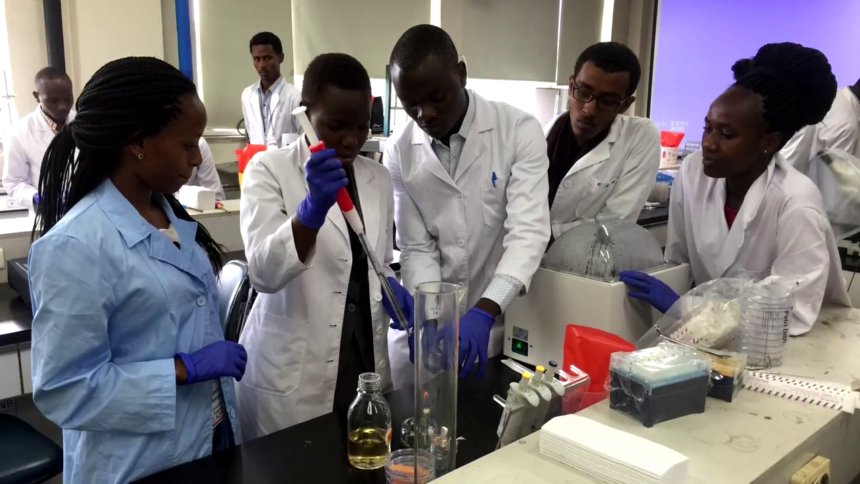
For example, a student studying Criminology and Security Studies may learn about crime prevention, criminal behaviour and security management in class. Practical exposure through supervised fieldwork, research, relevant internships and community safety projects can help the student understand how these ideas apply to real situations.
The same applies to students in other fields. An education student can gain experience through teaching practice. A journalism student can learn by reporting real events, conducting interviews and writing for publication. A student of computer science can build projects that demonstrate technical ability.
These activities do not replace classroom education. They help students connect what they learn with the problems they may face outside the university.
Universities should therefore continue to improve practical training, internship opportunities, career guidance and partnerships with relevant organisations. Where possible, students should have access to equipment, facilities and supervised projects that allow them to practise their skills.
What Students Can Do for Themselves
Although universities have an important responsibility, students also have a role to play in their own development.
University life offers opportunities to learn outside the classroom. Students can join relevant associations, participate in competitions, volunteer with credible organisations, attend useful training programmes and take part in projects that address real problems in their communities.
These experiences can help them develop communication, teamwork, leadership, problem-solving and organisational skills.
For instance, a student who volunteers in a community project may learn how to work with people from different backgrounds, organise activities, manage time and respond to unexpected challenges. A student involved in campus journalism may improve research, writing, interviewing and critical-thinking skills.
Such experiences can also help students discover their interests and understand the kind of work they want to pursue after graduation.
However, students must be careful not to join every organisation simply to collect certificates. Participation is valuable when it provides an opportunity to learn, contribute and take responsibility.
A certificate from a training programme or volunteering activity may be useful, but the experience gained and the work completed are equally important. Students should be able to explain what they learnt, the challenges they faced and how they contributed to the outcome.
The aim should not be to fill a CV with activities. It should be to build the ability to do meaningful work.
Volunteering Is More Than Collecting Certificates
Volunteering deserves particular attention because it gives students an opportunity to contribute to society while learning from real experiences.
Through community service, students can become more aware of the challenges people face beyond their campuses. They may encounter issues relating to education, health, environmental protection, poverty, safety and the welfare of vulnerable groups.
Working on these issues can help students understand that knowledge becomes more valuable when it is used to improve lives.
However, volunteering should not be treated only as a way to strengthen a CV. Its purpose is also to serve people and communities. Students should approach it with a willingness to learn, contribute and remain responsible for the tasks they accept.
At the same time, organisations that involve student volunteers should provide proper guidance and meaningful responsibilities. Students should not be used merely to fill attendance lists or appear in photographs. They should have opportunities to participate in planning, problem-solving and evaluating the results of their work.
When volunteering is approached seriously, it can benefit both the community and the student.
Universities, Employers and Government Must Play Their Parts
It would be unfair to place the entire responsibility on students. Some students want to gain practical experience but have limited access to the necessary facilities, funding, professional networks or internship opportunities.
Universities should strengthen their relationships with employers, professional bodies and community organisations. They should also make career guidance more accessible and help students understand the skills expected in their chosen fields.
Employers can contribute by providing internships, mentoring opportunities and entry-level roles that allow young people to gain experience. They should also consider the potential of applicants rather than judging them only by the length of their work history.
Government and relevant institutions have a responsibility to support quality education, improve access to training and create an environment where businesses and organisations can provide more opportunities for young people.
These responsibilities are connected. Students need opportunities to learn, universities need to prepare them adequately, and employers need to create pathways through which they can gain experience.
No single group can solve the problem alone.
Preparing for Life After Graduation
Students should begin preparing for life after graduation before their final year. Waiting until after collecting a certificate to think about practical skills, career opportunities and personal development may leave them struggling to catch up.
This preparation does not mean abandoning academic work. Students must still attend lectures, study seriously and work towards good results. Instead, they should find a reasonable balance between academic achievement and activities that develop their abilities.
They can start by identifying skills relevant to their interests, seeking genuine learning opportunities and working on small projects that demonstrate what they can do. They can also learn from people with experience in their chosen fields and ask questions about the challenges they may encounter.
Not every student will have the same opportunities or follow the same career path. Some may enter paid employment, while others may pursue further education, entrepreneurship, public service or community development.
Whatever path they choose, the ability to communicate, solve problems, work with others and apply knowledge can make a difference.
Conclusion
A university certificate remains valuable, and it should never be dismissed. For many professions, a recognised qualification is essential. However, obtaining a degree should not mark the end of a student’s learning and development.
Nigerian universities must continue to prepare students for the realities of work and society. Students must also take responsibility for developing their skills, seeking useful experiences and understanding how their knowledge can be applied beyond examinations.
The question is not whether certificates matter. They do. The question is whether students are making the most of their university years and whether the education system is giving them enough opportunities to put their knowledge into practice.
A certificate may show what a student has studied, but what that student can do with the knowledge is another important part of the story.
References
National Bureau of Statistics (NBS). Nigeria Labour Force Survey, Q1 2024.
Read the report
National Universities Commission (NUC). Labour Market Observatory Project.
View the project
National Universities Commission (NUC). NUC, CoL Host Validation Workshop on Graduate Employability Framework.
Read the report
Photo Credit
Wikimedia Commons.