
By Okoi Obono-Obla
The South-West Battleground:
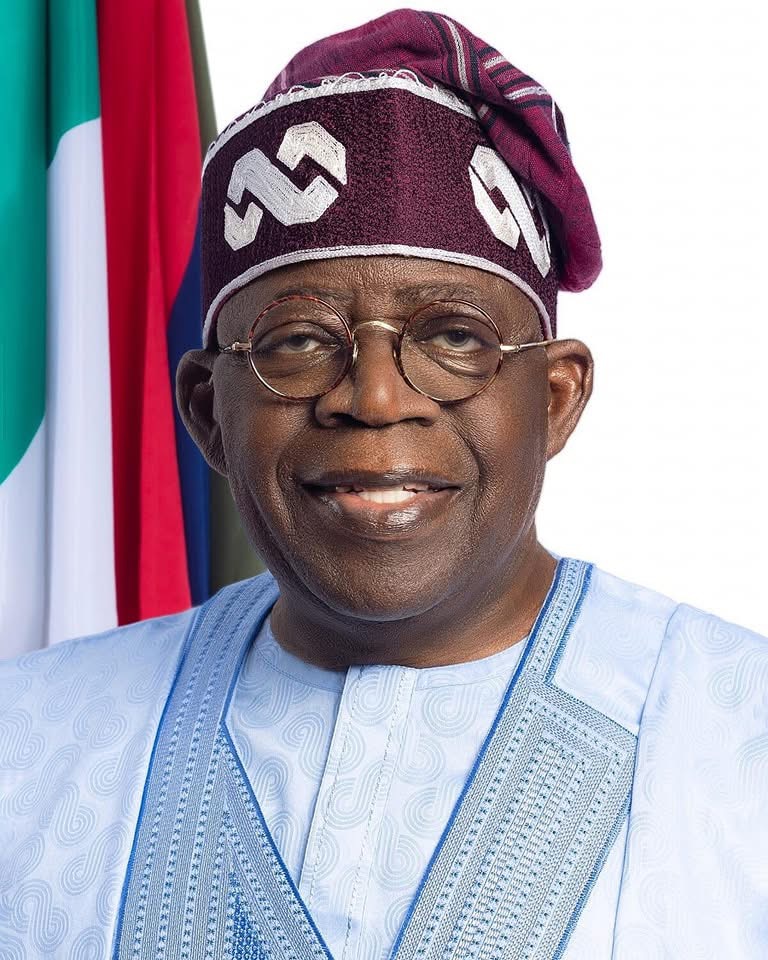
The South-West geopolitical zone — Lagos, Oyo, Ondo, Ekiti, Osun, and Ogun States — stands as one of Nigeria’s most politically sophisticated regions. It boasts the highest literacy rate in the country and the second-largest voter population after the North-West. Economically vibrant and socially influential, it is the home region of President Bola Ahmed Tinubu, whose political legacy defines much of the zone’s current dynamics.
This analysis draws from the final list of Senate candidates released by INEC on 12 September 2026, providing insight into how the APC, APM, Accord, ADC, and NDC are positioned ahead of the Presidential and Senate elections on 16 January 2027.
Tinubu’s Political Roots:
Tinubu’s influence in the South-West is unmatched. As Governor of Lagos State (1999–2007) and a former Senator (1992–1993), he built a formidable political network that evolved into the defunct Action Congress of Nigeria (ACN) — which merged with the ANPP and CPC in 2013 to form the All Progressives Congress (APC).
“Tinubu’s political architecture is the backbone of the APC’s dominance in the South-West.”
His legacy ensures that the APC’s presence in the region is not just institutional but deeply cultural — woven into the political consciousness of the electorate.
Governors as Power Brokers:
Governors in the South-West are the levers of power, controlling local government structures, traditional institutions, and grassroots mobilization. The region’s traditional system is highly centralized and monarchical, giving governors significant influence through royal endorsements.
| State | Governor’s Party | Senate Candidate Landscape (INEC list, Sept 2026) | Likely Dynamics |
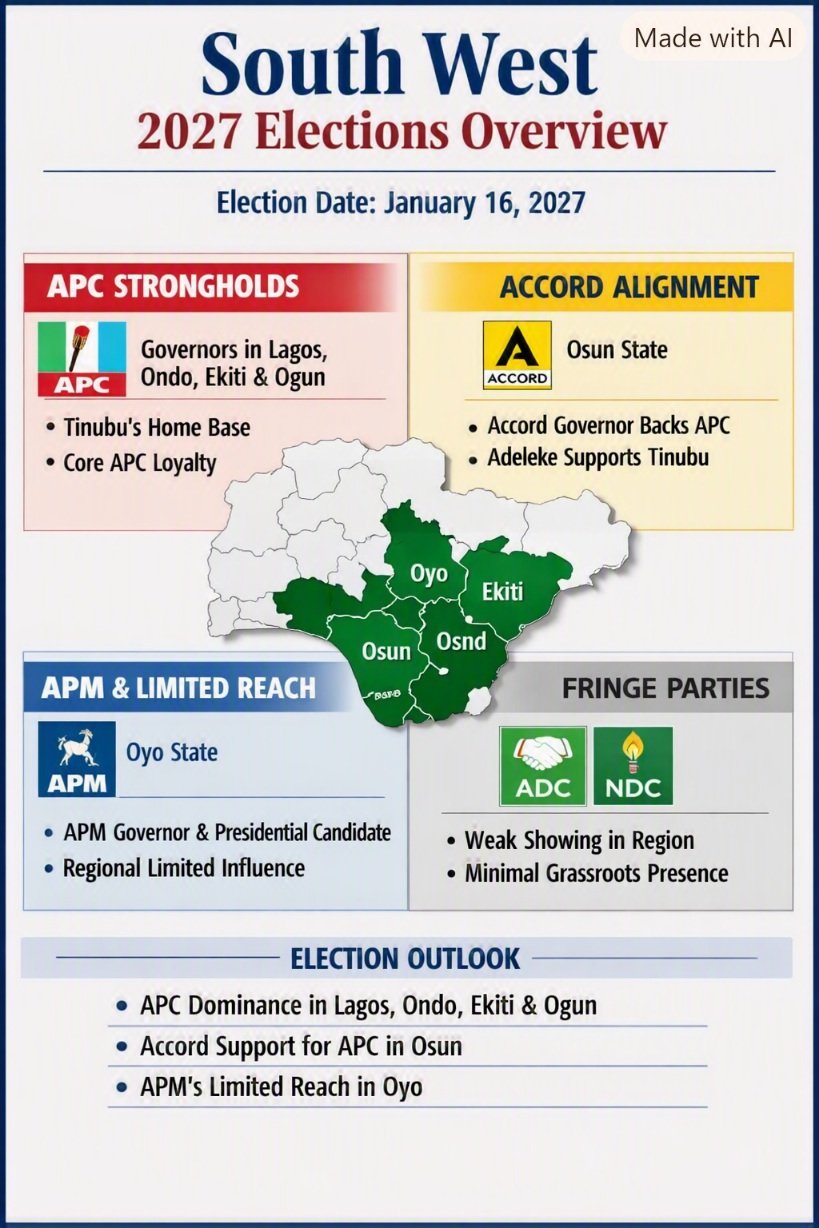
| Lagos | APC | APC, ADC, NDC candidates | Tinubu’s home base; APC dominance reinforced by deep party machinery and urban mobilization |
| Oyo | APM | APM, APC, ADC, NDC candidates | APM governor is also a presidential candidate; may split votes but lacks regional spread |
| Ondo | APC | APC, ADC, NDC candidates | APC governor ensures strong grassroots control; opposition parties marginal |
| Ekiti | APC | APC, ADC, NDC candidates | APC governor consolidates Tinubu’s influence; Senate races likely mirror presidential strength |
| Osun | Accord | Accord, APC, ADC, NDC candidates | Governor Adeleke (Accord) won August 2026 election; declared support for Tinubu, boosting APC’s presidential prospects |
| Ogun | APC | APC, ADC, NDC candidates | APC governor maintains strong Tinubu alignment; Senate contests favor incumbency |
Fringe Parties and Structural Realities:
The ADC and NDC remain fringe players in the South-West. The NDC did not field a candidate in the Osun gubernatorial election (August 2026). The ADC candidate scored only 15,000 votes, underscoring its limited reach.
These parties lack the grassroots networks and traditional alliances that drive South-West politics. Their presence in the Senate races is symbolic rather than competitive.
Cultural and Electoral Context:
The South-West’s political sophistication means voters are issue-aware, yet governors’ influence remains decisive. The traditional monarchical system — with Obas and chiefs commanding local respect — amplifies gubernatorial control.
“In the South-West, the palace and the party office often speak with one voice.”
The simultaneous Presidential and Senate elections will likely see straight-ticket voting, with the APC benefiting from Tinubu’s personal popularity and the governors’ mobilization machinery.
Outlook:
The APC’s dominance in Lagos, Ekiti, Ondo, and Ogun, combined with Accord’s pro-APC stance in Osun and APM’s limited reach in Oyo, gives Tinubu’s party a commanding advantage in both Senate and Presidential contests. While the South-West’s high literacy and political sophistication could encourage diverse voting patterns, the governors’ control of local governments and traditional institutions will remain the decisive factor.
“The South-West is Tinubu’s political heartland — and in 2027, its governors will be the custodians of his legacy.”
Conclusion:
The January 16, 2027 elections in the South-West will be less about party competition and more about consolidation. With four APC governors, an allied Accord governor in Osun, and the cultural weight of the traditional institution behind them, President Tinubu is poised to sweep both the presidential and senatorial polls in the zone. The opposition, fragmented and lacking grassroots depth, is unlikely to alter this trajectory.