Great Imo Jonathan
Recently the conference of Concerned Nigerians met in Abuja to discuss the restructuring of Nigerian state into what they termed ethno linguistic indignity regions. But what the organizers ended up doing was to try to sustain after the civil war propaganda and used the opportunity to push a stupid agenda even outside their defined basis for restructuring. The Igbo delegation rejected it because they saw through their stupid agenda. Instead of correcting themselves, the anti Igbo agenda agents returned to their post civil war propaganda mood and started pushing distorted history that defiled facts and logic.
To start with, they defeated the agenda of their conference by going against the definition of ethno linguistic-iindignity. Ethno-linguistic identity often referred to in these discussions as ethno-linguistic-indiginity, affinity or indigenous connection means grouping people together based on shared native language, culture, history, and ancestral roots. But they deliberately reduced Igbo to south east, an unofficial artificial creation called geopolitical zone meant for pure ease of administration of Nigeria instead of grouping the entire Igbo communities into a region as they did others.
Meanswhile there are Igbo-speaking populations in areas outside the official South-East zone, such as Anioma in Delta State and parts of Rivers State and north central Nigeria that share the exact same language, core culture, and ancestry as Igbos inside the South-East.
So the core objection raised by Igbo delegates (such as Prof. Obasi Igwe and Dr. Katch Ononuju) at the Abuja restructuring conference was that while other major groups like the Yorubas had their wider linguistic and regional space comprehensively mapped, the proposed configurations arbitrarily restricted the “Igbo region” strictly to the five South-East states. Leaving out contiguous Igbo-speaking areas in the South-South and North-Central. Which contradicted the conference’s own stated foundation of using pure ethno-linguistic affinity and territorial connection as the template for regional autonomy.
The story of Ndi Igbo did not start in 1960, and it certainly did not start in 1967. Long before the name “Nigeria” was coined, Igbo communities already had organized kingdoms, trade networks, and a distinct identity that stretched across the region then known as the Bight of Biafra. Even in the Nigerian government’s official documents Igbo civilization is the oldest in Nigeria. Why the attempt ro now act as if people are ignorant of what was?
There were reigning Igbo kingdoms before Nigeria, including Nri and Aro.
Before the 1800s, two major Igbo institutions shaped life in the eastern region. The Nri Kingdom which is the oldest kingdom in present-day Nigeria, dating back to around the 9th century. Nri ruled through spiritual and moral authority, not conquest. Nri priests and institutions influenced communities across Igboland and beyond. Their reach was respected for resolving disputes and setting taboos.
Then there was the Aro Confederacy. From the 16th to the 19th century, the Aro built a powerful trade and judicial network. Using the Aro oracle at Arochukwu and a network of Aro settlements, they connected markets from the Niger-Benue confluence down to the coast of the Bight of Biafra. This was not the “Biafra of 1967.” This was the Bight of Biafra, the name European traders gave to the coastal area from the Niger Delta to Cameroon, where Aro and other Igbo traders were major players. If the British agreed with James Beale, an Igbo educated British military officer’s proposal in 1865 there would have been a self governing pure independent nation of Igbo country long before the creation of this suffocating state called Nigeria.
So yes, long before Lugard’s amalgamation in 1914, Igbo political and commercial systems were already esistibg in large territories and trading across West and Central Africa. Even modern day Guinea Bissau there are indigenous Igbos occupying the Bioko region and are officially recognised in the country as Igbos. The story of the Igbos in the Caribbean and Americas is story for another day.
It is important that people know this because many don’t even know how they became Nigerians in the first place. Igbos are the first indigenous people to Nigeria, some others came many years after. Some from, Egypt, some from Ghana, some from chad, some from Congo and Cameroon. The Fulani for example started migrating into what is today northern Nigeria as pastoralists beginning from 11th to 14th century. Then in 1804 the Fulani jihad occurred.
But what is important is that the day President Abraham Lincoln issued the Emancipation Proclamation on January 1, 1863, everyone that had settled anywhere in the world either through migration or slavery became legally indigenous to the land. That is how migrants and slaves became automatically indigenous to the space they occupied, including in America.
So Ndi Igbo are not only indigenous in the 5 South East states. Indigenous settlements of Igbo communities are found in 13 states across Nigeria. In South East: Abia, Anambra, Ebonyi, Enugu, Imo. In South South: Delta, Rivers, Cross River, Akwa Ibom and Edo States. In Delta they are Anioma people found in their communities like Asaba, Ibusa, Ogwashi-Uku, Kwale, etc. In Rivers they are Obigbo, (Oyigbo), Port Harcourt (Igwuocha), Ekpeye, Ikwerre, Opobo, Ogba, Ndoni, Egbema. Even many of those in present day kalabari like Dokubo Asari are Igbo, up to eighty percent of them. Even in Bayelsa State, there are Oruama people who are indigenous Igbos in the state. In Akwa Ibom we have Obolo/Ibeno Igbo-speaking communities. In Cross River we have Osokom, Utughugwu Igbo communities. Then we have the Igbanke (Igboakri) in Edo State.
In the North Central we have indigenous Igbo communities in Benue, Ado, Oju, and border towns. While in Kogi there are indigenous Igbo-speaking communities in Igalamela, Ankpa, and Lokoja area.
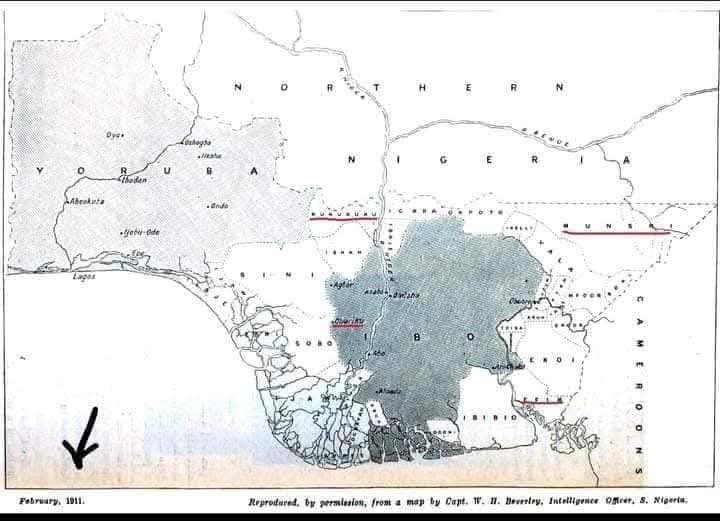
We know what Igbo land is and we know the map of Igbo land from 1800. The Willinks Commission appointed by the British colonial government in 1957, formally mapped out Nigeria’s major and minority ethnic territories. Led by Sir Henry Willink, the commission was tasked with investigating the growing fears of minority ethnic groups who worried they would be politically dominated by the three majority groups, the Igbo in the East, the Yoruba in the West, and the Hausa-Fulani in the North, once Nigeria gained independence.The Willinks Commission 1958 final report produced five historic maps to visually delineate regional and tribal boundaries.
Even though some of our original Igbo territories were seeded to some others, we accepted it but we hold that final map sacred because it is internationally recognised and nobody can further tamper with our land. The same goes for the West African Court of Appeal final Judgment of 1958, on what was Igbo territories in current day Rivers State. These documents are not for jokes, those are the only documents you can tender anywhere in international courts that is admissible. Don’t play with it and don’t argue with it because even if you fight wars you will return to those documents for final settlement in the world court. So don’t be stupid.
These are regarded as the final authoritative ethnographic maps left behind by the British colonial administration before Nigeria’s independence in 1960. They include the map of Nigeria Showing Major Ethnic Groups. This clearly marked the core territories of the Igbo, Yoruba, and Hausa-Fulani across the three federating regions. Those detailed maps documented distinct territories for smaller minority groups, such as the Ibibio, Ijaw, Edo, Urhobo, and Tiv, who were advocating for separate regional states to prevent marginalization.
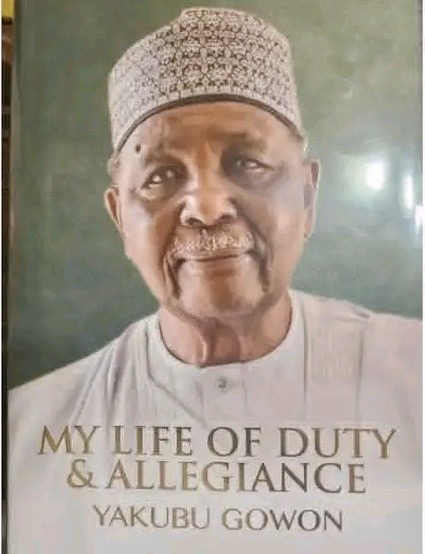
Gowon and his coconspirators only created states, they did not create the people. Many of those who tried to hide or deny their identity during and after the civil war did so to preserve their lives. The attendant propaganda that followed is what also kept them in check. But they should know that they are better off with their brothers in one region because in future those that are deceiving them today will take advantage of them and they will end up like ethnic Russians in eastern Ukraine who ran to follow strangers to form a country and are now dying in the hands of those they denied their brothers to follow. History always repeat itself.
This spread shows that Igbo land and Igbo people have always been both coastal and inland rooted.
Yet in the south east Igbos are not the only indigenous people there. It is important to state clearly Ndi Igbo are not the only indigenous people of the South East.
The Igala people have indigenous communities in parts of present-day Enugu and Kogi border areas. Ndi Igbo do not claim Igala land or identity, even though they have shared history as brothers. Igboland has always been a place of neighbors, Ibibio, Ijaw, Ogoni, Igala and coexistence has been part of their history.
Modern Igboland is richly endowed. The core South East states sit on massive natural resources. The South East holds the largest proven gas deposits in Nigeria, and Nigeria itself has the largest gas reserves in Africa. The Anambra Basin, Imo, Abia, and parts of Enugu are gas-rich.
Oil has long been found in commercial quantities in Abia, Imo, and Anambra. Even before the fake boundary adjustment of 1976 when part of old Imo communities of Obigbo and Egbema were taken into Rivers state because oil were found in those Igbo communities. The idiots governing Nigeria then thought they were punishing Ndi Igbo as a people but they were not wiser than God.
Solid minerals abound in Igbo land including Coal in Enugu, limestone in Ebonyi and Nkalagu, lead/zinc in Ebonyi and Abakaliki, clay, salt, iron ore, and silica sand across the region.
With agriculture, trade, industry, and these resources, the economic argument is simple: Igboland has the human capital and the natural resources to be self-sustaining. The claim is not about needing “anything from anybody.” It’s about not letting any idiot define who we are. We have the capacity to build and contribute from a position of strength.
From the spiritual leadership of Nri, to the trade diplomacy of Aro, to the 13 states where Igbos are indigenous and work today, the Igbo story is one of continuity, adaptation, and enterprise.
It is a story that predates Nigeria, helped build Nigeria, and continues to shape Nigeria. Acknowledging that history and recognizing the resources and contributions of Igboland is key to understanding Nigeria’s past and planning its future.
Because any Nigeria that works must be one where all its parts, with all their history and resources, are respected.
Great Imo Jonathan