By Ibrahim BUNU
ibrahimbunu2520@gmail.com
For those who sincerely do not understand what actually happened in Osun State yesterday—and why the outcome matters far beyond Osogbo—I believe we need to look beyond the headline.
This was not merely a governorship election.
It was a political signal about 2027.
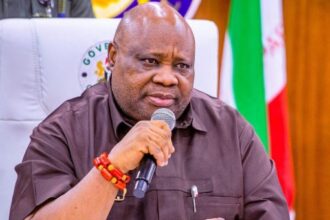
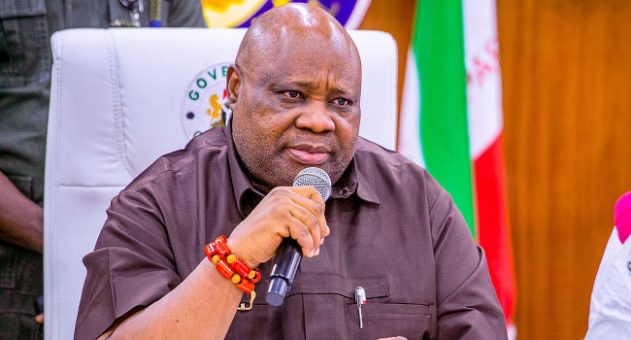
Governor Ademola Adeleke has won re-election on the platform of the Accord Party, defeating APC candidate Bola Oyebamiji and ADC candidate Najeem Salam.
The final figures are striking:
* Ademola Adeleke — Accord: 511,067 votes
* Bola Oyebamiji — APC: 444,815 votes
* Najeem Salam — ADC: 17,180 votes
INEC declared Adeleke the winner after he won 19 of Osun’s 30 local government areas, while Oyebamiji won 11. (Channels Television)
But the most politically consequential development may not be the 66,252-vote margin between Adeleke and Oyebamiji.
It may be what Adeleke does with the political capital he has just acquired.
And that takes us directly to 2027.
FIRST, LET US UNDERSTAND THE NUMBERS
Adeleke’s 511,067 votes and Oyebamiji’s 444,815 votes add up to:
955,882 votes.
That is almost one million votes.
But we should be intellectually honest:
It would be wrong to say that Tinubu has automatically acquired one million votes from Osun.
Elections do not work that way.
A governorship vote is not automatically transferable to a presidential candidate.
People vote differently at different levels.
A voter can support Adeleke for governor and vote for Tinubu for president—or support Adeleke for governor and vote for somebody else for president.
Therefore, Adeleke’s 511,067 votes cannot simply be stamped “Tinubu votes.”
But that does not make Adeleke’s political value to Tinubu insignificant.
Quite the opposite.
It may make it more interesting.
THE REAL VALUE IS NOT VOTE TRANSFER. IT IS POLITICAL ALIGNMENT.
This is where many political observers are missing the bigger picture.
Adeleke has now demonstrated that he possesses something every presidential campaign desperately wants:
a functioning political machine with demonstrated electoral capacity.
He has just mobilised more than half a million votes in a competitive statewide election.
He has defeated the APC candidate.
He has demonstrated the capacity to win across 19 LGAs.
And immediately after his victory, he reaffirmed his support for President Bola Ahmed Tinubu’s 2027 re-election bid. (The Street Journal)
That changes the political conversation.
The question is no longer:
“Can Adeleke’s votes simply be transferred to Tinubu?”
The better question is:
“Can Adeleke’s political structure, influence and relationship with the electorate be aligned with Tinubu’s 2027 project?”
That is a much more sophisticated question.
And the answer could have significant implications.
THE APC DID NOT NECESSARILY NEED TO “OWN” ADELEKE
This is where the political chessboard becomes fascinating.
Some people approached the Osun election as though the APC’s only objective was to defeat Adeleke.
I am not convinced that is the best way to understand the broader strategic picture.
Of course, every party wants to win the election it contests.
The APC wanted its candidate, Bola Oyebamiji, to win.
But politics is not always a single-layer game.
There is the immediate contest.
And there is the larger political architecture.
2026 is the immediate contest.
2027 is the strategic contest.
And in that strategic contest, the emergence of Adeleke as a victorious governor who openly supports Tinubu creates an unusual political configuration.
The man who defeated the APC in Osun is simultaneously saying:
“I support Tinubu for 2027.”
That is politically significant.
THE 444,815 APC VOTES ARE ALSO IMPORTANT
There is another part of the equation that should not be ignored.
Oyebamiji secured 444,815 votes.
Those votes represent an established APC electoral base in Osun.
They are not hypothetical.
They are not opinion-poll numbers.
They are actual votes cast in a real election.
The APC therefore leaves the Osun governorship election with something important:
a measurable electoral floor.
But the strategic challenge for APC is to determine how much of that 444,815 can be retained, expanded and converted into presidential votes in 2027.
Because the governorship election has exposed the battlefield.
It has identified strongholds.
It has identified weaknesses.
It has identified turnout patterns.
It has identified local political structures.
And, most importantly, it has identified the distance between the APC and the dominant candidate.
That is valuable intelligence for 2027.
AND THEN THERE IS ADC
Now let us talk about the elephant that did not quite enter the room.
ADC.
Najeem Salam scored only 17,180 votes.
That is not an insignificant number in absolute terms, but politically, compared with Adeleke’s 511,067 and Oyebamiji’s 444,815, it places ADC in a distant third position in this particular contest. (Channels Television)
And that matters because the ADC has increasingly positioned itself as one of the major opposition vehicles ahead of 2027.
Osun therefore offered ADC an opportunity to demonstrate whether its national political momentum could immediately translate into a serious statewide electoral challenge.
It did not.
At least not in Osun.
That does not mean ADC is finished.
Far from it.
A governorship election cannot, by itself, determine the outcome of a presidential election.
But it does provide a useful warning:
National political excitement is not the same thing as local electoral machinery.
The ADC may have prominent names.
It may have an emerging coalition.
It may generate enormous media attention.
But 2027 will ultimately be fought at polling-unit level.
And Osun has just reminded everyone of that.
THIS IS WHY BASHIR AHMAD’S MOCKERY OF ADC MATTERS
Bashir Ahmad’s mockery of the absence or weakness of the opposition platform on the Osun ballot can therefore be understood within a broader 2027 argument.
The important question is not whether ADC exists.
It obviously does.
The question is whether ADC can convert its national political narrative into millions of actual votes across thousands of polling units.
That is a completely different exercise.
Politics is not won on X.
It is not won on WhatsApp.
It is not won by the number of influential politicians announcing support.
It is won when someone physically enters a polling unit, accreditation happens, a ballot is cast, the result is recorded, and the vote survives the entire electoral chain.
That is the difference between political noise and political power.
NOW COME BACK TO TINUBU’S 11 MILLION
This is where the Osun story becomes even more interesting.
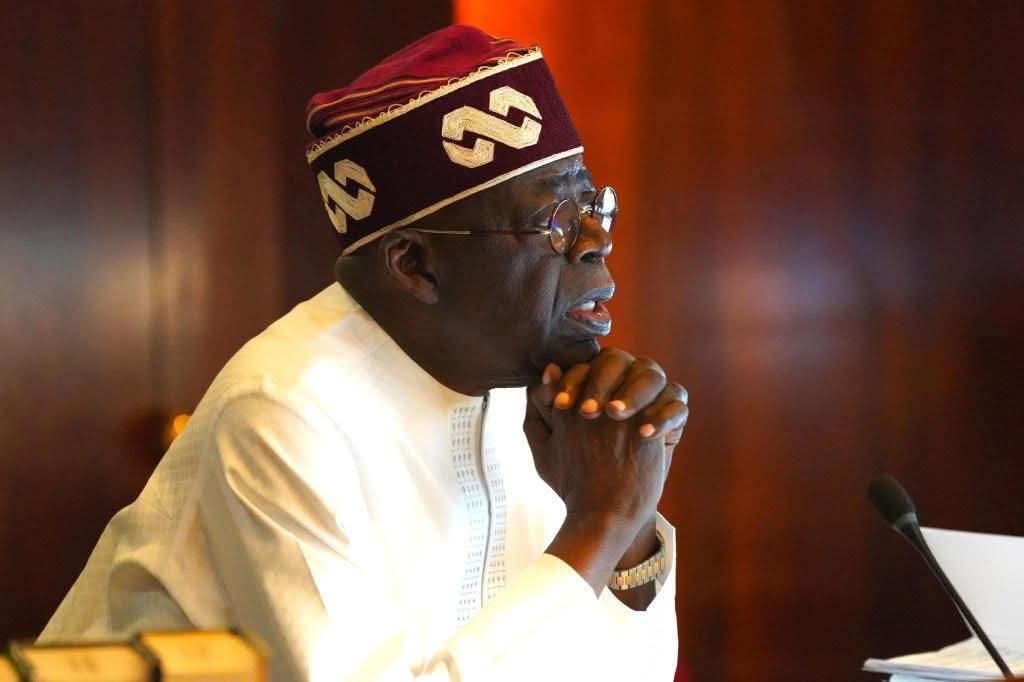
President Tinubu secured 10,999,162 votes in the APC’s nationwide direct presidential primary, according to the State House. The APC said 12,643,316 members were registered, 11,069,746 were accredited and 11,015,665 voted. (State House)
Those figures should not be treated as equivalent to votes in the 2027 general election.
They are party-primary votes, not general-election votes.
That distinction matters.
The same person who votes for a candidate in a party primary is not necessarily going to vote for that candidate in the general election.
There will be other candidates.
There will be opposition coalitions.
There will be religious calculations.
There will be regional calculations.
There will be turnout differences.
There will be voter apathy.
There will be campaign dynamics.
There will be economic conditions.
And there will be the credibility of the electoral process itself.
So the 11 million should be understood principally as a measure of APC mobilisation and organisational capacity, not as 11 million guaranteed presidential votes.
That is the intellectually defensible way to read it.
THE OSUN FORMULA FOR 2027 IS THEREFORE MORE COMPLICATED—and MORE INTERESTING
Consider the political mathematics.
Tinubu has the APC machinery.
Adeleke has demonstrated electoral strength.
Oyebamiji has demonstrated an APC base of almost 445,000 votes.
ADC has demonstrated that its national profile has not yet translated into comparable strength in this particular state election.
And Adeleke has now publicly aligned himself with Tinubu’s 2027 ambition. (The Street Journal)
That creates a fascinating strategic possibility.
Not automatic vote transfer.
Political convergence.
And political convergence is often more powerful than a simplistic arithmetic of votes.
THE MOST IMPORTANT QUESTION: WHAT DOES ADELEKE WANT?
This is where the real political game begins.
Adeleke is not a political novice.
He has just won re-election.
He has demonstrated considerable electoral strength.
He belongs to a major political family.
He controls a statewide political structure.
And he now has four more years of executive authority ahead of him.
If he genuinely remains committed to Tinubu’s 2027 re-election, then the relationship between Osun’s governor and the presidency could become politically significant.
But Adeleke will also have interests of his own.
He will want federal cooperation.
He will want development projects.
He will want political space.
He will want respect from the centre.
And he will want to preserve his own political relevance.
Therefore, the relationship should not be understood as:
Tinubu gets Adeleke’s votes.
It should be understood as:
Tinubu and Adeleke potentially enter a mutually beneficial political alignment.
That is far more realistic.
THE APC SHOULD NOT MAKE THE MISTAKE OF MISREADING ADELEKE’S VICTORY
There is a temptation within partisan politics to look at Adeleke’s victory and simply conclude:
“APC lost Osun.”
That is true electorally.
But it is incomplete strategically.
The more important question is:
Why did APC lose, where did it lose, and what does it need to change before 2027?
The party now has detailed electoral intelligence.
It knows that it can produce nearly 445,000 votes in Osun.
It knows where its candidate performed strongly.
It knows where Adeleke dominates.
It knows the strength of the Accord structure.
It knows the limitations of ADC.
And it knows that Adeleke is no longer simply a PDP governor.
He has now won another term under Accord while simultaneously endorsing Tinubu for 2027.
That is a very different political equation from the one APC faced before the election.
AND THIS IS WHY 2027 WILL NOT BE A SIMPLE APC–ADC CONTEST
Anyone who believes 2027 will be determined simply by putting APC on one side and ADC on the other is underestimating Nigerian politics.
The real contest will involve:
alliances.
defections.
regional calculations.
governors.
grassroots structures.
religious considerations.
ethnic identities.
economic conditions.
candidate popularity.
incumbency.
party machinery.
turnout.
And above all:
who can build the broadest electoral coalition.
Osun has just provided one piece of that puzzle.
THE MOST DANGEROUS POLITICAL MISTAKE IS TO CONFUSE A RESULT WITH A GUARANTEE
Adeleke’s 511,067 votes are real.
Oyebamiji’s 444,815 votes are real.
ADC’s 17,180 votes are real.
But none of these numbers is a guaranteed presidential vote in 2027.
They are signals.
They tell us where political strength currently exists.
They tell us which structures are functioning.
They tell us which alliances are possible.
And they tell us which parties have work to do.
The smart political operator therefore does not say:
“Adeleke has delivered 511,067 votes to Tinubu.”
The smart political operator says:
“Adeleke has demonstrated the capacity to mobilise more than half a million Osun voters, and he has publicly aligned himself with Tinubu’s 2027 project. The strategic question is how much of that political capital can be converted into actual presidential support.”
That is the real story.
SO, WHAT ACTUALLY HAPPENED IN OSUN?
Adeleke won.
APC lost the governorship.
ADC came a distant third.
But politically, something more complicated happened.
Adeleke emerged stronger.
APC retained a substantial electoral base.
ADC failed to demonstrate comparable strength in this particular statewide contest.
And Tinubu received an explicit endorsement from the man who had just defeated his party’s candidate.
That is not a contradiction.
That is Nigerian politics.
Politics is rarely a straight line.
Yesterday’s opponent can become tomorrow’s ally.
Today’s defeated party can become tomorrow’s coalition partner.
And a governorship election can become a rehearsal for a much larger national contest.
THE FINAL LESSON FOR 2027
The APC should not celebrate Osun as though it has already won 2027.
ADC should not dismiss Osun as though it means nothing.
And Adeleke should not be treated as though his endorsement automatically transfers every Adeleke voter to Tinubu.
All three conclusions would be wrong.
The correct conclusion is much more strategic:
Osun has shown that political structures matter.
Personal popularity matters.
Governorship performance matters.
Party machinery matters.
Coalitions matter.
And endorsements matter—but only when they can be converted into organised electoral action.
The 2027 election will therefore not be won by whoever produces the loudest arithmetic.
It will be won by whoever can convert:
political relationships → grassroots structures → voter mobilisation → credible candidates → actual ballots.
That is the real lesson of Osun.
And that is why yesterday’s election was never just about who occupies the Osun Government House.
It was a warning, a signal and a rehearsal for 2027.
My, oh my.
The chessboard is getting crowded.
— Ibrahim BUNU
ibrahimbunu2520@gmail.com