By Okoi Obono-Obla
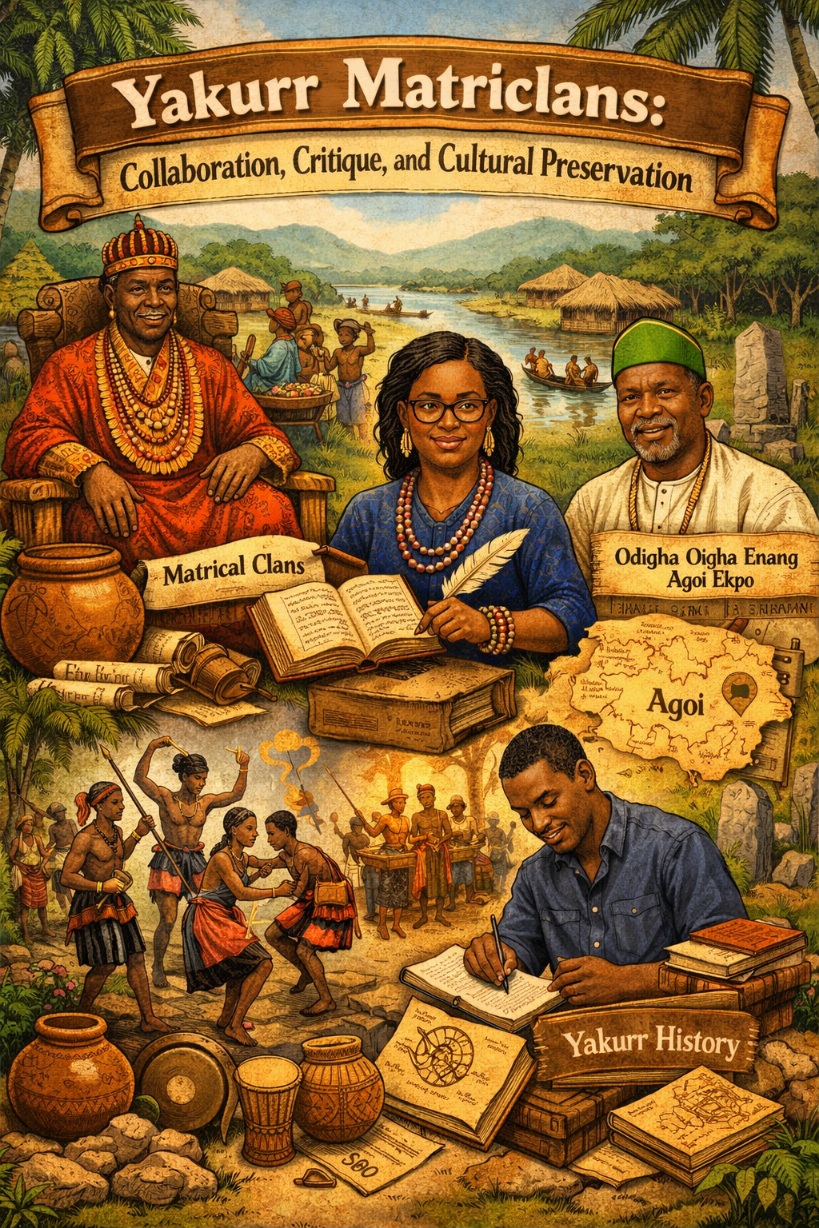
Yakurr Matriclans: Collaboration, Continuity, and Cultural Heritage:
I recently wrote a piece titled The Ninety-One Matriclans of Yakurr: A Cultural and Historical Overview published on chatafrik.com. Disappointingly, some readers—especially from Yakurr—often misunderstand my writings. A few accuse me of praising my Ugep community, while others claim I distort facts or even lie.
I do not claim to have a monopoly of knowledge or to be the sole authority on history and culture. Far from it. I write out of curiosity and interest, with the aim of contributing to a repertoire of historical records. My hope is that younger generations, studying in various institutions of learning, will have something to fall back on when researching, given the serious dearth of literature on Yakurr historiography. Unfortunately, many people still misunderstand me.
I have repeatedly emphasized that nobody should expect me to write the history or culture of all the numerous communities that make up Yakurr, each with its nuanced traditions and customs. My knowledge of other communities is limited. Therefore, I write on Yakurr culture from the perspective of the community I come from—Ugep—where I have deep knowledge arising from personal interest and my accession into the stool of Obol Kepon. I have said countless times that everyone should write about the history and culture of their own community. This collective effort will create a vast source of Yakurr history and enrich its scholarship.
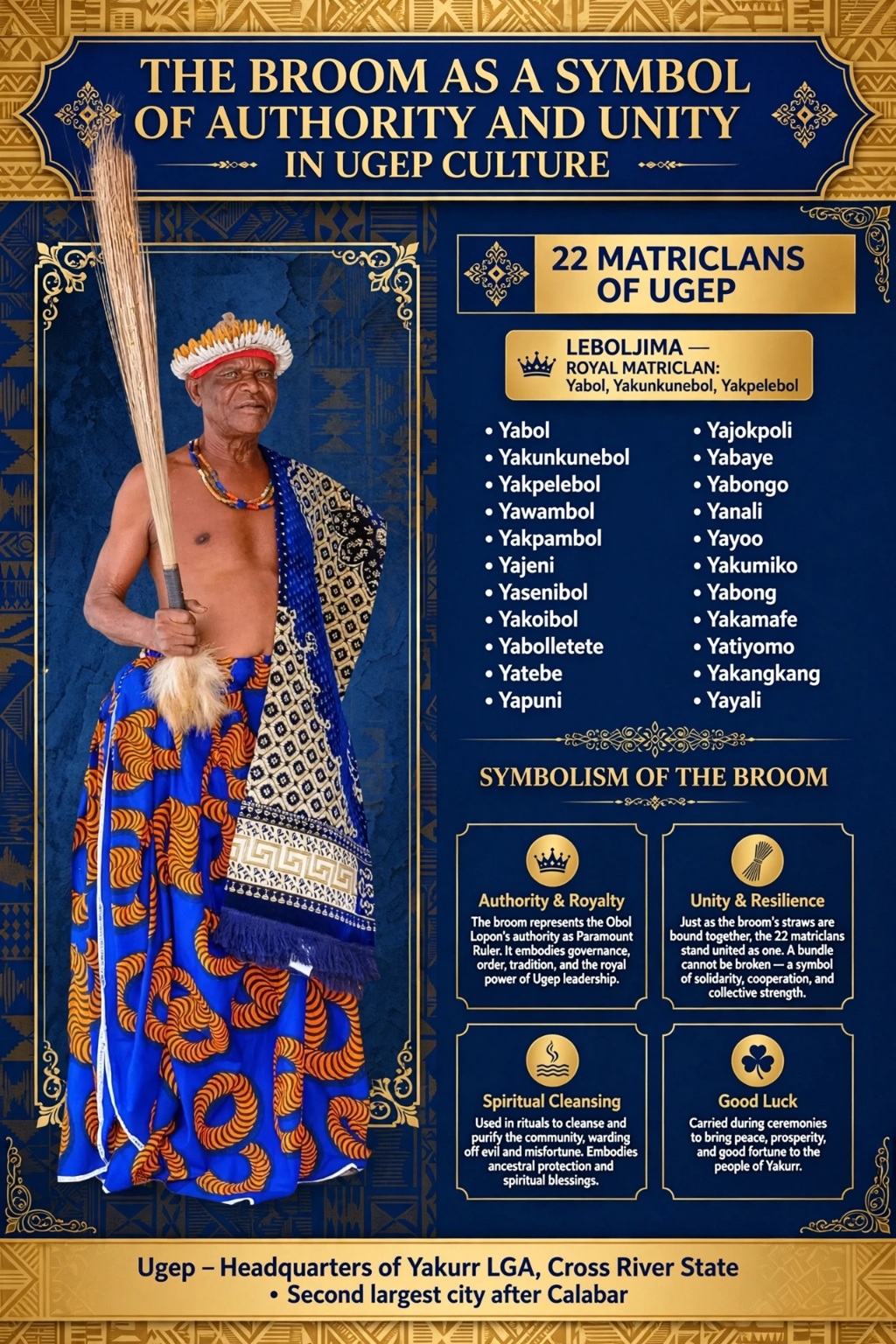
When I wrote on Yakurr matriclans, I concentrated on those in Ekori, Mkpani, Nko, Ugep, and Idomi communities. My sources were derived from the seminal work of Mathias Okoi Uyouyo, who did not delve into matriclans in Assiga, Nyima, and Agoi. I therefore find it petty when some people insult or accuse me of being self‑centered.
I shared the article with Professor Joy Etiowo, a distinguished Professor of African Literature and former Deputy Vice‑Chancellor (Academic) at the University of Cross River State (UNICROSS, formerly CRUTECH). She graciously critiqued it in true academic tradition and responded:
“Obol, this is outstanding, as usual. A little contribution: for Nko, s/n 3 & 15 are the same. There is no matrilineage at Nko known as Yapuni. What is known as Yapuni in other Yakurr villages is what is Yakamafe in Nko.”
While the uninitiated may make a fuss or throw arrows, accusing me of promoting my own community, Professor Etiowo politely and respectfully corrected my mistake and expanded my knowledge of matriclans in Nko. I now know that what is called Yapuni in other Yakurr villages is known as Yakamafe in Nko. This is an excellent example of the nuances in Yakurr history and anthropology that I have been emphasizing. I greatly appreciate Professor Joy Etiowo—God bless her!
I must also thank Odigha Odigha Enang from Agoi Ekpo, who graciously furnished me with the missing link in my previous article concerning Agoi matriclans. He generously helped me to source and provide them, instead of attacking me as some “bad belle” people usually do. His contribution further enriched the work and demonstrated the spirit of scholarship and collaboration that I have always advocated.
According to Mr. Odigha, the matriclans in Agoi include Yawambol, Yayor, Yatheomoh, Yayami, Yakpong, Wakop, and Yajirajit. He further explained that the largest matriclan in Agoi is Yayor, followed by Wakop, and then Yawambol. Incidentally, I come from the Yayor matriclan in Ugep, which is also recognized as the largest matriclan in Agoi. This fascinating connection underscores the deep interrelatedness of Yakurr communities and their shared lineage traditions.
Conclusion
The enumeration of matriclans in Agoi enriches the broader understanding of Yakurr’s cultural heritage. Constructive critiques and contributions—such as those of Professor Joy Etiowo and Odigha Odigha Enang—demonstrate the value of collaboration in historical scholarship. With Yayor standing out as the largest matriclan both in Ugep and Agoi, we see how intertwined Yakurr communities truly are. My writings are not meant to exalt one community over another, but to preserve fragments of Yakurr history and culture. I encourage every Yakurr community to document its own traditions and histories, so together we can build a comprehensive and authentic record for future generations.