
By Chief Akinwumi Akinfenwa
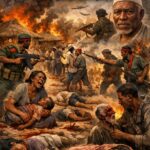
On June 12, 1993, Nigerians voted in what has been widely regarded as the freest, fairest and most credible election in the nation’s history. The election, presumably won by Chief Moshood Kashimawo Olawale (M.K.O.) Abiola, was annulled by the military regime of General Ibrahim Babangida, plunging Nigeria into one of the gravest political crises in its post-independence history.
The consequences were immediate and profound. The annulment triggered nationwide protests, economic uncertainty, international sanctions, political repression, and eventually the collapse of the military transition programme. It also strengthened the resolve of pro-democracy forces whose sacrifices ultimately paved the way for the return of civilian rule on May 29, 1999.
Today, thirty-three years after June 12 and twenty-seven years after the restoration of democracy, a critical question remains: What has Nigeria done with the democratic mandate won through such immense sacrifice?
The answer is neither straightforward nor comforting.
While June 12 succeeded in ending military dictatorship and institutionalizing electoral democracy, Nigeria’s development story remains one of unrealized potential, structural contradictions, and widening social inequalities.
*June 12 and the Promise of Democratic Development*
The June 12 struggle was never merely about elections. It was fundamentally about justice, accountability, popular sovereignty, and the right of citizens to determine their collective future. Democracy was expected to become a vehicle for economic prosperity, social progress, and national development.
Political thinkers such as Amartya Sen have long argued that development itself is a form of freedom. In this sense, democracy should not merely produce governments; it should improve lives.
Measured against this standard, Nigeria’s democratic journey presents a mixed verdict.
The country has undoubtedly recorded important political gains. Since 1999, Nigeria has experienced its longest uninterrupted period of civilian governance. Electoral transfers of power have occurred multiple times, including the historic defeat of an incumbent ruling party in 2015. Civic freedoms are considerably broader than under military rule, and constitutional governance has become firmly entrenched.
Yet democracy cannot survive on political symbolism alone.
Its true test lies in whether citizens experience tangible improvements in their daily lives.
*Economic Growth Without Development*
Supporters of Nigeria’s democratic experiment often point to economic growth indicators as evidence of progress.
Indeed, Nigeria remains Africa’s largest economy by several measurements. GDP growth reached approximately 3.4 percent in 2024, while fourth-quarter growth stood at about 3.8 percent, driven largely by services and telecommunications. Successive GDP rebasing exercises have also revealed a more diversified economy than previously understood.
However, headline economic figures conceal a troubling reality.
Development economists generally agree that countries with Nigeria’s demographic profile require annual growth rates of between 6 and 7 percent to significantly reduce poverty and create sufficient jobs. Nigeria remains well below that threshold.
Even more concerning is the disconnect between economic expansion and living standards.
Recent estimates suggest that between 38 and 40 percent of Nigerians live below the national poverty line. Millions more remain vulnerable to economic shocks, inflation, unemployment, and declining purchasing power.
In practical terms, many Nigerians are not experiencing the benefits supposedly reflected in macroeconomic statistics.
The implication is clear: democracy has produced economic growth, but not enough inclusive prosperity.
*The Human Development Deficit*
The June 12 struggle envisioned a Nigeria where citizens would enjoy not only political rights but also social and economic opportunities.
That vision remains incomplete.
Nigeria continues to rank in the lower tier of global human development and Sustainable Development Goal performance indices. Life expectancy remains below the global average. Maternal and infant mortality rates are among the highest in the world. Access to reliable electricity, clean water, quality healthcare, and sanitation remains inadequate for millions.
The education sector presents another paradox.
Nigeria possesses one of the world’s youngest populations, with more than 60 percent of citizens under the age of 30. In theory, this demographic structure should provide a powerful engine for economic growth and innovation.
Instead, youth unemployment and underemployment remain persistently high. Universities continue to produce graduates whose skills often do not align with labour market demands. The result is a growing pool of frustrated young citizens confronting shrinking economic opportunities.
This is perhaps one of the most significant developmental failures of the post-June 12 era.
A democracy that cannot effectively harness its youthful population risks converting a demographic dividend into a demographic liability.
*Insecurity: The Silent Enemy of Development*
No assessment of Nigeria’s development trajectory can ignore the devastating impact of insecurity.
Over the past two decades, terrorism, banditry, kidnapping, farmer-herder conflicts, separatist agitations, and communal violence have claimed thousands of lives and displaced millions.
Entire communities have been uprooted. Agricultural productivity has suffered. Investment confidence has weakened. Public resources that could have financed schools, hospitals, roads, and industrial projects have increasingly been diverted toward security expenditure.
The June 12 movement sought to deepen democracy. Yet insecurity continues to undermine the developmental benefits democracy was expected to deliver.
Development cannot flourish where citizens fear for their lives.
*Democracy and the Question of Equity*
Perhaps the greatest challenge confronting Nigeria’s democratic project is not the absence of growth but the unequal distribution of its benefits.
The concentration of wealth in a relatively small segment of society contrasts sharply with widespread poverty and deprivation.
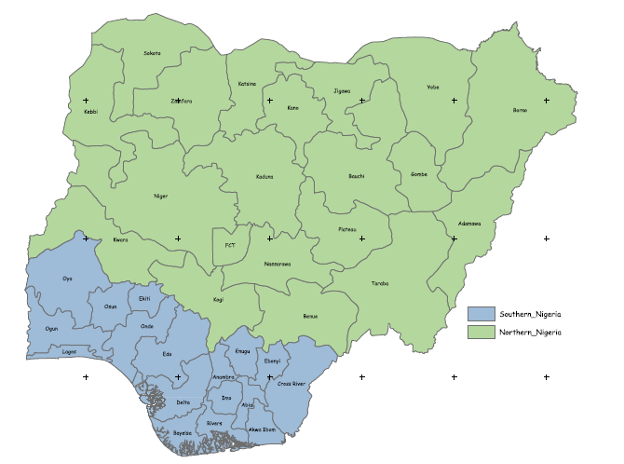
Regional disparities remain pronounced. Rural communities continue to lag behind urban centres in infrastructure and public services. Food inflation disproportionately affects low-income households, while access to quality healthcare and education often depends on income and location.
This raises a fundamental question:
Can democracy be considered successful when large segments of the population remain excluded from its dividends?
The legitimacy of any democratic system ultimately depends on its capacity to deliver fairness and equal opportunity.
Where inequality widens, democratic trust weakens.
*Nigeria and the Global Development Agenda*
Since the return to democratic rule, Nigeria has consistently aligned itself with international development frameworks.
Under the Millennium Development Goals (MDGs) between 2000 and 2015, the country achieved notable progress in school enrolment and disease control programmes. However, key targets relating to maternal mortality, extreme poverty, and gender equity were only partially achieved.
The transition to the Sustainable Development Goals (SDGs) in 2015 offered another opportunity for transformational change.
Yet progress has remained uneven.
While digital financial inclusion and technological innovation have expanded significantly, poverty, hunger, inequality, and unemployment continue to challenge national development efforts.
With fewer than five years remaining before the 2030 SDG deadline, Nigeria faces a narrowing window to convert policy aspirations into measurable outcomes.
*Why June 12 Still Matters*
The significance of June 12 extends far beyond historical remembrance.
It represents a national aspiration for a democratic system capable of delivering justice, accountability, prosperity, and development.
The tragedy of contemporary Nigeria is not that democracy failed to arrive; it is that democracy has not yet fully delivered on its developmental promise.
The country has achieved political durability but continues to struggle with developmental fragility.
Economic growth remains insufficient for structural transformation.
Social progress remains uneven.
Poverty and inequality remain stubbornly persistent.
Institutional weaknesses continue to undermine governance effectiveness.
Corruption and policy discontinuity continue to erode public confidence.
These realities suggest that the unfinished business of June 12 is no longer democratic transition; it is democratic performance.
*The Road Ahead*
As Nigeria commemorates June 12, the focus must shift from celebrating democratic survival to demanding democratic effectiveness.
The country requires stronger fiscal institutions, improved revenue mobilization, industrial diversification, youth-centred employment policies, and more effective anti-corruption mechanisms.
Development planning must transcend political cycles and become a national consensus project.
Most importantly, government at all levels must align budgets and public policies more directly with measurable development outcomes.
The ultimate measure of democracy is not the number of elections conducted but the quality of life enjoyed by citizens.
Thirty-three years after June 12 and twenty-seven years into uninterrupted civilian rule, Nigeria stands at a defining crossroads.
The sacrifices of June 12 secured the right to vote.
The challenge before today’s leaders is to ensure that those sacrifices also secure the right to development.
That remains the unfinished promise of June 12.
And history will judge Nigeria not merely by the democracy it won, but by what it did with it.
*©️ Chief Akinwumi Akinfenwa*
*09091700203 – WhatsApp*
*07062986613 – Calls*