By Okoi Obono-Obla
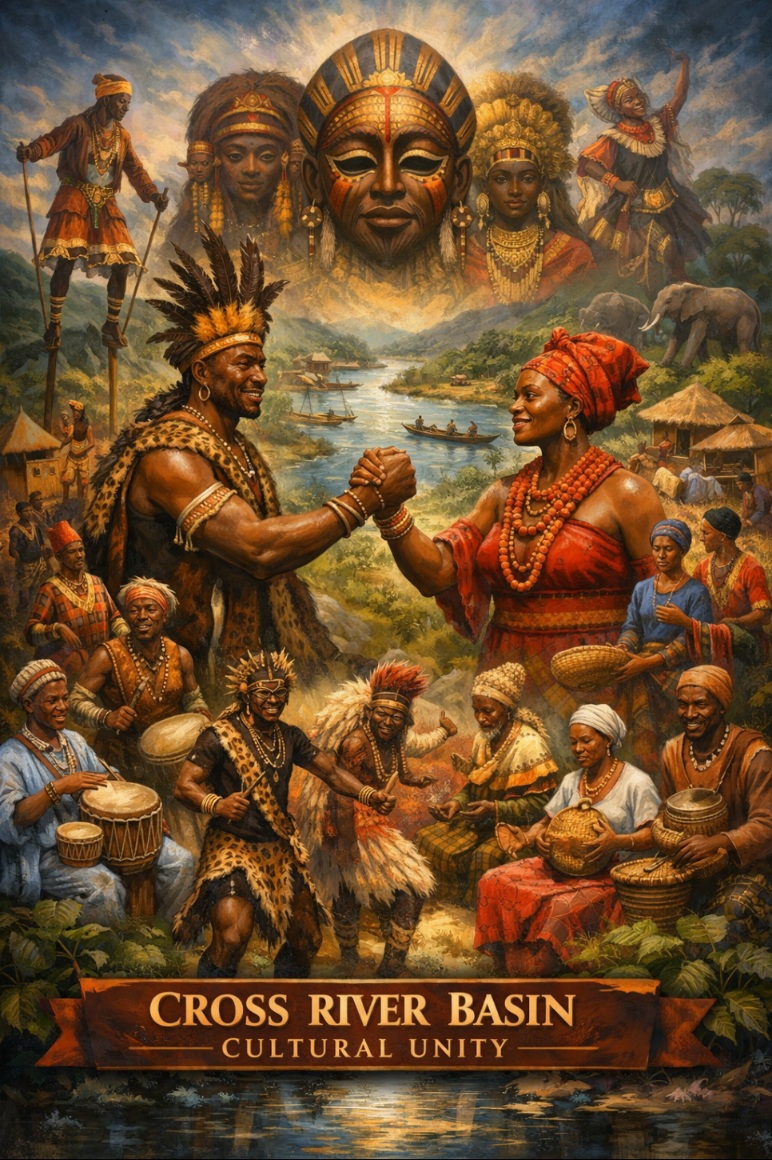
Cross River Basin: Cultural, Linguistic, and Genetic Unity:
On 17 May 2026, I published an article titled Yakurr–Ibibio Cultural and Linguistic Connections in the Cross River Basin. In his contribution, Ekong Sharp observed:
“Once a name, word, or anything in different areas is pronounced the same way or has the same meaning, it suggests the people share a common origin. The Ibibio and Ejagham (also known as Ekoi) peoples are genetically very closely related. They show high homogeneity in uniparental markers despite linguistic diversity.
Key Genetic Features:
– Paternal (Y-DNA): The predominant haplogroup in both is E1b1a1-M2 (and its subclades like E1b1a7 and E1b1a8).
– This reflects deep shared ancestry tied to ancient migrations, possibly linked to the expansion of Sahelian agriculture after the Sahara’s desiccation (~3500 BCE), with roots tracing back toward Northeast Africa in broader models.
An Ibibio person and an Ejagham person would typically be genetically indistinguishable or extremely similar at the population level—much closer to each other than to most other Nigerian or African groups.
A key 2010 study (Veeramah et al.) analyzed over 1,000 samples from the Cross River region, including Ibibio, Ejagham/Ekoi, and related groups (Efik, Oron, etc.). It found extremely low genetic differentiation for both Y-chromosome and mtDNA, despite over 60 languages spoken. Language did not strongly correlate with genetic clusters—indicating substantial historical gene flow, intermarriage, and shared ancestry over millennia. The region forms a genetically cohesive network.”
In my response to Ekong Sharp, I wrote:
“This is what I have been striving to establish through my writings on the cultures and traditions of the Cross River Basin, seeking to correlate similarities and identities in various ways. You have articulated this scientifically and appropriately. Our scholars in geography, sociology, history, linguistics, and anthropology must partner, cooperate, and collaborate — with sponsorship from our wealthy business community and government — to fund this research project based on the insights you have highlighted in your response.”
Conclusion:
The convergence of cultural traditions, linguistic parallels, and genetic evidence underscores the deep-rooted unity of the peoples of the Cross River Basin. This unity calls for a multidisciplinary research effort, supported by academia, government, and the private sector, to further unravel and preserve these shared identities for posterity. Such collaboration will not only enrich scholarship but also strengthen cultural heritage and social cohesion across the region.