
By Prof Anthony Ejiofor
Nigeria today stands at one of the most consequential crossroads in its post-independence history. Beneath the daily struggles for survival lies a deeper national question: Is the country undergoing painful but necessary reforms that may eventually reposition it for greatness, or is it descending further into a dangerous cycle of elite consolidation, economic suffocation, institutional decay, and democratic erosion?
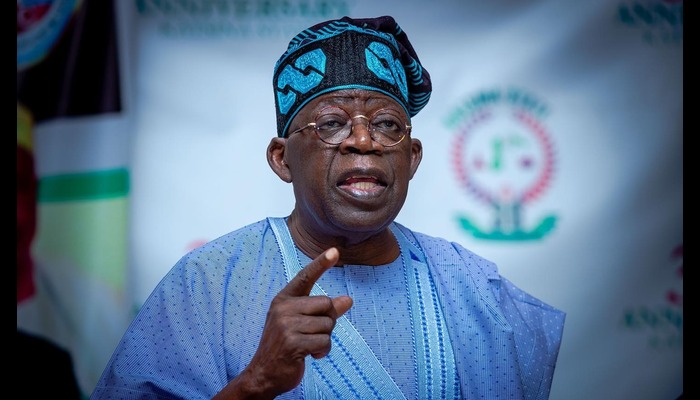
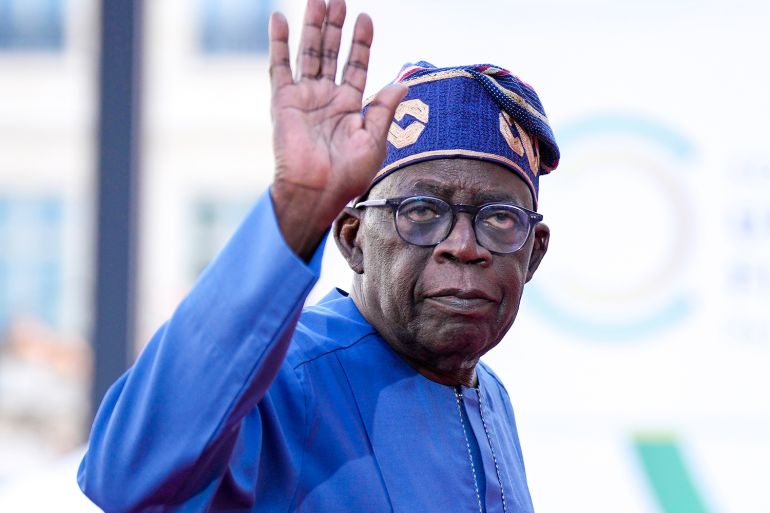
The administration of President Bola Ahmed Tinubu is now three years old as of May 2026. When he came into office in 2023, many Nigerians hoped that his reputation as a seasoned political strategist and former governor of Lagos State would translate into economic competence, institutional discipline, and national renewal.
Instead, Nigeria presents a deeply mixed and troubling picture: bold economic reforms on one hand, and crushing social pain on the other; promises of national rebirth alongside worsening public distrust; and an expanding concentration of political power amid weakening democratic space.
The stakes for Nigeria have rarely been higher.
Necessary Reforms, Poorly Sequenced
To be fair, Tinubu inherited an economy already burdened by years of structural dysfunction:
His administration took steps previous governments repeatedly avoided. The removal of fuel subsidy and the floating of the naira addressed distortions that many economists had long identified as economically unsustainable.
But reform is not judged merely by economic theory. It is judged by human consequences, sequencing, preparedness, and social outcomes.
The abrupt removal of subsidies without adequate social cushioning triggered severe inflationary shocks. The floating of the naira without sufficient productive capacity accelerated currency collapse, rising food prices, and widespread hardship. Millions of Nigerians who were already vulnerable have now been pushed into deeper poverty.
Today, many families can barely afford food, transportation, school fees, medication, or electricity. Small businesses are collapsing under inflationary pressures. The middle class is shrinking at an alarming rate. Professionals are emigrating in unprecedented numbers. Hope itself is becoming scarce.
Macroeconomic reforms that fail to protect citizens risk losing both legitimacy and sustainability.
Borrowing Without Production: A Dangerous National Addiction
Perhaps the gravest long-term danger confronting Nigeria today is the continued expansion of external borrowing without corresponding productive transformation.
Borrowing, in itself, is not evil. Every developing nation borrows. The critical question is this: What is the borrowing financing?
Nations that successfully use debt channel borrowed funds into:
Such investments expand productivity, create jobs, grow exports, strengthen the currency, and eventually generate the revenue needed to repay debts sustainably.
Nigeria’s situation is tragically different.
For decades, borrowing has increasingly financed:
The result is an economy that consumes far more than it produces.
This model is economically catastrophic.
A country cannot continuously borrow to import food, fuel, luxury goods, and even basic necessities while neglecting domestic production. Such an economy eventually faces:
Nigeria’s worsening debt-service burden now consumes enormous portions of government revenue, leaving insufficient resources for health care, education, infrastructure, and security. Future generations are effectively being mortgaged without corresponding national assets to justify the debt.
Without a deliberate national pivot toward production-driven development, Nigeria risks becoming permanently trapped in debt dependency and economic fragility.
No nation can borrow its way into prosperity while producing little.
Corruption: Nigeria’s Persistent National Cancer
One of the greatest disappointments of the present administration is the continued perception of widespread corruption despite promises of reform and renewed governance discipline.
To be clear, corruption did not begin under Tinubu. It has become an entrenched bipartisan culture spanning multiple administrations, political parties, and institutions. Nigeria’s tragedy is not simply corrupt individuals; it is the normalization of corruption within governance itself.
Yet citizens reasonably expected a government that came promising renewed competence and reform to demonstrate a sharper break from the past.
Instead, allegations of:
Meanwhile, ordinary Nigerians are repeatedly asked to “make sacrifices.”
Nothing destroys public confidence faster than asking suffering citizens to tighten their belts while political elites appear insulated from the pain.
Corruption is not merely a moral issue. It is fundamentally developmental. Corruption:
A nation battling poverty cannot afford leadership cultures associated with excessive luxury, unchecked patronage, and conspicuous state spending.
The fight against corruption must cease being selective, performative, or weaponized against political opponents alone. It must become institutional, transparent, and impartial.
Otherwise, anti-corruption rhetoric becomes little more than political theater.
Democracy Under Pressure
Another growing concern is the increasing concentration of political power within the ruling APC and the gradual suffocation of competitive democratic space.
The migration of governors, legislators, and political elites into the ruling party may appear politically advantageous in the short term, but it carries dangerous long-term implications for democratic health.
Healthy democracies require:
When opposition structures become weakened or intimidated, governance often drifts toward impunity and authoritarian tendencies.
Nigeria’s democratic history should teach us that excessive centralization of power rarely produces lasting stability. Instead, it often breeds public resentment, political alienation, and institutional decay.
Democracy dies not only through military coups. It can also die slowly through institutional capture, elite consensus, weakened opposition, and the normalization of unchecked power.
The Dangerous Perception of Unequal Justice
The contrasting handling of Sunday Igboho and Mazi Nnamdi Kanu has further intensified public perceptions of uneven justice and ethnic imbalance within the Nigerian state.
Whether or not one agrees with either man’s rhetoric or methods is secondary to the broader national issue: the perception of fairness.
In divided societies, justice must not only be done; it must also be visibly impartial.
Many Nigerians, particularly within the Igbo community, see the prolonged detention and handling of Nnamdi Kanu as evidence of selective state severity. Such perceptions deepen alienation and weaken national cohesion.
A fragile federation cannot survive indefinitely on coercion alone. National unity requires fairness, trust, inclusion, and equal citizenship under the law.
The Youth Question and the Future of Nigeria
Perhaps the single most underestimated political force heading into 2027 is Nigeria’s increasingly restless younger generation.
Nigeria is a remarkably young country. Millions of citizens under the age of 35 are confronting:
Many young Nigerians increasingly feel excluded from the nation’s economic and political future. Their frustration is not merely economic; it is existential.
The #EndSARS movement demonstrated the immense mobilizing power of Nigerian youth. Since then, economic hardship has deepened even further. A generation that is educated, digitally connected, politically conscious, and socially frustrated cannot be ignored indefinitely.
The 2027 elections may, therefore, become not merely a contest between political parties, but a referendum by younger Nigerians on the entire political establishment.
Any political coalition hoping to succeed in 2027 must understand this reality:
young Nigerians are no longer satisfied with slogans, ethnic manipulation, or recycled elite bargains.
They want:
More importantly, Nigeria must begin intentionally planning for its younger generation beyond elections. No country can survive when its youth increasingly see migration as their primary aspiration and their own nation as a place of diminished possibilities.
A nation that fails its youth ultimately fails its future.
What Nigerians Must Do
Nigeria’s problems are now too deep to be solved merely by changing personalities at the top. The country requires structural renewal.
Citizens must demand:
Nigeria must also urgently transition from a consumption economy to a productive economy. Manufacturing, agriculture, technology, energy, and industrialization must become national priorities.
Equally important, Nigerians must resist the temptation to reduce politics solely to ethnic loyalty or religious sentiment. Nations are not built by emotional mobilization alone, but by competence, accountability, and shared civic purpose.
2027 and the Future of the Republic
As 2027 approaches, Nigeria faces a defining choice.
The country can either:
or
But for such a coalition to succeed, it must genuinely reflect the aspirations of ordinary Nigerians rather than merely rearranging elite interests under new political banners.
In 2027, Nigerians must look beyond familiar political calculations and ask a deeper question:
Who is prepared to govern in the interest of the masses rather than primarily in the interest of entrenched elites?
The next leadership team must demonstrate:
The opposition, if it hopes to offer a credible alternative, must move beyond personality cults and fragmented ambitions. Nigerians are increasingly hungry not merely for political change, but for governance transformation.
The next election must not simply be about who captures power. It must be about whether Nigeria itself can still be rescued from long-term decline.
History will judge this moment harshly.
And future generations will ask whether today’s leaders and citizens had the courage to confront uncomfortable truths before the nation drifted too far toward irreversible decay.
Prof. Anthony Ejiofor is an academic, public intellectual, and community leader engaged in issues of governance, development, and the future of Nigeria and Africa.