Why Kwankwaso Was Singled Out in a US Bill
By Farooq Kperogi
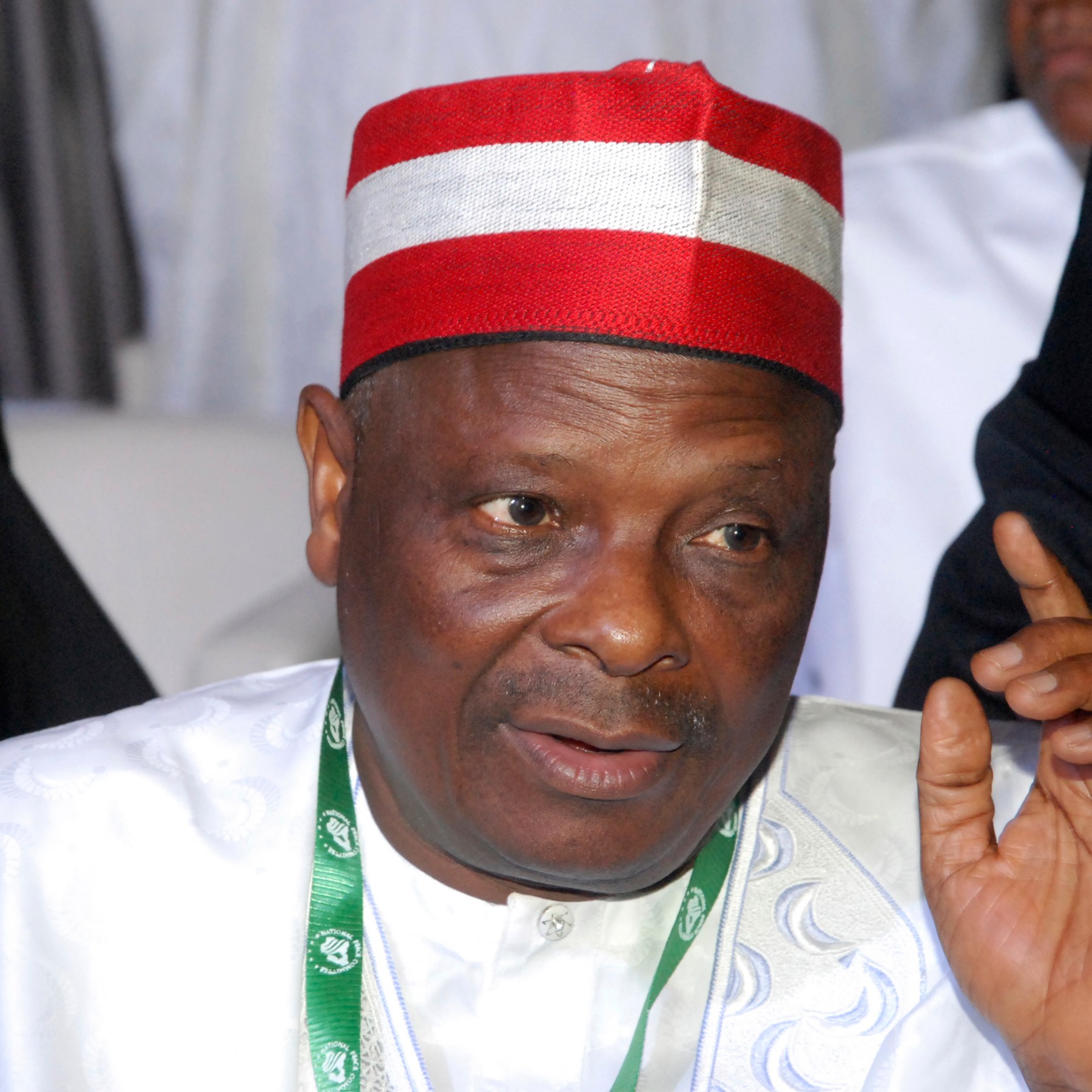
I was initially surprised, shocked even, that of all northern Nigerian Muslim politicians, Rabiu Musa Kwankwaso was the one Republican congressmen singled out for a possible visa ban and asset freeze in their “Nigeria Religious Freedom and Accountability Act of 2026” bill. Daily Trust’s explainer, which I will return to shortly, clarified the logic for me.
Anyone with even the faintest familiarity with Kwankwaso’s trajectory and disposition knows that he is not, by any stretch of the imagination, a religious fanatic.
As Kano’s governor, he was famously (and for Sharia advocates, infamously) unenthusiastic about the introduction of Sharia in 2000. I know because I covered the intrigues that culminated in its declaration that year, as this screenshot testifies.
My June 30, 2000, Weekly Trust report, co-written with the paper’s then Kano correspondent Sulaiman Aliyu and titled “Sharia: Triumph of Kano Masses,” showed that Kwankwaso resisted declaring Sharia for months and was at odds with both everyday people and the Muslim clerical establishment over the matter.
Unlike in several other Muslim northern states, Kano’s Sharia bill was a private bill. Neither Kwankwaso nor state legislators sponsored it. This exposed him to such intense pressure and danger that he temporarily stopped attending public functions. His deputy, Abdullahi Ganduje, often represented him.
On some occasions, public anger directed at Kwankwaso spilled over to Ganduje, including an incident in which he was stoned during a Maulud celebration while standing in for his principal.
In my June 30 to July 6, 2000, report I summarized Kwankwaso’s predicament in these words: “The governor was trapped in a delicate cul-de-sac. And his escape route was the launching of Sharia on the 21st of June 2000.”
During the formal launch of Sharia in Kano, which I covered as Weekly Trust’s Assistant News Editor, Kwankwaso stated: “Only the state government has the right to punish offenders. We should avoid taking the law into our hands. We should not intimidate those who are not Muslims.” That is not the rhetoric of a religious extremist.
After being compelled to declare Sharia against his preferences, his implementation of it was widely perceived as lukewarm. He remained in persistent tension with segments of the ulama. This was the single most important reason why he lost reelection in 2003 to Ibrahim Shekarau, the candidate of the Kano clerical establishment.
Interestingly, Kwankwaso’s reluctance both to declare Sharia initially and to pursue an aggressive implementation afterward fed one of the more bizarre rumors about his identity. Certain individuals circulated the demonstrably false claim that he was an Igbo man whose surname was supposedly a corruption of “Okonkwo and Sons.”
Reuben Abati raised this during an Arise TV interview in early 2023, a moment I analyzed in my February 9, 2023, article titled “Kwankwaso’s Superhuman Restraint During Arise TV Interview.”
As Dr Hussaini Abdu observed during our last month’s Diaspora Dialogues podcast, “Wike, Kwankwaso and Godfatherism in the Fourth Republic,” Kwankwaso’s continuing uneasy relationship with influential clerical actors partly explains his cultivation of populist support among ordinary Kano residents.
By any reasonable political or sociological measure, Kwankwaso is an improbable candidate for accusations of religious extremism.
Why, then, did Riley Moore and his colleagues single him out? The explanation is straightforward. Kwankwaso was the only nationally prominent Nigerian politician who openly criticized the United States’ designation of Nigeria as a Country of Particular Concern.
In a public statement, he argued that the designation was unhelpful, reduced a complex problem to simplistic binaries, risked exacerbating interreligious tensions, and that cooperation would be more constructive than confrontation.
Moore reacted sharply on Twitter (now X), writing: “Governor do you care to comment on your own complicity in the death of Christians? You instituted Sharia law. You signed the law that makes so-called blasphemy punishable by death.”
Kwankwaso ignored the provocation. Even if he had chosen to respond, it is unclear how a social media exchange could have accommodated the historical and political complexities surrounding Sharia’s adoption in Kano.
The episode illustrates a familiar dynamic in contemporary politics. Public criticism of U.S. policy by foreign political actors can generate personalized responses, especially when filtered through ideological and religious advocacy frameworks. Kwankwaso’s inclusion in the bill appears less rooted in his actual record than in his dissent from a particular U.S. policy posture and his refusal to engage in a performative online dispute.
It is also important to note that the bill remains at the introduction stage in the House of Representatives. Several procedural hurdles stand between introduction and passage into law. The measure must pass committee scrutiny, secure House approval, clear the Senate, survive any reconciliation process, and receive presidential assent.
A review of Congress.gov indicates that most Nigeria-specific standalone bills do not advance beyond the introduced or referred stages.
Meanwhile, this seems to me like a rhetorical and political gift to Kwankwaso, whom I once dismissed as a “local champion” at the expense of inviting the raw rage of his supporters. He has struggled for years to gain political traction outside Kano.
This is probably the gift he has been waiting for to become the unofficial Sardauna of Hausaphone Muslim Arewa, like Muhammadu Buhari was.