


By Okoi Obono-Obla
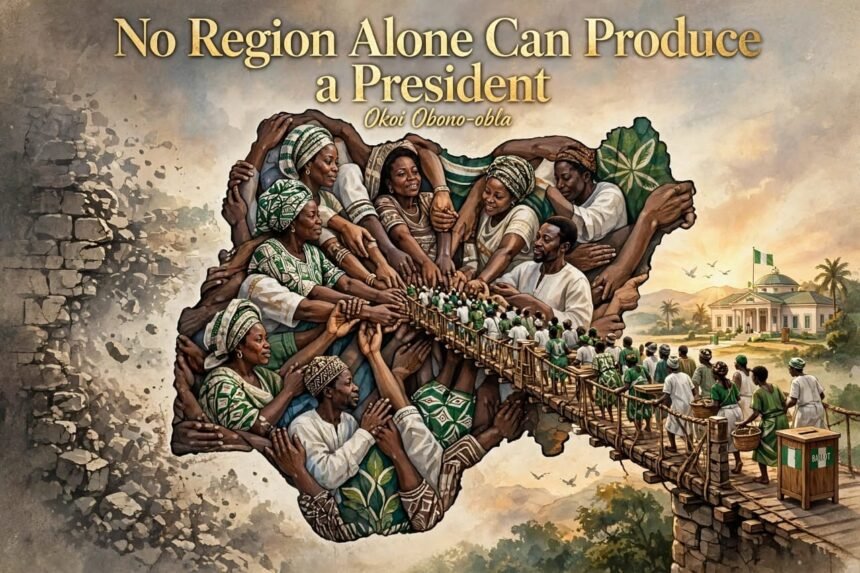
Vice President Kashim Shettima says no candidate can win the Nigerian presidency by relying solely on votes from one region or geographical section of the country. His argument rests on two grounds: the Constitution was deliberately configured by its framers to prevent that outcome, and the reality of Nigeria’s political configuration makes it practically impossible. Any politician relying on votes from one region or section of the country, he said, is wasting his time.
He drew a political lesson from that reality: leadership of a country as diverse as Nigeria can be attained only through negotiations, strategic alliances, compromises and bridge-building, rather than through appeals to ethnic and religious sentiments.
That lesson applies with particular force to politicians like Atiku Abubakar who, in Shettima’s assessment, are strategically relying on regional bases to clinch the presidency. On that assessment, they are daydreaming. The same logic informed the decision of President Muhammadu Buhari and President Bola Tinubu in 2013 to agree to merge their different political platforms into one, a process that led to the formation of the APC.
Buhari’s own history illustrates the point. He contested in 2003, 2007 and 2011 on a strong Northern Nigerian base but lost each time. He did not lose merely because of the spread requirement: in 2003 and 2011 he also lost the national popular vote by wide margins, and the 2007 election was widely questioned for credibility. What his three defeats demonstrate is the broader proposition: regional strength, however deep, is insufficient without national acceptability. He won only in 2015, after building a broader coalition.
That proposition is anchored in the Constitution. Under Section 134(2) of the 1999 Constitution, a presidential candidate must win the highest number of votes and secure not less than one-quarter of the votes cast in each of at least two-thirds of all the states and the Federal Capital Territory, Abuja. The philosophy is to prevent regional champions from emerging as President without the prerequisite national base and spread.
The message, therefore, is not merely partisan; it is constitutional and historical. Nigeria’s presidential contest was designed to reward bridge-builders, not sectional champions. Any candidate who mistakes regional enthusiasm for national viability mistakes applause in his base for acceptance across the federation. Until politicians learn that lesson, they will keep winning their regions and losing Nigeria.
By Okoi Obono-obla