
By Idowu Ephraim Faleye +2348132100608
Nigerians have a strange habit of forgetting the difficult years that came before, especially when it suits their political sentiments. It is as though a thick fog settles over public memory whenever a new administration takes office. This selective political amnesia has become particularly evident in discussions about the present Nigeria’s economic situation.
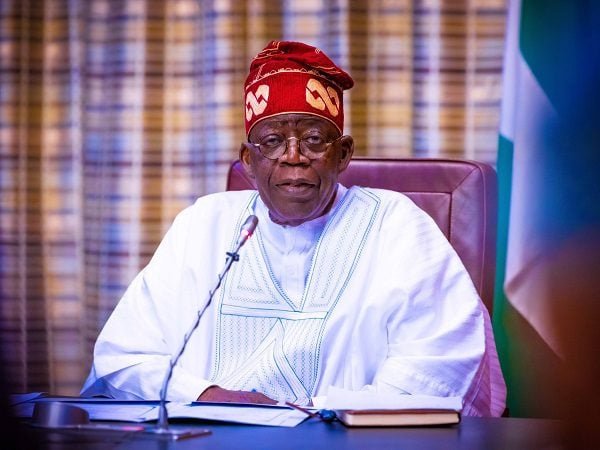
Before Tinubu took office, 27 Nigerian states were struggling to meet their salary obligations. The Federal Government, under the previous administration, had to introduce successive financial interventions to keep state governments afloat. Forgetting that reality does not change it; it only makes an honest assessment of the present more difficult.
In October 2015, President Muhammadu Buhari acknowledged the severity of the situation while addressing journalists in India. He disclosed that the Federal Government had to assist 27 out of Nigeria’s 36 states in paying workers’ salaries. That was a public admission, subsequently documented in financial policy reports. Twenty-seven states, representing three-quarters of the federation, needed federal assistance to meet their basic salary obligations.
The situation was serious enough to necessitate several emergency financial interventions. A 2016 report by the Independent Corrupt Practices and Other Related Offences Commission (ICPC) identified the 27 beneficiary states as Abia, Adamawa, Bauchi, Bayelsa, Benue, Borno, Cross River, Delta, Ebonyi, Edo, Ekiti, Enugu, Gombe, Imo, Katsina, Kebbi, Kogi, Kwara, Nasarawa, Niger, Ogun, Ondo, Osun, Oyo, Plateau, Sokoto and Zamfara. These states cut across all six geopolitical zones. In some cases, workers endured months of unpaid salaries until the Federal Government arranged emergency financial assistance.
It is important to understand the nature of these interventions because the terms ‘bailout’ and ‘budget support’ can easily be mistaken for outright financial gifts. A Budget Support Facility was designed to help states meet their financial obligations when internally generated revenue and allocations from the Federation Account were insufficient. For instance, a state requiring ₦5 billion monthly to meet its obligations but receiving only ₦3.5 billion would have a funding gap of ₦1.5 billion. Federal assistance helped bridge such gaps and sustain salary payments, pensions and essential services.
A bailout, on the other hand, was an emergency intervention intended to address accumulated financial obligations, particularly outstanding salaries. In 2015, the Federal Government introduced a salary bailout programme alongside a debt restructuring arrangement. Through the Debt Management Office, short-term commercial bank loans owed by states were restructured into longer-term Federal Government bonds, reducing immediate repayment pressure and freeing up resources for other obligations.
These interventions were not entirely grants. A substantial portion involved loans and borrowing arrangements. The Federal Government raised funds through special-purpose bonds and other financing mechanisms before extending assistance to states, with repayment arrangements tied to deductions from their monthly Federation Account allocations. In effect, some of the relief provided involved restructuring or transferring financial obligations rather than creating new wealth.
In his Independence Day broadcast on 1 October 2017, Buhari disclosed that the Federal Government had supported states with approximately ₦1.641 trillion between 2015 and 2017. In January 2019, the then Minister of Finance, Zainab Ahmed, reported that states had received approximately ₦2.23 trillion in special intervention grants and refunds between June 2016 and December 2018. These figures covered different interventions, including loans, debt restructuring and refunds such as the Paris Club repayments.
By August 2019, the Federal Government was already making arrangements to recover approximately ₦614 billion advanced to states under the Budget Support Facility. Officials indicated that repayment would be arranged through deductions from states’ Federation Account allocations. This confirms that the facility was a loan arrangement, not a permanent financial gift.
In 2022, the National Economic Council still had to establish a committee to review the outstanding repayment arrangements involving the governors, the Central Bank and the Federal Ministry of Finance. Years after the intervention began, its financial obligations remained an issue. Interestingly, the government acknowledged that states were still experiencing difficulties meeting their financial obligations. This tells us something important: the financial difficulties that necessitated the original intervention had not disappeared.
The situation was not limited to state governments. A study by ActionAid Nigeria examining public-sector wage bills between 2011 and 2020 found that the Federal Government’s actual revenue was insufficient to cover its wage bill between 2016 and 2020. The revenue shortfall increased from approximately ₦612 billion in 2016 to ₦2.69 trillion in 2020. This illustrates the extent of the fiscal pressure confronting the Federal Government itself. If the centre was struggling to meet its wage obligations from actual revenue, the difficulties facing states, many of which depended heavily on monthly federal allocations, were hardly surprising.
Even as Tinubu prepared to assume office, salary arrears remained a problem in several states. A Punch investigation published on 14 May 2023, barely two weeks before the inauguration, identified seven incoming governors facing significant salary obligations inherited from their predecessors. This demonstrated that the problem had not disappeared. Tinubu inherited a federation in which some states were still struggling with salary payments, public debts and outstanding financial obligations arising partly from previous interventions.
None of this suggests that the economic difficulties inherited by Tinubu absolve his administration of responsibility for its own policies and outcomes. Every administration must be assessed on its decisions, achievements and failures. However, such assessments must begin with an honest understanding of the conditions it inherited. It is intellectually dishonest to discuss Nigeria’s present economic difficulties without acknowledging the fiscal challenges that preceded May 2023.
Political disagreement should not become an excuse for historical distortion. Criticism of the Tinubu administration is legitimate. But selective memory cannot replace evidence, and political loyalty should not determine which historical facts Nigerians choose to remember.
A nation cannot properly assess its present without understanding its past. Before condemning the economic consequences of today, we must remember the financial realities of yesterday. Otherwise, what we are witnessing is not necessarily a disagreement over economic policy, but political amnesia masquerading as historical analysis.
The economic reforms introduced by President Bola Ahmed Tinubu have significantly increased the financial resources available to state governments, particularly through the removal of petrol subsidies and the reform of the foreign exchange regime. The impact is reflected in the substantial growth in monthly FAAC allocations, giving states considerably greater fiscal capacity than they had before May 2023. According to NEITI, allocations to state governments increased by approximately 62 per cent in 2024 compared with 2023. This expanded revenue base has created greater room for governors to meet salary and pension obligations, accommodate wage increases and still commit substantial resources to capital projects and infrastructure development. The challenge now is to translate this increased fiscal capacity into tangible improvements in the lives of ordinary Nigerians through responsible management and accountability.
While the reforms have brought significant economic adjustments and hardship, their longer-term outcomes must be assessed beyond immediate difficulties. Nigerians have legitimate reasons to demand relief and better living conditions, but they also have reason to recognise the fiscal changes taking place and allow sufficient time for the policies to deliver their intended structural benefits. Economic transformation requires consistency, patience and sustained implementation; abandoning ongoing economic reforms before they produce their intended results would only amount to economic harakiri.
*Idowu Ephraim Faleye is a freelance political writer based in Nigeria. +2348132100608*