By Bolanle BOLAWOLE
turnpot@gmail.com 0705 263 1058.
(Published in the ON THE LORD’S DAY column in the Sunday TRIBUNE newspaper edition of 25 October, 2026).
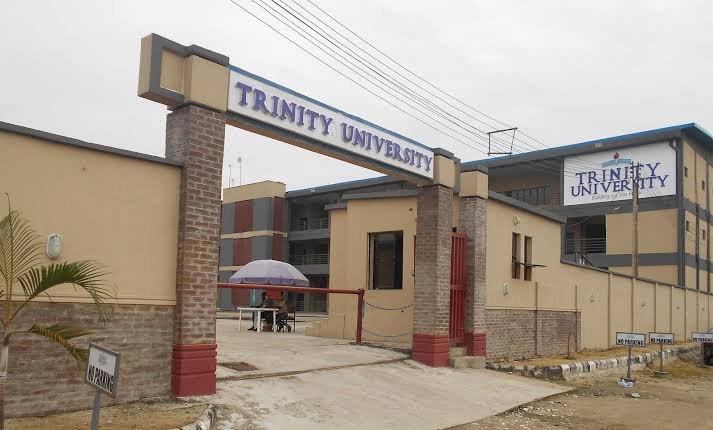
The above title is a combination of the theme of the 5th convocation ceremony of Trinity University, Yaba, Lagos and the title of its convocation lecture delivered by Professor Bode Ayorinde. The vice-chancellor, Professor Clement Olusegun O. Kolawole, had kicked off the convocation activities on Monday, October 12, 2026 with a press conference, followed by other week-long activities which included the presentation of its nursing science and medical laboratory science graduates for induction into the Nursing and Midwifery Council of Nigeria and the Medical Laboratory Science Council of Nigeria respectively.

From a private university that started with just nine (9) pioneering students in 2019, Trinity University graduated a total of 323 students across various disciplines penultimate week, with 79 of them achieving First Class honours, two of whom got a perfect 5.0 Cumulative Grade Point Average (CGPA).
I wish every graduating student from Nigerian universities – private as well as public – had the opportunity to listen to Ayorinde’s convocation lecture titled “Navigating the troubled world: Understanding the world, confronting its troubles, and equipping the next generation for survival and significance”, which was delivered on Thursday, 15 October, 2026. A one-time member of the House of Representatives, Ayorinde is the Pro-Chancellor and Chairman of Council of Achievers University, Owo, Ondo state.
He started by saying he chose the word “navigating” deliberately because “a navigator does not simply react to events (but) studies the terrain, knows the direction of travel, spots the dangers, chooses a route, adjusts as conditions change, and keeps the destination in view.” According to him, the navigator must learn to “navigate a world of extraordinary opportunities and formidable challenges. It is a world of great scientific achievements and of persistent human suffering. Information is abundant, yet truth and wisdom are scarce. Communication has become instant but human beings have not necessarily become more understanding.”
To successfully make this journey, Ayorinde counselled that we must learn not to lose faith, integrity and sense of purpose. “The world is not merely a troubled place to be endured. It is a complex human environment to be understood, navigated and, where possible, transformed. Its troubles come from human choices, failing institutions, economic pressure, technological disruption, damage to the environment and spiritual disorientation. They differ from country to country, from one person to another, and from one state to the next. Here in NIgeria, we face serious problems of security and welfare, and the opportunities for survival, let alone prosperity, are limited.” Hearing these, I sighed!
Our world is complex
Ayorinde then admonished that as graduates of a Christian university, their task is threefold. “First, to understand the world as it is. Second, to develop the competence and character to survive in it. Third, to use your education and faith to make it better.” He, therefore, built his lecture around three questions: What is the world we live in made of? What has made it troubled? How can we navigate this world and still shine?
Ayorinde divided the world into the physical and natural world (made up of land, water, air, forests, minerals, oceans, plants, animals, and the ecosystem which sustain life and which we depend on for food, shelter, energy, medicine, transport and industry); the human world or “the world of people”, as he called it; the political and institutional world (made up of governments, constitutions, courts, legislatures, regulatory authorities, international and business organisations – all of which are the bodies through which society exercises authority; and the economic and financial world (responsible for the production of goods and services, trade, employment and investment, together with banking, insurance, taxation, public finance and the distribution of resources – which all of us take part in, whether as workers, entrepreneurs or consumers).
He then charged the graduates that “understanding the economic world is essential. A degree gives you academic knowledge but financial literacy teaches you how to earn, save, and invest.”
The other “worlds” that he listed include the scientific and technological world, and the question for the fresh graduates, he said, “is not whether technology will affect your life. It will. The question is whether you will understand it well enough to benefit from it and to manage its risk; the cultural and moral world or the “world of values” where the role of education is not only to sharpen the intellect but to also “free the mind and equip the learner to weigh the values of the world around them before making choices”; the international and interconnected world where, whereas nations are “separated by oceans and man-made barriers… yet, nations are bound together by trade, finance, migration, technology, diplomacy, security arrangements and environmental systems. No nation lives in complete isolation.”
In clear reference to the Strait of Hormuz debacle, Ayorinde said “a conflict thousands of kilometres away can change the price of fuel in Nigeria.” While an interconnected world “creates room for cooperation and prosperity, it also lets shocks cross borders quickly”; as a result of which he counselled that we need to “understand the world beyond our immediate surroundings.”
Finally, he spoke of the spiritual world and described human beings as “moral and spiritual beings searching for identity, belonging, and purpose in the world we live in… Rightly understood, spirituality does not pull us away from the problems of society. It strengthens our resolve to face them.”
Ayorinde then described the world in which we live as troubled, but added that this is nothing new. “Every generation has faced wars, whether local, national, regional or global as well as disease, economic hardship, social tension, and uncertainty. What sets out time apart is the speed, scale and interconnectivity of many of these challenges.”
Wars, geo-political rivalries and insecurity; poverty, unemployment, and economic insecurity; inflation, indebtedness and rising cost of living; climate change and environmental degradation; misinformation, social division and the crisis of truth; loneliness, mental pressure, and the crisis of meaning; the crisis of values and loss of purpose; and the crisis of drug abuse were some of the other “troubles” of our world that Ayorinde painted a picture that troubles the soul.
Describing the rate of drug abuse, particularly among our youth, as “sobering”, he said the country’s first national drug use survey carried out in 2018 with the support of the United Nations Office on Drugs and Crime, “found that 14.4% of Nigerians aged 15 to 64 had used a psychoactive substance other than alcohol and tobacco, in the previous year.” That, I dare to say, must be stale news! The figures must be far higher by now. He then advised that the National Drug Law Enforcement Agency be invited to talk to students on the adverse effects of drug abuse.
Adding value to degrees and certificates
Ayorinde admonished that whereas university degrees remain valuable, they may no longer be enough. “You must understand the community, the state, the country, and the world in which you intend to live and prosper.” So the question for a university graduate is not just where can I find a job (but) what problem can I solve? What value can I create? What can I contribute to national development? You must also accept this basic fact that despite all the challenges (that) the world faces, honest people still survive, and they go beyond survival to achieve significance.”
So, today’s graduating students should endeavour to anchor their life in enduring values, be financially literate, use technology with judgment, look after themselves (health is wealth), expect disappointments and setbacks (tough times never last but tough people do), stay honest under pressure, live for others, and work hard. While Ayorinde stressed survival instincts, he insisted that this should not be seen as the ultimate. “We should aspire to be significant”, he added.
“The future is not shaped only by presidents, governors, chief executives or global institutions. It is also shaped by the decisions of ordinary people who choose to act responsibly. You may not all become famous. You may not all hold public office, build large businesses or become wealthy. But everyone of you can become a person of integrity, competence and positive influence, and that is a worthy ambition.”
Yes, it is! You can guess that I thoroughly enjoyed the lecture, the opportunity cost of which was foregoing some other equally important engagements.
Appeal to the FG
The convocation ceremony took place the next day, Friday, 16 October, 2026. In attendance were the university’s Chancellor, Dr. Samuel Adedoyin, OFR, and his wife; Pro-Chancellor and Chairman of Council, Pastor Samuel O. Olatunji; the Executive Secretary of the National Universities Commission (NUC) was represented; members of the Board of Trustees and of the Governing Council; the vice-chancellor and principal officers of the university, Senate members, representatives of sister institutions, staff, students and invited guests.
In his address, the vice-chancellor explained why the university was holding two convocation ceremonies within one year. “The Governing Council of the university approved management’s recommendation to bring the convocation ceremony… near the calendar year that the students conclude their programmes of study and, thus, release them for the mandatory national youth service, their admission into foreign universities, which take them far and near, and prevent a situation where only a few of the students concerned show up, particularly after they have participated enthusiastically in their professional induction ceremonies, which usually take place before the convocation ceremony itself.”
Congratulating the graduating students, Kolawole said they have been found worthy of both learning and character, warning that no one who falls short in any of the two would be awarded the university’s honours.
The university has come a long way, he said, reeling out achievements which include increased staffing, additional classrooms, laboratories, offices and hostel facilities. “The Governing Council approved the promotion of Dr. Christiana Modupe-Ade Adetunji to the rank of Professor, the first in the history of the university. In addition, five other academic members of staff are currently being processed for elevation to the professorial rank, and we trust that the process will be completed soon.”
Kolawole also disclosed that three academic programmes have been added to the programmes on offer in the university; all courses are accredited by the relevant professional bodies; the Senate of the university also recently approved the establishment of another Faculty to increase the number to four. The university has also taken interest in ensuring that its students have skills that can help them to be gainfully employed when they graduate, thereby making skills acquisition a compulsory part of its curriculum.
Kolawole did not end his speech before appealing to the Federal Government to allow “students in private universities and institutions… to benefit from the innovative financial support that those in public institutions enjoy under NELFUND. Similarly, private institutions and their workforce should also benefit from the support of TETFUND because they are Nigerians who should not be discriminated against (simply) because they are studying or working in private institutions.”
Well said!
* Former Editor of PUNCH newspapers, Chairman of its Editorial Board and Deputy Editor-in-Chief, BOLAWOLE was also the Managing Director/ Editor-in-Chief of The WESTERNER newsmagazine. He writes the ON THE LORD’S DAY column in the Sunday TRIBUNE and TREASURES column in the New TELEGRAPH newspaper on Wednesdays. He is also a public affairs analyst on radio and television.