
by Moses Enekwechi
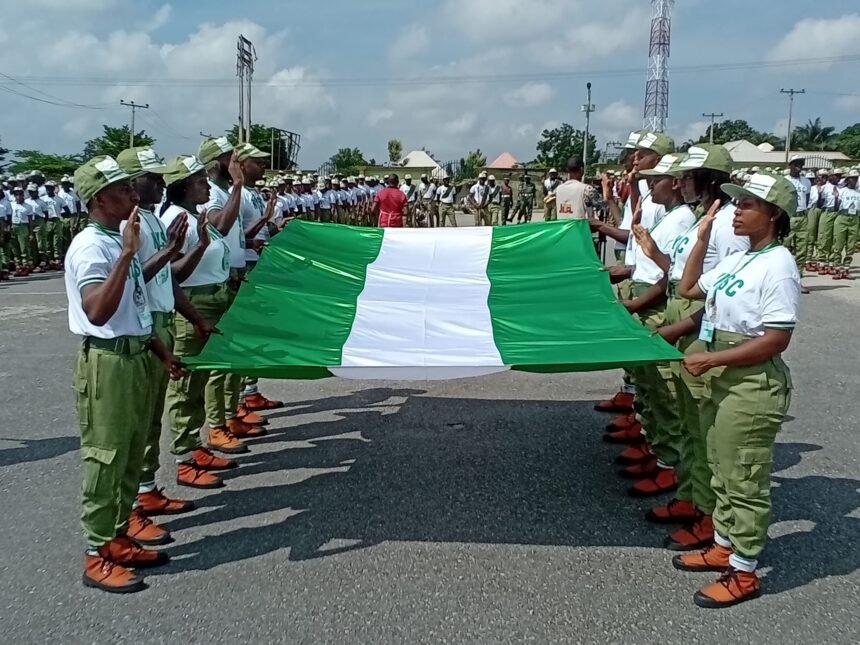
The National Youth Service Corps (NYSC) was established in 1973, shortly after the Nigerian civil war, to foster national unity, reconciliation, and integration. The idea was simple: new graduates would serve the country for one year in a different state, applying their skills and knowledge while also bridging cultural, ethnic, and regional divides.
However, more than 50 years later, that doesn’t seem to be the case anymore. There’s barely any evidence to suggest that the program’s aims and objectives are still being achieved. This begs the question many Nigerians are now asking: Is NYSC in Nigeria still fulfilling the purpose for which it was created, or has it become outdated in a society where insecurity, unemployment, and corruption continue to frustrate the very youths it was designed to empower?
Aside from unity and integration shortcomings, another issue is that the NYSC program has also become a burden for most youths when you take into account insecurity, unemployment, and the government’s inefficiency in ensuring the safety and welfare of the youths involved.
It has become very common to hear on the news that corps are kidnapped on their way to camp or their PPA, and when this happens, the government does little or nothing to facilitate their safe return. Or should we talk about how some corpers manipulate their postings so they can serve in more favorable states? Or how others, when posted to an organization, find ways to arrange with the management so they don’t actually have to work?
The program and its system have become flawed, with barely any efficiency or transparency left in them.
I remember back in 2023, during my NYSC camp orientation. One day, while I was in the hostel with other corps members, we got into a discussion about this very topic. I said outright that I felt the program ought to be scrapped. Omo, you needed to see how outraged many of them were by my opinion.
They were like:
“Why would you say something like that?”
“Don’t you know how youths are benefiting from the initiative?”
— blah, blah, blah.
I simply responded by asking:
“Okay, what are the actual benefits youths are currently getting from the program?”
None of them could give a reasonable answer.
And that’s exactly the problem for a program that has existed for over 50 years, most people cannot point to clear, relevant benefits it’s providing for young Nigerians today. Instead, the NYSC has become more of a convenient tradition than a system that truly empowers or protects the youth it claims to serve.
For most corpers, either during or after their service year, the experience feels like a wasted period of their lives — participating in an unnecessary program that they don’t really have a choice about. This is simply because they must undergo the process to be eligible to legally work in Nigeria’s job sector.
Now, whenever I remember that discussion I had back during my orientation with my corps members, I admit maybe saying “scrap the program” was a bit harsh. Why I say so is because, regardless of whether the benefits they mentioned didn’t sound so relevant to me, at least they are still benefits.
But it can’t be denied that the program is in serious need of reforms, because the current system and operations are not working at all. And while it doesn’t look like NYSC is largely fostering national integration and unity anymore, there are still many who believe it does.
I know some corps members who made friends during service and remain friends even after. I also know corpers who learned the language of natives, as well as the laws and traditions of the communities where they served.
And that’s really the heart of the debate: does NYSC still deserve to exist, or should it be scrapped?
On one hand, the flaws are alarming — insecurity, poor structures, corruption, and the feeling among many youths that it’s simply a wasted year. On the other hand, some argue it has its redeeming qualities: fostering friendships, enlightening young people to other cultures, and, in some cases, providing experiences they may never have had otherwise.
This leaves us at an impasse — if the program cannot be scrapped outright because of these small but noted benefits, then the least the government owes Nigerian youths is a total reform of the NYSC system.
Now, like I said earlier, maybe scrapping the program is not the ideal alternative, but the real question is about what reforms can actually make it live up to its original purpose. Because if the system is going to stay, then at least it should protect and empower the youth it was created for.
For example, the priority should be security. It’s no news that corps get kidnapped on their way to camp or their PPA, and the government does little or nothing. The government must prioritize the safety of corps members.
Another is relevant skill-building. Instead of forcing graduates into irrelevant PPAs, the program should emphasize vocational training, digital skills, entrepreneurship, and real industry exposure — things that can help young people survive in today’s Nigeria.
And lastly, there’s the issue of funding — particularly when it comes to corps members’ allowances. It’s no secret that most PPAs pay their corps workers little or nothing at all, despite it being written in their letters that they are expected to be given decent allowances during their service period.
At the end of the day, NYSC doesn’t have to be scrapped — but only if real reforms can be put in place. Until then, it will keep feeling like a broken system, forcing young people into a cycle that doesn’t protect or prepare them for the realities of today’s Nigeria. If the government is really serious about youth empowerment, then NYSC must stop being a yearly ritual and start being a program that truly adds value and relevance to the lives of the people it was created for.