by Okoi Obono-Obla
Introduction
On 1st October, 1963, Nigeria ceased to be a constitutional monarchy within the British Commonwealth and became the Federal Republic of Nigeria. The 1963 Constitution, enacted by the Federal Parliament, was Nigeria’s first autochthonous constitution. It abolished appeals to the Privy Council, established a Supreme Court of Nigeria as the apex court, and most significantly for our purpose, replaced the Governor-General representing Her Majesty the Queen with a President of the Republic.
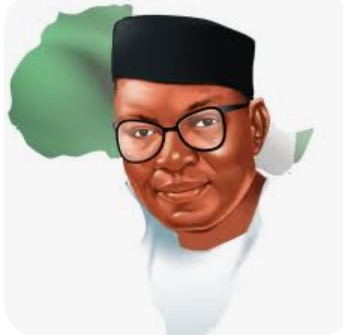
The first and only President to serve under that Constitution was Dr. Benjamin Nnamdi Azikiwe, former Governor-General, former Premier of Eastern Nigeria, and the doyen of Nigerian nationalism.

The Nature of the Presidency: Ceremonial Head of State
Chapter IV of the 1963 Constitution created the office. Section 34(1) provided:
“There shall be a President of the Republic who shall be elected to office in accordance with section 35 of this Constitution and shall be the Head of State of the Federation and the Commander-in-Chief of the armed forces of the Federation.”
Despite the grandeur of the title and the vesting clause in Section 84(1) that “The executive authority of the Federation shall be vested in the President,” the Constitution adopted a pure parliamentary model derived from Westminster.
The key to understanding the President’s role is Section 93(1). It mandated that in the exercise of his functions, the President “shall act in accordance with the advice of the Council of Ministers” or a Minister acting under its general authority. The Council, under Section 89, consisted of the Prime Minister as its head and other Ministers appointed on his advice. Under Section 90, that Council was collectively responsible to the Federal Parliament, not to the President.
The Chief Executive, therefore, was not the President but the Prime Minister, Sir Abubakar Tafawa Balewa, who commanded a majority in the House of Representatives.
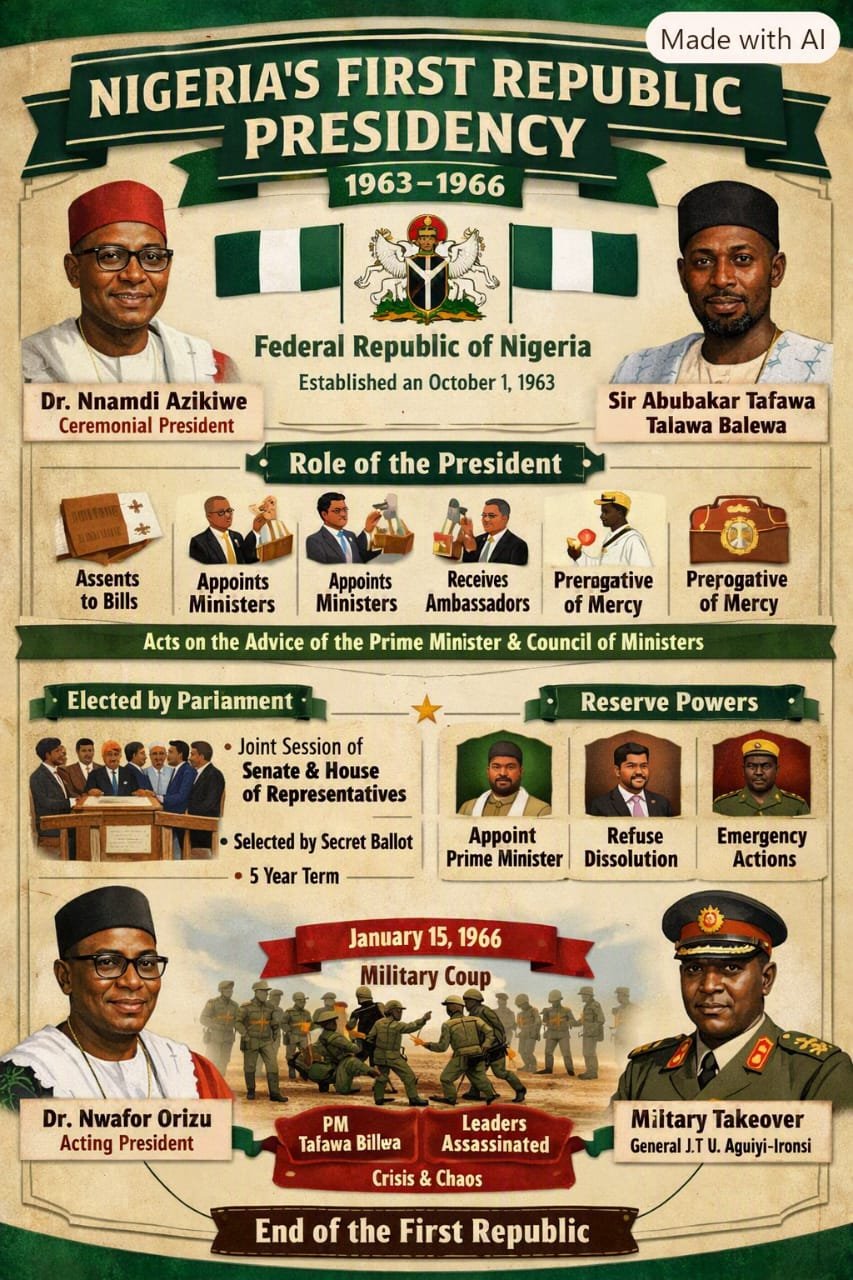
In this sense, it is correct to describe President Azikiwe as a ceremonial figurehead. He assented to Bills, prorogued and dissolved Parliament on advice, appointed Ministers on the advice of the Prime Minister, received credentials of ambassadors, awarded national honours on advice, and exercised the Prerogative of Mercy under Section 101 on the advice of a designated Minister.
However, he was not powerless. Section 93(1) proviso reserved to him the right to act in his own deliberate judgment in four critical areas which constitute the classic reserve powers of a parliamentary Head of State:
(a) The power to refuse dissolution under Section 68(4): If the Prime Minister requested a dissolution and the President felt the government could be carried on without it and that a dissolution was not in the national interest, he could refuse.
(b) The appointment of a Prime Minister under Section 87: He alone had to determine who appeared likely to command the support of the majority of the House.
(c) Authorizing another Minister to perform the Prime Minister’s functions under Section 92 when it was impracticable to obtain the Prime Minister’s advice due to absence or illness.
(d) Approving appointments to his personal staff under Section 147.
These powers made him a constitutional umpire, not a daily administrator.
Mode of Appointment and Tenure
Section 35 established an indirect, elite mode of election. The President was not elected by universal suffrage. He was elected by secret ballot at a joint meeting of both Houses of the Federal Parliament – the Senate and the House of Representatives. Each parliamentarian had one vote.
A candidate had to be a Nigerian citizen of at least forty years, qualified to be a member of the House of Representatives, and nominated by a document signed by himself and at least three members of Parliament.
To win, a sole candidate needed more than half of all members of Parliament; where there were two or more candidates, he needed two-thirds of all members. If no one attained that threshold, the lowest-scoring candidate was eliminated ballot after ballot until someone was elected. Section 35(11) made the instrument declaring him elected conclusive and not justiciable.
Section 36 fixed the term at five years. Section 37 required the oaths of allegiance and office before the Chief Justice, while Section 38 provided for removal for misconduct or incapacity through a complex parliamentary investigation by a joint committee, requiring a two-thirds majority of all members of Parliament to pass.
Section 39 provided for continuity: if the office was vacant, or the President was absent or ill in the opinion of the Prime Minister, the President of the Senate would act. If he too was unable, the Speaker of the House would act.
It was this last provision that would become historically decisive.
The Denouement: January 1966
The parliamentary republic lasted only two years and three months.
On the night of 15th January, 1966, Major Chukwuma Kaduna Nzeogwu and other young majors struck. In Lagos, Ibadan and Kaduna, leading political and military figures were assassinated, including Prime Minister Sir Abubakar Tafawa Balewa, Premier of Northern Nigeria Sir Ahmadu Bello, Premier of Western Nigeria Chief S. L. Akintola, and Finance Minister Chief Festus Okotie-Eboh, as well as senior Army officers.
At that critical moment, the constitutional Head of State, Dr. Nnamdi Azikiwe, was not in the country. He had travelled abroad on medical leave and was holidaying in the Caribbean. With the Prime Minister dead, the Council of Ministers shattered, and Parliament unable to meet, there was a vacuum.
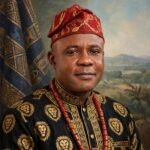
The lot therefore fell on the man designated by Section 39 of the Constitution to act during a vacancy: the President of the Senate, Dr. Nwafor Orizu.
Dr. Orizu, as Acting President, rallied what remained of the Council of Ministers. In the early hours of 16th January, after consultations with senior politicians and with the surviving military hierarchy led by the General Officer Commanding the Nigerian Army, Major-General J. T. U. Aguiyi-Ironsi, he made a broadcast to the nation. He announced that the Federal Council of Ministers had decided to hand over the administration of the country to the Armed Forces voluntarily, in the interest of peace and stability.
That broadcast and the subsequent handing over of power to General Aguiyi-Ironsi marked the end of the First Republic and the suspension of the 1963 Constitution. The ceremonial Presidency, designed to be above partisan politics and to act as a unifying symbol, had in its final act to preside over the dissolution of the very democratic order it was meant to embody.
Thus, the history of the Presidency from 1963 to 1966 demonstrates both the elegance and the fragility of the parliamentary republican experiment in Nigeria – a Head of State revered as a national father, but constitutionally confined to ceremonial functions, whose absence in the hour of crisis left an Acting President to formally transfer power from civilian constitutionalism to military rule.
@ Okoi Obono-Obla