Great Imo Jonathan
Please every Nigerian that comes across this article should take time to read to the end. It will help you make informed decision on the renewed debate about subsidy. This article looks at why bringing back subsidy isn’t the answer and why removing it without the priority areas of reform failed Nigerians.
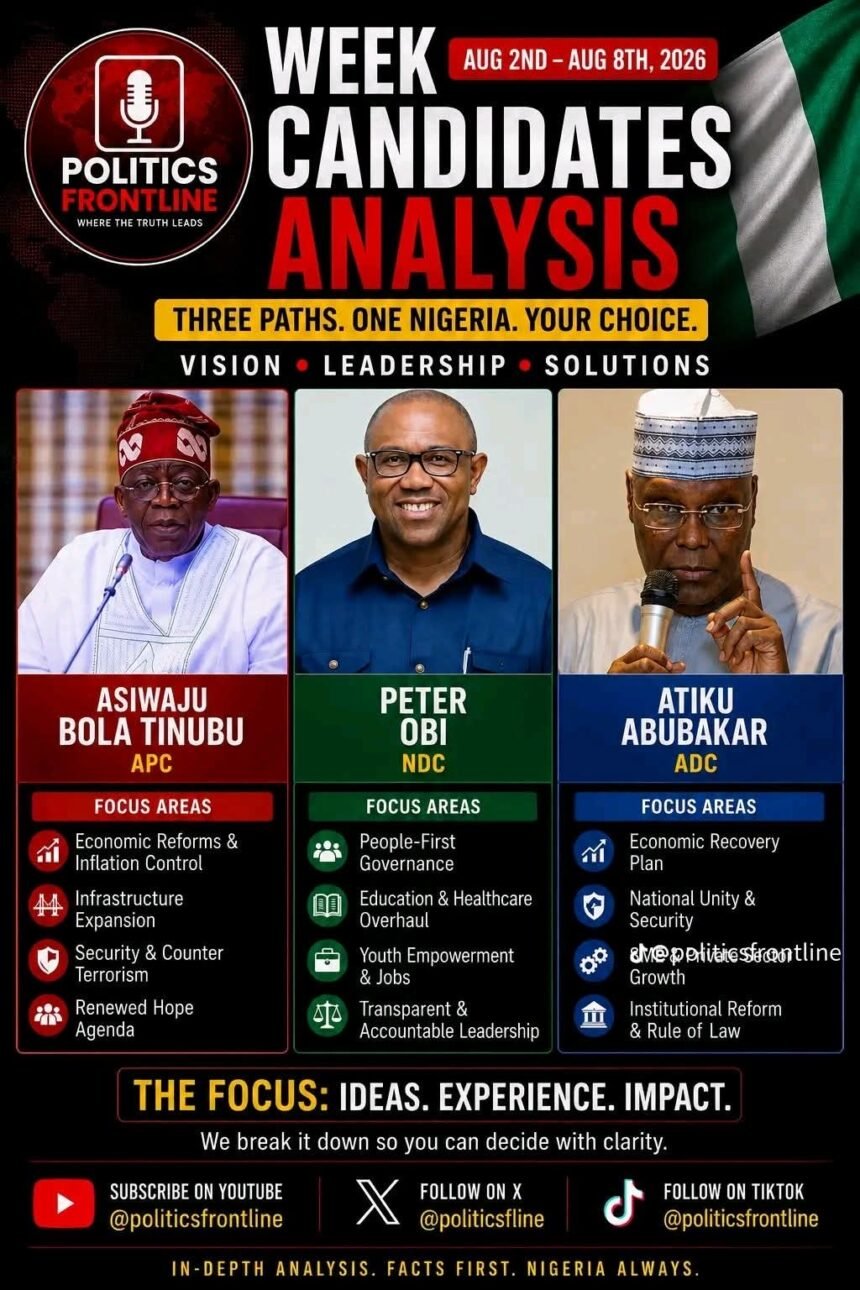
For over 40 years, fuel subsidy has been the most divisive economic policy in Nigeria. In 2023 President Tinubu announced “subsidy is gone.” Now, with prices at record highs, Atiku Abubakar has promised to “bring back subsidy.” And Peter Obi has argued there was a better way to remove it.
The debate is no longer about subsidy versus no-subsidy. It’s about: Can Nigeria afford it, can we manage it, and what do we do with the money saved?

Here’s the breakdown.
A good analysis of issues precedent makes it appear that Atiku’s promise to bring back subsidy is based on a kind of political desperation. The promise to restore subsidy sounds popular because Nigerians are hurting. But it ignores 4 hard realities:
1 Financial Capacity. Nigeria can no longer afford it if we have to quickly meet up with the backlog of our developmental challenges.
Before the removal, subsidy was gulping over N4 trillion yearly. In 2022 alone it was N4.39 trillion, an amount more than our budget for health, education and defense combined.
With debt servicing now over 90% of revenue, and FX pressures, where will the money come from? Borrowing to pay subsidy means borrowing to consume, not to invest. That path leads straight to a debt crisis.
2 Corruption. The subsidy regime was broken. The old subsidy was not subsidy to the poor. It was subsidy to importers, marketers, and a few connected people. We had ghost imports and double claims. We had smuggling to neighboring countries where petrol was sold at 2 to 3 times the price. There was no proper metering or audit of volumes
Bringing it back without fixing these leakages is like pouring water into a basket.
3 Local refining capacity has changed the game. With Dangote Refinery, Port Harcourt, Warri, and modular refineries coming on stream, Nigeria is moving toward domestic refining. If government brings back subsidy now, it will distort pricing and kill the incentive for local investors who put billions into refineries. We will go back to importing and subsidizing, instead of producing and exporting.
4 It is a political band-aid, not a solution. Promising to bring back subsidy 3 years after removal, with no plan to fix corruption or fund it, looks like desperate politics. It addresses the symptoms, including high prices but not the disease of inefficiency, corruption, and lack of alternatives.
Tinubu was correct to have removed subsidy because we all knew it was unsustainable. That was why despite the manner in which he removed it, no Nigerian went on protest because we were sure what the problem was. But removal without preparation turned the reform into punishment.
1 He didn’t first kill the corruption. The biggest justification for removal of subsidy was corruption. Yet there has been no high-profile prosecution, no public audit of past subsidy payments and no structural reform of NNPC/NNPCL. So Nigerians feel they are paying for sins they didn’t commit.
2 The savings were squandered. Government said subsidy removal would free up money for infrastructure, health, education, and CNG buses. But 2 years on,Inflation was over 30%. Yet Tinubu has spent over 400 billion on himself, his family and vice President alone. Untill date there is no visible mass transit rollout, the direct cash transfer we were told of looks like pure government scam or it is not at the scale that will make the right imoact. New levies and taxes have replaced subsidy.
The worst is that new forms of siphoning have emerged under President Tinubu, in the guise of “energy security,” FX interventions, and opaque fuel import deals. In fact these costs are now higher than the old subsidy. Thereby making a mockery of the Tinubu subsidy removal.
3 No cushions were put in place first. Subsidy removal without alternatives was bound to hurt. There was no mass CNG conversion, no functional rail, no cheap transport, no targeted support for farmers and manufacturers before prices jumped. The result: cost of food, transport and goods exploded, and millions Nigerians were pushed into poverty.
The failure was not in removing subsidy. The failure was in removing it insincerely and without a plan.
This is why I buy Peter Obi’s argument on the removal of subsidy. Peter Obi’s argument has consistently been: Subsidy must go, but it must be removed sequentially, transparently and with people’s welfare as priority.
Peter Obi’s idea was to:
1 Cut waste first. Block leakages, publish real consumption data, audit NNPC.
2 Build alternatives first. Roll out CNG buses, revive rail, support local refining so supply increases before price increases.
3 Phased removal. Remove gradually over 12 to 18 months, not overnight shock therapy, to allow adjustment.
4 Transparency. Show Nigerians daily how much is being saved.
Again Peter Obi argued the N4 trillion plus yearly should be treated as an investment fund for the poor.
1 Pull people out of poverty. Make some critical interventions during transition.
2 Health and Education. Massive funding for primary health centers and public schools. Obi showed at the NBA conference in Port Harcourt, how just 5% of what Tinubu realised from subsidy removal could have provided well equipped functional primary health care facilities across ten thousand communities in Nigeria.
Let me pause and show you the implication of that example Peter Obi gave at NBA conference in Port Harcourt. I have to because some people hear things but they can’t process them.
Now pay attention.
Well equipped primary healthcare facilities in every community in Nigeria with just 5% of what Tinubu realised from subsidy removal would have radically improve the lives of ordinary citizens of Nigeria by acting as their first line of medical defense and a powerful engine for economic stability. Especially now that millions of Nigerians are dying from common illnesses because of poverty brought about by the Tinubu economic reforms.
By making essential medical care locally accessible and affordable, these centers protect households from the devastating financial shocks often caused by sudden illnesses. Globally, every $1 invested in primary healthcare can yield up to $16 in economic returns by boosting productivity and building human capital.
This would have also drastically reduce out-of-pocket expenses for millions of Nigerians. Because today Nigerian citizens pay 100% of their medical costs directly out of pocket. Primary health centers would have provided affordable consultations, essential medicines, and routine check-ups, safeguarding households from catastrophic health expenditures. It would have also eliminated travel and accommodation costs that people pay going out of their immediate environment to seek medical help. Because when healthcare is unavailable locally, rural and low-income residents must spend heavily on transport and lodging to reach urban, secondary hospitals. Neighborhood health centers eliminate these predatory secondary expenses.
This alone would have gone a long way to prevent the severe financial shocks Nigerians had from subsidy removal.
Unmanaged common conditions like high blood pressure or diabetes that frequently lead to severe medical emergencies (like strokes or kidney failure) would have reduced. Because treating these at advanced hospitals deplete a family’s entire life savings or force them into high-interest debt.
So just 5% of money Tinubu realized from subsidy removal Peter Obi said should have been invested early in such interventions. This would have helped in areas like childhood immunizations, maternal care, and routine screenings, to stop infectious and chronic diseases before they require hyper-expensive treatments.
This simple 5% investment in primary health care intervention across Nigeria would have had a multiplayer microeconomic impacts. By boosting household livelihoods Nigerians would have been maximizing working days and retaining more of their monthly wages.
Because sick days directly equate to lost wages for daily-wage earners, traders, and farmers. Swift, local treatment at a primary health facility minimizes recovery time, allowing workers to quickly return to their jobs.
It also meant potecting family caregivers. Because when a family member falls severely ill due to a lack of early treatment, another able-bodied adult must often quit working or drop out of school to become a full-time caregiver.
So simply keeping the community healthy keeps more family members economically productive. It meant sustained agricultural and business productivity. Especially for rural agricultural communities, seasonal illnesses like malaria frequently hit during planting or harvest times, decimating a family’s annual food supply and revenue. Proactive community treatment would have secured local food and economic output.
That is why Peter Obi kept highlighting the importance of intervention in health and education. Because healthy and educated people are more productive. Hence, moving Nigeria from consumption to production.
3 Productive Infrastructure. Power, roads to farms, and support for MSMEs to reduce cost of production.
4 Food Security. Fertilizer subsidy and mechanization for farmers so food prices don’t explode when transport costs rise.
So Peter Obi’s core idea is to subsidize people, not products. Don’t subsidize petrol that benefits the rich with 5 cars. Subsidize the poor directly.
So Peter Obi’s approach Is the best way forward. Because
1 It is fiscally responsible. It relieves government of the unsustainable N4trn burden and debt.
It is anti-corruption driven. Because direct investments in the areas wherw Nigerians have most need are easier to track than opaque fuel import payments.
3 It is pro-growth. Peter Obi’s idea of investing in power, health, education, and SMEs grows the economy and creates jobs, instead of consumption.
4 It is pro-poor. His idea protects the most vulnerable from the shock, while building long-term capacity so Nigerians are not permanently dependent on cheap fuel.
This is not about politics. It’s about applying national resources to what matters most: human capital and productivity.
Bringing back subsidy now will bankrupt us and reward the same cabal. Removing subsidy without investment in people is cruelty.
Hence, Peter Obi’s framework, will remove the corruption in the system, invest the savings in Nigerians, and build an economy that does not need subsidy to survive.
2027 should not be a debate of “who will give you cheap fuel today.” It should be “who will build a Nigeria where you don’t need subsidy to live with dignity tomorrow.”
Because the real subsidy Nigeria needs is a subsidy on poverty, unemployment, and poor governance. And that one we can afford to pay.
Great Imo Jonathan