By Okoi Obono-Obla
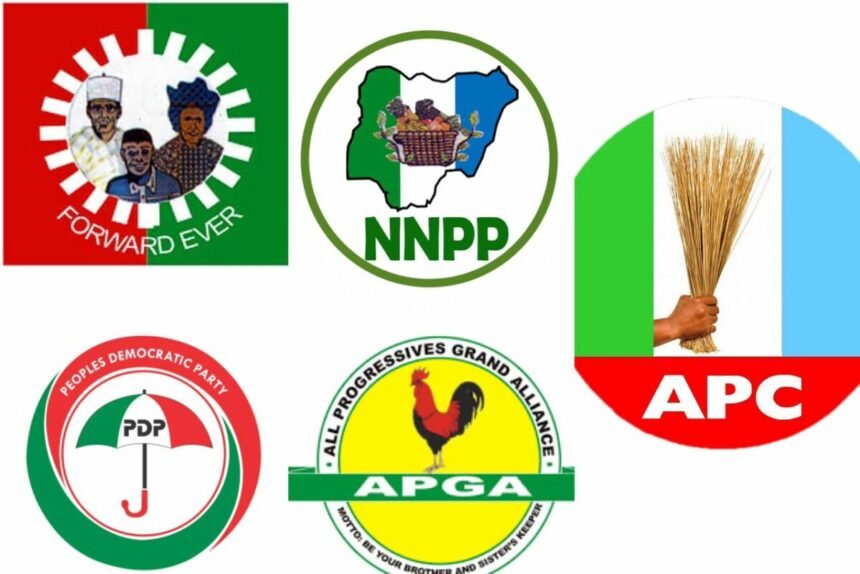
There is a bit of naivety and indeed academic exercise in what the opposition is trying to do at this moment – this convergence to forge an alliance to present a single presidential candidate to square against the APC will definitely end in futility.
Let us go back to history. Efforts to forge such alliances in Nigeria have never worked in the past 65 years.
In 1964, the United Progressive Grand Alliance (UPGA), comprising the defunct NCNC, Action Group, NEPU, UMBC and others, was formed to fight the Nigerian National Alliance (NNA) made up of the NPC and NNDP. It failed glaringly and lost the election overwhelmingly.

Then in 1983, the defunct NPP, Unity Party of Nigeria (UPN), Peoples Redemption Party (PRP), GNPP and NAP formed the Progressive Parties Alliance (PPA) to fight the defunct NPN, but they lost the 1983 general elections with what Dr. Umaru Dikko, who was the Director-General of the NPN Presidential Campaign Organization, famously called a “moonslide”.
Again in 1999, the defunct Alliance for Democracy (AD) and the All Peoples Party (APP) forged an alliance to fight the PDP in the presidential election but lost drastically to the PDP candidate, Chief Olusegun Obasanjo.
In 2011, the defunct CPC and Action Congress of Nigeria (ACN) at the last minute tried to forge an alliance to collectively fight the presidential election but failed.
It was this failure that gave the leaders of the defunct CPC and ACN the impetus to realize that they had to collapse their respective political parties and merge. That merger birthed the APC in 2013.
Is history repeating itself again with the convergence by the so-called 100-coalition at a Summit in Abuja on 31st August 2026 with the aim of cobbling together an opposition to present a single presidential candidate for the 2027 general elections?
When you present a single candidate, you have to aggressively sell that candidate in more than 176,846 polling units, 8,809 electoral wards, 774 Local Government Areas, 360 Federal Constituencies, 109 Senatorial Districts, 990 State Constituencies and 36 States of the country and the Federal Capital Territory. You must have structures and committed and dedicated local leaders and membership in all these units.
Voting takes place in these 176,846 polling units and results are collated from these polling units and transmitted to the 8,809 electoral wards, then collated at the 774 Local Government Areas, then collated again at the States Collation Centres before they are transmitted to the National Collation Centre in Abuja. At these points of collation, from polling unit to electoral ward to local government and to the State, is not a tea party. A political party must have a dedicated team of committed and honest cadres who are ready to be painstakingly involved and be alert and observant at every stage to ensure transparency and no compromise.
From my personal experience as State Collation Officer in the 2011 presidential election for the defunct CPC, and in 2015 and 2019 for the APC presidential candidates: As soon as I finished voting in my polling unit in Yakurr Local Government Area, I had to drive to Calabar, a distance of about 120 kilometres, to report at the Cross River State Collation Centre at the INEC State Headquarters in Calabar. When I arrived, collation had not started as results were still being collated at the wards and 18 Local Government Areas in the State.
A move was made by the incumbent State administration to compromise me. At the State Collation Centre, an Agent for a rival political party that was in power in the State made a concerted effort to bribe me. He said to me pointedly, “Your candidate has gotten 25% of the total number of votes cast in the State, please I want you to cooperate with us concerning the final figures to be allotted to the presidential candidate of the political party the State is supporting.” Of course I refused.
The point I am making is that elections go beyond voting. Without a solid structure across the country with a team of cadres who believe totally in the philosophy of such a political party, it is difficult. Therefore, when the opposition collapses and presents a single presidential candidate with a totally new party that has to be internalized among the electorate and sold to them, it will be difficult for the electorate at the grassroots level to accept it and ensure that its interest at every stage is protected.
Assume a single presidential candidate is adopted now in September 2026 and the presidential election takes place on January 16, 2026, with State elections on February 6, 2026 – you have less than four months to start selling that new party in more than 176,846 polling units and all other structures across the federation. That is a logistical impossibility.
CONCLUSION
History has shown that last-minute alliances of convenience do not win presidential elections in Nigeria. What worked in 2015 was not an alliance but a full merger. Without deep-rooted party organs and trusted polling-unit agents who can defend votes from the polling unit to the National Collation Centre in Abuja, any new coalition flying a new flag months to an election is a vehicle without an engine. Structure, not summit declarations, wins elections.