
By Babafemi Ojudu
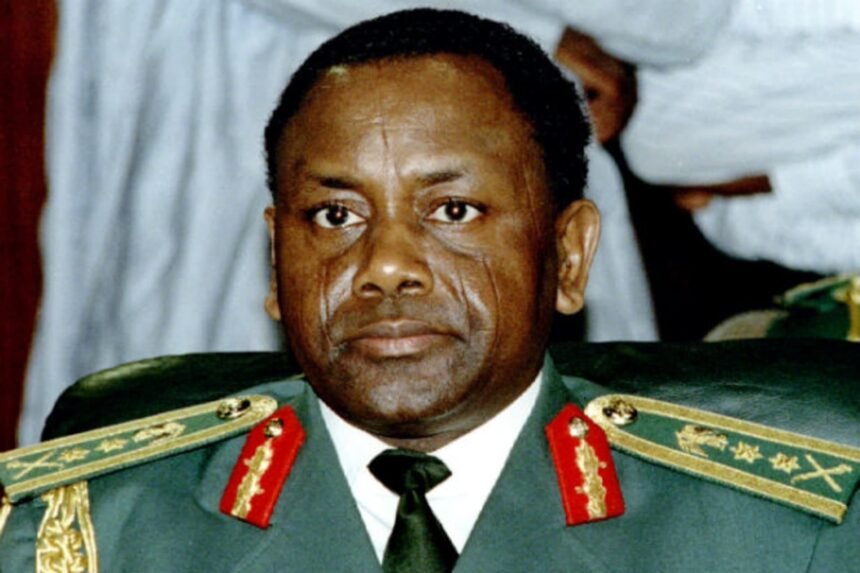
I have just finished reading the account of former DSS operative, Mr Dennis Amachree, on the sudden death of General Sani Abacha in his book DSS @ 40: My Journey Behind The Shield.
At the time Abacha died, I was in detention, completely cut off from events as they unfolded. In the years since, I have heard numerous accounts of what transpired—some from the streets and others from individuals who were in positions to know. Amachree’s version is the latest to enter the public domain. It is not particularly detailed, but it is intriguing and certainly not one that should be dismissed with a wave of the hand.
Yet, as someone who spent decades as an investigative journalist, I have learnt that every answer worth accepting must withstand the questions it inevitably raises. A credible account does not necessarily end an inquiry; sometimes, it deepens it. And while Amachree’s narrative adds an important perspective to one of the most consequential episodes in Nigeria’s contemporary history, it also leaves several critical questions unanswered. If these revelations are accurate, they raise questions that only a thorough security and intelligence investigation can hope to answer. Who exactly were the women at the centre of the episode? What were their backgrounds? What relationships, if any, did they have with foreign individuals, organisations or intelligence services? These are standard questions in any investigation involving the sudden and unexpected death of a serving Head of State.


It is not enough simply to accept the reported statement: “He died while on top of me.” That declaration, rather than settling the matter, opens up further avenues of inquiry. Why would one sister introduce—or yield—her younger sister to her own lover? Was this merely an unusual personal arrangement, or was there more to it? Amachree’s account, at least from what has been presented, leaves these questions unanswered. The broader geopolitical context also deserves examination. What was the disposition of Western governments and their intelligence agencies towards General Abacha at that particular time? What strategic interests were at stake? Were there active efforts to influence the direction of Nigeria’s political transition? These are questions of legitimate historical inquiry, not conclusions or allegations.
Equally important are the unanswered questions surrounding those closest to the late Head of State. What did his trusted associate, General Jeremiah Useni, know about the circumstances leading up to Abacha’s death? He was reportedly the last senior officer to meet with Abacha before the arrival of the women. Was he formally debriefed or interrogated by investigators? If so, what information emerged? Was he aware of the identities of the women or the circumstances that brought them into Abacha’s company?
Another critical question concerns the role of the Chief Security Officer, Major Hamza Al-Mustapha. Where was he at the time the two sisters visited the Head of State? Were they subjected to the standard security screening before being granted access, or were they admitted without proper vetting.

One could understand why a long-standing intimate companion of a Head of State might, over time, be accorded relatively unrestricted access. But should that privilege have been automatically extended to her sister? If no thorough security checks were conducted on both women, it would suggest a serious breach of protocol and raise legitimate questions about the performance of those charged with safeguarding the life of the nation’s leader. Any credible investigation into the circumstances of General Abacha’s death ought to have examined this aspect closely.
The handling of the two sisters after the incident also warrants scrutiny. Why were they reportedly kept in custody for approximately six months? Where were they held? Was this done for their protection, to preserve the integrity of an investigation, or to prevent them from speaking publicly before inquiries had been concluded? Were formal statements taken from them? If so, where are those statements, and what did they reveal?
Finally, what was their travel history before the visit and Abacha’s death? Whom had they met in the weeks or months preceding the incident? What were their associations and movements? These are precisely the kinds of questions competent intelligence and security services routinely pursue when investigating the sudden death of a national leader.
Whether those questions were asked, how thoroughly they were investigated, and what conclusions—if any—were reached remain matters that historians, researchers and perhaps future official disclosures may yet illuminate. Mr Amachree’s account may therefore be a useful lead, but it cannot reasonably be accepted as the final resolution of the mystery. It gives us a scene, not an investigation; an anecdote, not evidence; a dramatic last sentence, but no answers to the many paragraphs that must logically precede it.

To conclude simply that Abacha “died while on top of me” is to reduce a grave matter of state to a bedroom footnote. A Head of State does not cease to be a national security responsibility merely because he enters a private room. Indeed, it is precisely at such vulnerable moments that the duty of those entrusted with his protection becomes most exacting. The demand for further inquiry is not born of any desire to bring Abacha back from the dead, rehabilitate his rule or punish anyone nearly three decades after the event. The dead cannot be recalled, and history cannot be rewritten through vengeance. The purpose must be institutional learning.
When an incident of such magnitude is properly investigated and honestly resolved, its lessons can help us identify failures, close security gaps and strengthen the protective architecture around the President and other consequential public officials. A nation that refuses to learn from a security failure leaves the door open for its repetition.
Perhaps Abacha’s death was entirely natural. Perhaps there was no conspiracy, no foreign hand and no elaborate plot. But even that innocent conclusion must be earned through evidence: medical findings, security records, travel histories, witness statements, access logs and a credible account of what happened before, during and after the incident. Suspicion should never be mistaken for proof, but neither should simplicity be mistaken for truth.
Mr Amachree has offered us a resolution, but it is far too basic to close a matter this consequential. One might even say that his explanation is elementary, but this is no elementary-school puzzle, and “he died while on top of me” cannot be the final answer in the examination paper of history.
For now, therefore, the file must remain open. History is a patient interrogator. It may tolerate silence for a season, but it rarely accepts an alibi merely because it is colourful, convenient—or delivered from beneath the weight of a dying dictator.