By Ozodi Osuji
AI-generated summary
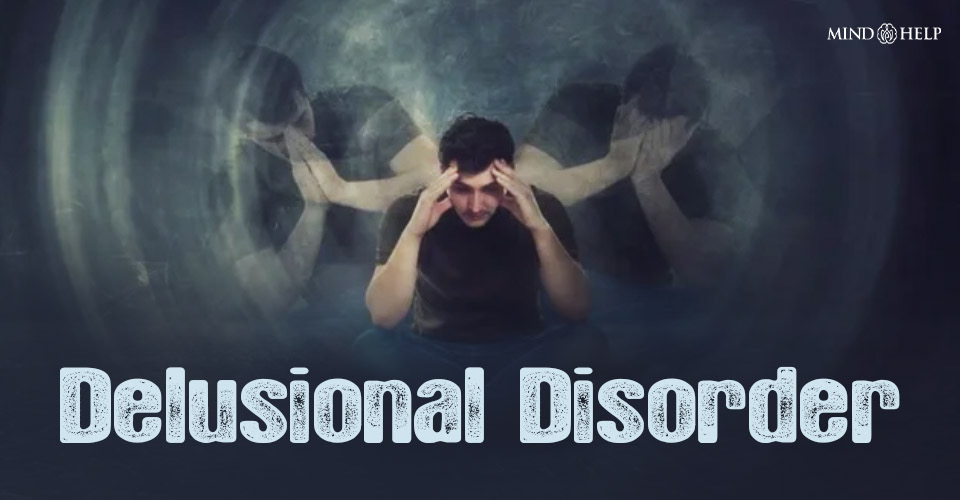
Delusional disorder is a serious mental health condition characterized by the presence of one or more persistent delusions that are not based in reality, lasting for at least one month.
Definition and Characteristics
Delusional disorder is classified as a type of psychotic disorder where individuals hold strong beliefs (delusions) that are false and resistant to reasoning or contrary evidence. These delusions can be categorized as non-bizarre, meaning they involve situations that could theoretically occur in real life, such as being followed, deceived, or loved from a distance. Unlike bizarre delusions, which involve impossible beliefs such as aliens controlling one’s thoughts. Non-bizarre delusions are more plausible but still untrue.

Types of Delusions
Delusional disorder can manifest in various forms, including:
Persecutory Type: Belief that one is being targeted or conspired against.
Erotomanic Type: Belief that someone, often of higher status, is in love with the individual.
Grandiose Type: Belief in having exceptional abilities, wealth, or fame.
Jealous Type: Belief that a partner is being unfaithful without any real proof.
Somatic Type: Beliefs related to bodily functions or sensations.
Symptoms
The primary symptom of delusional disorder is the presence of delusions, which can lead to significant emotional distress and interfere with daily functioning. However, individuals with this disorder often maintain a relatively stable daily routine and do not exhibit overtly bizarre behavior outside of their delusions.
Treatment
Delusional disorders are treatable, typically through a combination of psychotherapy and medication. Cognitive-behavioral therapy (CBT) can be particularly effective in helping individuals challenge and reframe their delusional beliefs. Antipsychotic medications may also be prescribed to help manage symptoms.
Conclusion
Delusional disorder is a complex mental health condition that requires careful diagnosis and treatment. Understanding its characteristics, types, and treatment options is crucial for effective management and support for those affected by it. If you or someone you know is experiencing symptoms of delusional disorder, seeking professional help is essential.
The above are AI-generated ideas on delusional disorders. Below are my thoughts on the disorder; my thoughts are based on several years of observing deluded people in many settings, including clinical and non-clinical.
In delusional thinking and behaving, one feels totally powerless and weak. Generally, the deluded person, in childhood, experienced a medical issue, usually inherited, that made him feel totally powerless and unable to overcome it. Thus, it becomes planted into his or her mind (conscious and unconscious mind) that he is totally powerless. Since no human being can exist on earth if he accepts total powerlessness, the child tries to overcome that sense of powerlessness by positing an image of himself or herself that has the opposite of how he feels: powerful. Thus, the person goes from powerlessness to an imaginary sense of power. There are now two ideas about one: a powerless self and an inordinately powerful self.
1. The deluded person has a total sense of powerlessness and disconnectedness from other people.
2. He pretends to have false power and false connectedness; this is ego power, which is powerlessness.
3. He must give up that ego power and accept his initial sense of powerlessness; he must give up the all-powerful self he invented and tried using to replace his powerless self.
4. In the acceptance of powerlessness and nothingness, the individual’s real self, which in religious categories is the Christ self, which I call the unified formless self, dawns on his awareness.
5. Deluded and paranoid people feel powerlessness and seek ego power; they tend to be acutely aware of who has power around them and resent them instead of cooperating with them. A paranoid child resents the parent’s authority/power and chooses oppositional defiant behavior to seem to be more powerful than the parents; he tunes them out and feels independent of them and more powerful than them; in doing so he justifies not listening to his parents and fancies himself totally autonomous and self-directed (in his book, Autonomy and the rigid character, David Shapiro noted the deluded person’s desire for total autonomy and independence and avoidance of our normal interdependence in society).
6. The deluded and paranoid person(both terms are interchangeable) must accept his powerlessness and nothingness and not seek self-conferred power. In powerlessness, he experiences his real self, the unified self, Christ, Atman, Nwachi, son of God.
7. In the death of the ego and acceptance of Christ, he derives power given to him by God and feels real power, not the powerless power of the ego self.
When the paranoid, deluded person accepts powerlessness, that is, does not seek self-given power, he is ready for the realization of his real self (which is the Christ self). In his mind now swept clean of self-conferred power, in the emptiness and nothingness of his mind, God and his son, which I call the unified formless self, dawn, but they will not dawn on a mind where there is a self-conferred power and ego self.
THE EGO MUST DIE IN ONE FOR THE CHRIST TO BE REBORN IN ONE
This is an either-or situation: ego or Christ. The self-one made for oneself (the ego-separated self) or the self that God created one as (Christ, who is unified with all other sons of God and God).
You cannot affirm the ego and know Christ. You must completely let your ego go for you to experience your real self, the Christ, the unified son of God, and in him know real power and strength derived from one’s union with all other sons of God and God at the formless spiritual level.
In contrast, the ego is separated from God and people and has no power, is weak and merely pretends to be powerful.
DISCUSSION
As can be seen, I have factored some religious terms into my take on how to heal delusional thinking and paranoia. This is because, in my many years of trying to help my deluded clients give up their delusional thinking and behavior, employing mostly secular therapy, I failed.
Generally, the typical psychotherapist gives up trying to help the deluded person. How can you help him? He is generally intelligent and rationalistic and deploys his reasoning to prove to you that his perceptions are true and that other people’s perceptions, including the therapist’s perception, are wrong. He wants to be right at all times and have other people be wrong.
To be right validates his desire for total power and certainty; to be wrong makes him feel powerless and uncertain.
Delusions are constructed to give him power and certainty in a world where he feels powerless as a result of biological and medical issues.
Sometimes social issues may cause delusional disorder, such as the peculiar situation of African Americans; the dominant people in their society tell them twenty-four-seven that they are powerless and worthless, so they feel powerless and worthless and try using delusional thinking to convert their internalized sense of powerlessness to powerfulness.
There is a spiritual aspect of delusional thinking; to explore this aspect of the disorder will take us too far afield in this brief article.
Instead, let me assert that humanity is part of God, and we try to seem separated from him. In Separation from him, we feel powerless because God is all power; in separating from him, we feel powerless.
All human beings feel powerless because they feel separated from God. We then try to make ourselves feel powerful by inventing powerful self-concepts and self-images housed in bodies and functioning as if we are those false self-conferred powerful selves.
To heal delusion disorder and, in fact, all mental and personality disorders, the individual must give up the self he made for himself, with which he replaces the self that God created him. He must give up the false ego self.
In Buddhist terms, he stays quiet and tries to make his mind give up any self-concepts and self-images he has about who he is and who other people are and what the things of this world mean and attain an inner sense of void, no self-concept. In a mind swept clean of all concepts of who he is- his real self, our shared formless unified self, what Buddhists and Hindus call God realization dawns. Asian religions call this experience Samadhi, Nirvana, Satori, and a Holy Instant where one’s ideas of who one is, separated self, are let die, and one experiences the Self as God created it, unified self, holy self: one whole self that is simultaneously infinite selves.
I have explored these ideas in detail in my other writings; for now, the salient point is that the deluded person invented a false separated self for himself, as we all did, and must give that false self-up and make his mind empty, and in its emptiness his real self, the self that God created him as, dawns.
When the deluded person gives up his false, grandiose self, he becomes a self that lives from mental health, a holy self that loves and forgives all of us our mistakes. A healed deluded, paranoid personality is an enlightened son of God! He goes from affirming the separated self to affirming our shared formless unified self and serves our common interests. As a result, he now lives in peace and is happy, in contrast to when he pursued a separate ego, a grandiose ego seeking grandiose powers, wealth, intelligence, and other symbols of earthly power. He goes from Trumpian narcissism to Christ’s humility.
CONCLUSION
It is difficult to heal deluded and paranoid people without helping them to embrace some spirituality and/or religion that enables them to see themselves as created by a power higher than themselves, let us call it God, and they try living from that power, and see it as loving and forgiving, and let him guide them in all their decisions.
A healed deluded person quits trying to guide his thinking and behavior from the perspective of his false grandiose ego-separated self.
The ego, even in its best state, as in so-called normal people, is deluded, but some egotists live from their group’s shared delusional disorder, whereas the deluded person lives from unshared delusional disorder, hence stands out as a sore thumb in society.
The truth is that to live as a human being is to be deluded, to believe that which is not true as the truth.
The truth is that we are all unified as one shared formless self, but at the present we have the delusion that we have separated selves housed in bodies, each person pursuing their self-interests at the expense of other separated selves.
What cures all of us is a return to living as who we are in truth, a formless unified self, the God Self/Whole Self, Holy Self, and a part of which is called the Son of God.
A son of God who lives as such while on earth is called the Christ self, a loving and forgiving self.
Thus, we must add spirituality to our present attempts to heal the deluded and other mentally challenged people with only medications and psychotherapy. We must, of course, keep on employing medications and talk-based therapies but add a spiritual angle to our efforts to address human mental and behavioral issues.
Ozodi Osuji
July 25, 2026