By Okoi Obono-Obla
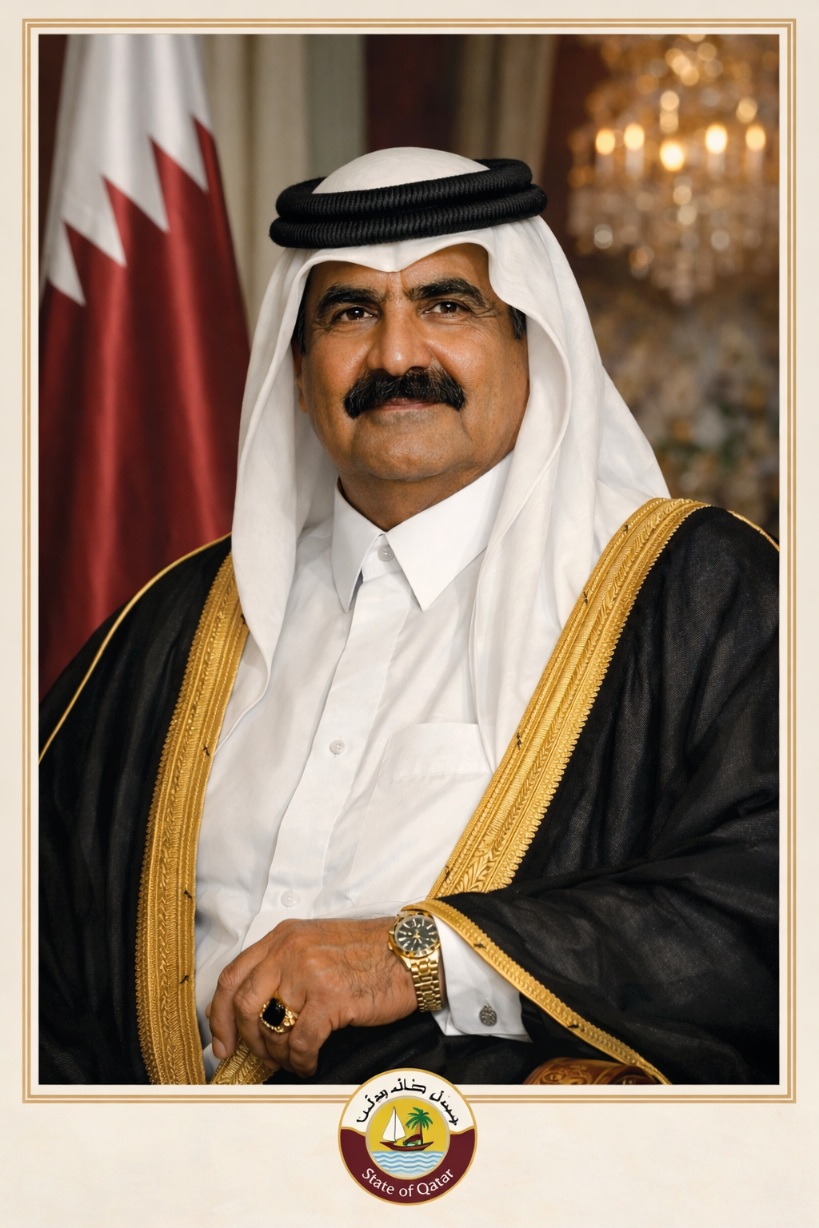
Sheikh Hamad bin Khalifa Al Thani: Architect of Modern Qatar
Sheikh Hamad bin Khalifa Al Thani, the Father Emir of Qatar, who marvellously transformed the nation through visionary leadership, passed away on 12 July 2026 at the age of 74. In June 1995, he seized power in a bloodless coup while his father, Sheikh Khalifa bin Hamad Al Thani, was abroad. At the time, Qatar was struggling economically and facing near‑bankruptcy.
Through disciplined and forward‑looking governance, Sheikh Hamad attracted massive foreign investment, developed Qatar’s vast natural‑gas reserves, and established the Qatar Investment Authority (2005), which became one of the world’s largest sovereign‑wealth funds. Under his leadership, Qatar’s GDP grew more than twentyfold, turning the country into a global economic hub and a destination for business and tourism.

He also launched Al Jazeera in 1996, revolutionising Arabic‑language broadcasting and giving Qatar an outsized voice in global media. His reign introduced gradual political reforms, including Qatar’s first municipal elections in 1999, where women could vote and stand as candidates, and the promulgation of Qatar’s first permanent constitution in 2004.
Qatar’s successful bid to host the 2022 FIFA World Cup further elevated its global profile. Though allegations of corruption surrounded the bidding process, Qatar was cleared of wrongdoing. The event accelerated infrastructure development and showcased the country’s transformation.
In 2013, Sheikh Hamad voluntarily abdicated in favour of his son, Sheikh Tamim bin Hamad Al Thani, ensuring a rare peaceful transition of power in the Gulf. His passing in 2026 marks the end of an era for Qatar, but his legacy endures in the nation’s economic strength, diplomatic influence, and cultural prominence.
Conclusion:
Sheikh Hamad bin Khalifa Al Thani’s life demonstrates how visionary, disciplined, and transparent leadership can reshape a nation. From an economic backwater with its first secondary school only in 1969, Qatar rose under his stewardship to become one of the world’s wealthiest and most influential states. His legacy remains a testament to the transformative power of leadership.