By Okoi Obono-Obla
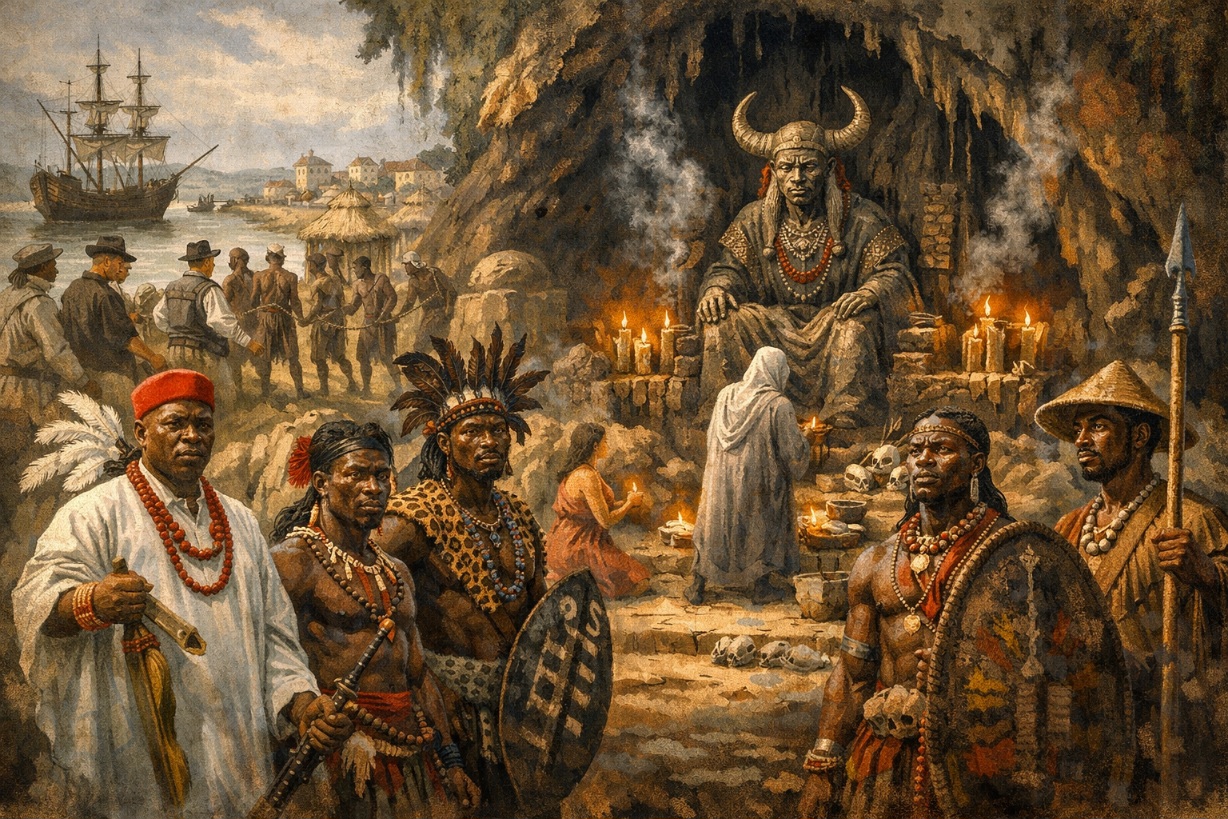
One of the factors that helped Ugep to develop educationally faster than most of its neighbours was its openness to colonial influence. While other neighbouring communities resisted colonialism—requiring the intervention of the British Expeditionary Force, a military unit organized by the Royal Niger Company to pacify resistant territories—Ugep came along with a welcoming attitude toward the colonial presence. The Royal Niger Company, chartered by the British colonial government after the Berlin Conference of 1884/1885, combined trade, military power, and missionary activity to establish control.
Unlike its neighbours, the Ugep people faithfully and openly received the missionaries that came alongside trade, guns, and the Bible. These three elements became the instrumentalities through which colonialists subdued and reshaped African societies under the guise of a civilizing mission.
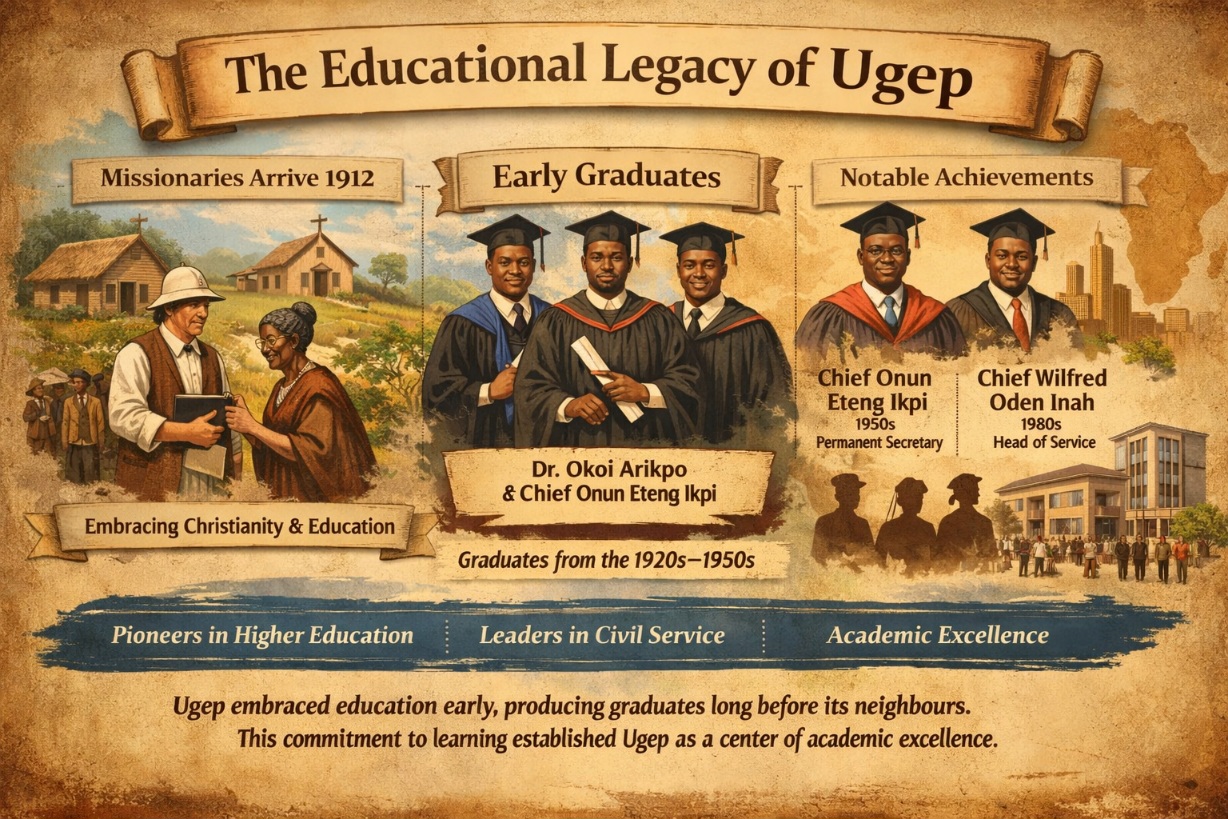
Although Ugep was a pristine and authentic African civilization, unspoiled by external forces, the people embraced the new ideas and systems introduced by colonialism with characteristic gusto and energy. According to Philip Eteng, his great-grandfather Etete Etowan was among the first to embrace Christianity in 1906. With the advent of Christianity came education. The Church of Scotland Mission came in 1910, establishing the Presbyterian Church and a primary school that same year.

This singular reason of wholeheartedly embracing Christianity and giving the missionaries the freedom to establish churches and schools attracted the people to acquire education. It became one of the key factors that helped Ugep to shoot ahead of its neighbours and has aided the fast development the town is currently enjoying. Ugep produced university graduates as early as the 1920s, 1930s, 1940s, and 1950s. Among them was Dr. Francis Eno Ebri, who studied medicine at the University of London and graduated in 1952, alongside notable figures such as Dr. Okoi Arikpo and Chief Onun Eteng Ikpi, who graduated from the University of London and Oxford University between the late 1920s and 1940s.
By the 1960s, many Ugep youths like Professor Inyang Abam Eteng, Justice Etowa Arikpo, Chief Obeten Bassey Iwara, Chief Wilfred Oden Inah, and Chief Arikpo Ettah had graduated. In the 1970s, Ugep produced several hundred graduates, even when some of its neighbours had yet to produce diploma certificate holders.
It is therefore on record that Ugep produced graduates sixty years before some of its neighbours managed to produce their first. As far back as the 1950s, Chief Onun Eteng Ikpi had become a powerful Permanent Secretary in the old Eastern Region of Nigeria, and by 1983 Chief Wilfred Oden Inah had risen to become the Head of Service of the old Cross River State. The civil service of Cross River State was filled with numerous top-level civil servants from Ugep. The town had produced professors several decades before some communities ever dreamt of having senior academics.
Conclusion
Ugep’s story stands as a shining example of how openness to new ideas and the early embrace of Christianity and education can transform a community. By welcoming missionaries and valuing learning, Ugep built a legacy of intellectual excellence that continues to define its identity. Its foresight and enthusiasm for progress made it a cradle of scholarship and leadership, setting a standard that many communities still aspire to reach.