By Okoi Obono-Obla
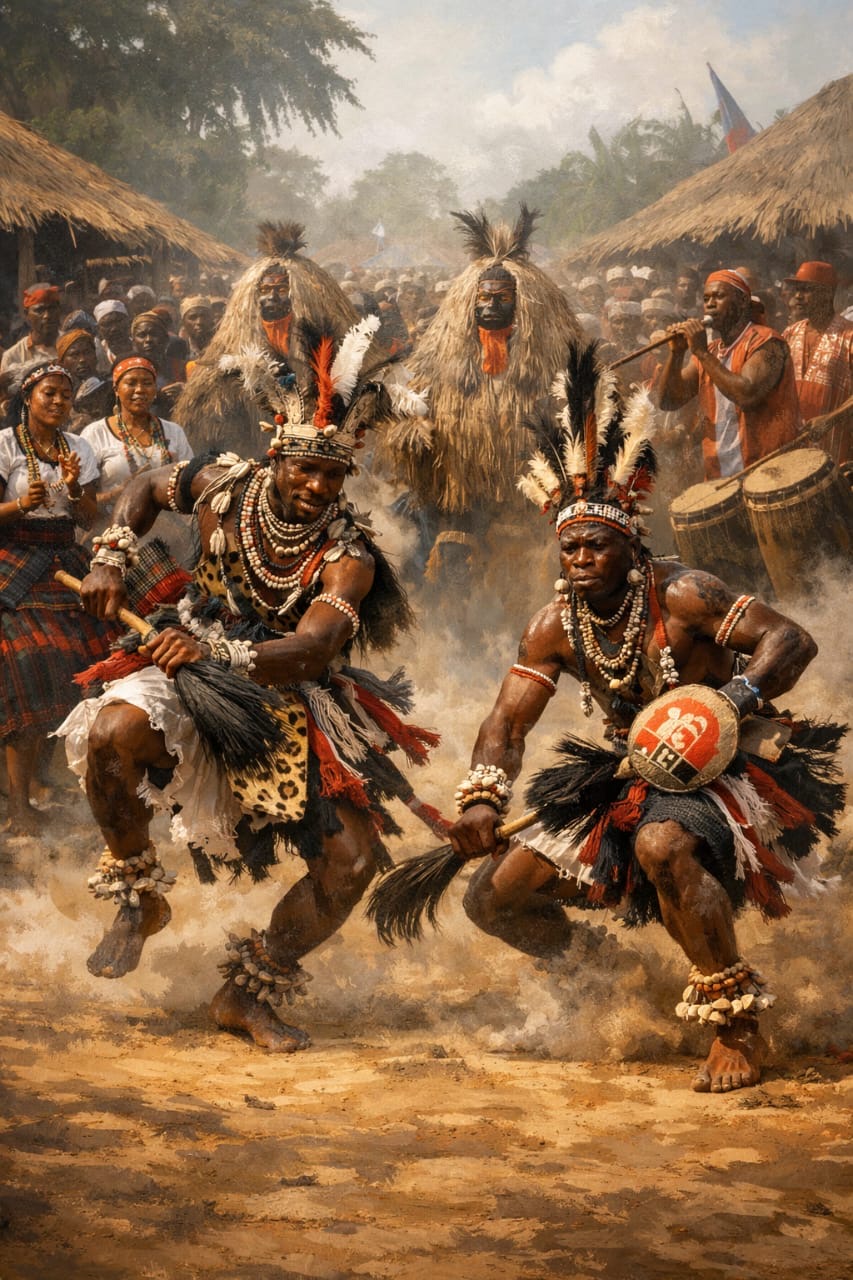
The Obam War Dance of Ugep, Yakurr Local Government Area of Cross River State, Nigeria, depicts courage, war heroics, valour, and the decimation of an enemy. It is a dramatic performance that combines singing and theatrical expression. The songs are typically an admixture of Agwagwune, Ejagham, Bahumumo, the extinct Akpa language, and are also splintered with Efik and Yakurr, reflecting the rich linguistic and cultural diversity of the region.
According to Uwem Affiah in his article Teaching Ideals and Traditional Drama: The Obam Dance of Ugep, the performance of Obam praises includes eulogies of the greatness and might of communities with which Ugep maintains cordial relationships. He notes:
> “The songs touch on war and hunting, praise singing, and history. Music in performance commences with the Otumise beating an esoteric rhythm in the Kebamtam during the ritual ceremony immediately preceding the public performance. At this point, he calls on the ancestral dead for guidance during the performance. After calling on the gods and the ancestors, he goes on to call on the leaders of Obam beginning with the head…”
Praise names are commonly used, which is typical of war and heroic dances such as Obam. Devices like allusion enrich the performance. For instance:
> “Obam Abrigba, Obam Abrigba, Akpu borokom, Usumanjom kan kan kan kan…”
The Abrigba is a special acknowledgement and recognition of the heroics of the Agwagwune people in Biase Local Government Area, with whom Ugep has shared historical affinity, interconnectedness, and diplomatic ties over the ages. This invocation demonstrates how the dance functions as a cultural archive, preserving memories of alliances and valorous deeds across generations.
The Otumise also calls on other clans and villages that enjoy cordial relationships with Ugep to come and be entertained, emphasizing unity. When he calls on these villages, he proclaims their greatness and challenges others to dare them. For example:
> “Ugep Eburutu (Ugep the great), Efik Eburutu (Efik the great), Nko Eburutu (Nko the great)…”
Alongside praise, the Otumise offers civically toned critique, directing sharp words at villages with which Ugep does not share cordial ties. This duality of praise and criticism underscores the dance’s role not only as entertainment but also as a cultural instrument of diplomacy, memory, and moral instruction.
Cultural and Linguistic Significance
The Obam War Dance is more than a performance; it is a repository of language and identity. By weaving together multiple tongues — Agwagwune, Ejagham, Bahumumo, Akpa, Efik, and Yakurr — the songs embody the interconnectedness of peoples in Cross River State. This linguistic admixture highlights the dance’s role in sustaining endangered languages and reinforcing cultural bonds.
Historical Context
The dance also situates Ugep within a broader historical narrative of alliances, rivalries, and communal survival. The recognition of Agwagwune heroics through Abrigba, the invocation of Efik greatness, and the critique of unfriendly villages all reveal how performance serves as a living chronicle of diplomacy and conflict resolution.
In conclusion, the Obam War Dance of Ugep remains a vibrant cultural performance that celebrates heroism, fosters unity, acknowledges historic alliances, and simultaneously critiques discord. It is both an artistic masterpiece and a civic expression of communal identity, preserving the linguistic, historical, and diplomatic heritage of Cross River State.