

by Boma West
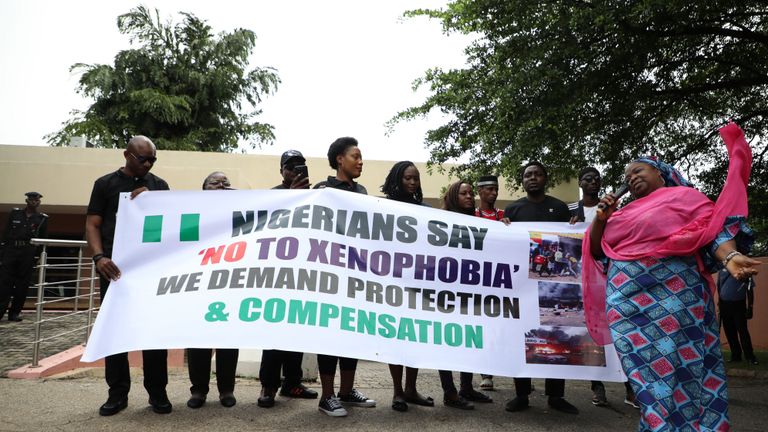
The Nigerian Consulate in South Africa, working alongside the Nigerian Citizens Association in South Africa, has announced a free repatriation flight for Nigerians who wish to return home permanently. The offer comes against the backdrop of escalating violence and xenophobic attacks that have made life increasingly precarious for foreign nationals living in South Africa, Nigerians inclusive.
On the surface, the gesture reads as a compassionate governmental response to a crisis that has claimed lives, destroyed businesses, and shattered the dreams of thousands of Nigerians who crossed the continent in search of better opportunities. The consulate deserves some credit for acting swiftly and making this option available. A free flight home is not a small thing, and for many stranded and terrified Nigerians, it may well be a lifeline.
The real question, however, begins where the aircraft lands.

Nigeria has been here before. When violence flared in Libya, Nigerians were airlifted home. When the United Arab Emirates cracked down and mass deportations swept through Dubai, Nigerians were flown back. In both instances and several others, the pattern was distressingly familiar: returnees were received at the airport, handed a hundred dollars, given a meal, photographed for the press, and then released into a country that had made no concrete provision for their next step. One hundred dollars. In Nigeria’s current economic climate, that sum barely covers a week of basic survival in Lagos, let alone the cost of rebuilding a life.
The danger with the South Africa repatriation, noble as the intention may be, is that it risks becoming another chapter in that same story. Repatriation without rehabilitation is not rescue; it is relocation of hardship. These are men and women who, in many cases, had built something for themselves abroad. They had trades, businesses, skills, and social networks. Returning them to Nigeria without a structured plan to help them reintegrate is, in practical terms, setting them up to either struggle in silence or find their way back to another country at the first opportunity.
What does genuine reintegration look like? It starts with data. The government needs to know who these returnees are, what they did abroad, what skills they carry, and what they need. A hairdresser from Durban is not in the same situation as a trader from Johannesburg or a student from Cape Town. Blanket treatment of returnees as a homogeneous group is one of the core reasons past efforts have failed. Beyond documentation, there must be access to soft loans and startup capital through agencies such as the Bank of Industry and the Small and Medium Enterprises Development Agency of Nigeria. There must be vocational support, mental health resources, and a transitional housing safety net for those who return with nothing but the clothes on their backs.
The Federal Government’s commitment to the welfare of Nigerians in the diaspora has long been tested and found wanting. The Nigerians in Diaspora Commission exists, on paper, as the body responsible for managing matters of this nature. It is time for that commission to step decisively into its mandate and move beyond press statements into programmable, funded action.
South Africa’s recurring xenophobic violence is a symptom of deeper tensions, and its Nigerian victims deserve more than sympathy. They deserve a home worth returning to, a government that receives them with a plan, and a system that treats their return not as the end of an obligation but as the beginning of one. The flight is the easy part. What Nigeria does after the landing is where the real test of governance lies.