By Boma West
A clip circulating across Nigerian social media captured something many citizens have long suspected but rarely heard spoken aloud by those in authority. In it, a NEPA official in Bayelsa State offers a candid, if startling, explanation for why residents in his area receive barely an hour of electricity at a stretch. His words, stripped of diplomatic framing, placed the blame squarely on the shoulders of consumers. The moment light is restored, he explained, people rush to power their freezers, washing machines, pumping machines, and every other appliance in the house, burning through a week’s worth of energy allocation within sixty minutes.
The clip provoked outrage, laughter, and a great deal of debate. It also opened a far more important conversation about what it would actually take for Nigeria to achieve stable, round-the-clock electricity supply, and why that milestone remains frustratingly out of reach.
The concept of 24-hour electricity is not a fantasy reserved for wealthy nations. Countries with comparable populations, climates, and even lower GDP per capita have managed to deliver reliable power to their citizens. Ghana, Rwanda, and Morocco have each made measurable strides, not because their citizens use less electricity, but because their governments built generation, transmission, and distribution infrastructure capable of meeting demand. Demand is not a problem to be suppressed; it is a signal to be answered.

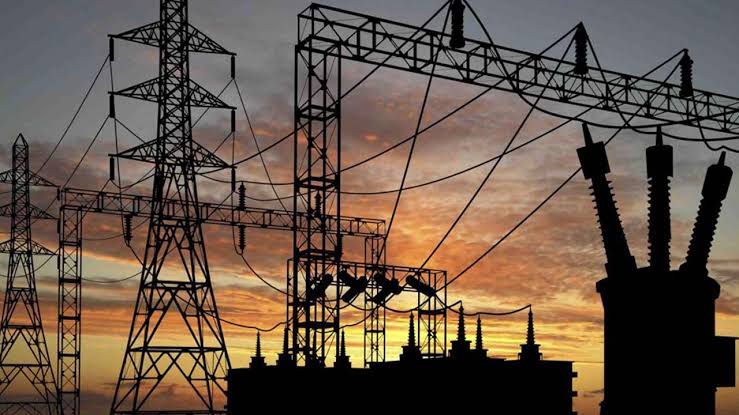
Nigeria’s installed generation capacity sits at roughly 13,000 megawatts on paper, but actual power delivered to the grid rarely exceeds 4,000 megawatts on any given day. A country of over 220 million people, with a rapidly urbanising population and an expanding middle class, cannot realistically survive on that output. The gap between what exists and what is needed has been present for decades, patched over with generators, prayer, and excuses.
The infrastructure decay runs deeper than the generation plants themselves. Transmission lines that were built in the 1960s and 1970s have not been meaningfully upgraded since. Distribution networks across most states are held together with improvised repairs, theft-riddled metres, and technical losses that bleed enormous volumes of electricity before it ever reaches a household socket. Gas supply to thermal plants remains erratic, partly due to pipeline vandalism and partly due to decades of underinvestment in the gas-to-power sector. Hydroelectric plants at Kainji, Shiroro, and Jebba suffer from declining water levels linked to climate change and poor reservoir management.
Funding has never been the only obstacle, though it is a significant one. The Nigerian electricity sector was partially privatised in 2013 under the hope that commercial operators would inject fresh capital and competence into a system that government had neglected. The results have been mixed at best. Distribution companies, or DISCOs, took on assets far more degraded than their assessments had anticipated, and many have since struggled to collect enough revenue from customers to cover operating costs, let alone invest in expansion. Generation companies, are owed billions in unpaid invoices from DISCOs, who in turn argue they cannot collect from customers they cannot even meter properly. The financial chain is broken at nearly every link.
Regulatory clarity has also been elusive. Tariff reforms needed to make the sector financially viable have been rolled back repeatedly due to political pressure. No government wants to preside over electricity price increases that affect millions of voters, even when those increases are necessary to attract the investment that would eventually bring prices down through efficiency and scale. The result is a sector trapped in a vicious cycle, too underfunded to improve, too broken to justify the funding it needs.
The Bayelsa official’s comment, however tone-deaf it sounded, touches on a real engineering reality. Load management is a genuine challenge in power systems where generation is constrained. When supply is unpredictable, consumers do stockpile energy in their appliances, which creates demand spikes that destabilise the grid further. The solution to that problem, however, is not to limit electricity to an hour a day. The solution is to build enough generation and storage capacity to absorb peak demand, invest in smart grid technology that can distribute load more efficiently, and provide consumers with accurate, real-time pricing signals that encourage conservation during high-demand periods.
Countries that have solved their electricity crises did not do so by rationing power indefinitely. They built more, planned better, and held their utilities accountable to service standards. Nigeria has the gas reserves, the renewable potential, the solar irradiation, and the human capital to power itself entirely. What has been absent is sustained political will, institutional coherence, and a regulatory environment that rewards performance rather than tolerating failure.
Twenty-four hours of electricity in Nigeria is not a pipe dream. It is an engineering problem with known solutions and a governance problem with known remedies. The hard question is not whether it is possible. The hard question is whether the country’s leadership, at federal and state levels, will finally treat it as the national emergency it has always been, rather than a talking point recycled every election cycle while generators roar on through the night.