

Akanni Iromini at 70!
By abiodun KOMOLAFE
_(Published in THE NATION, Saturday, April 25, 2026)_
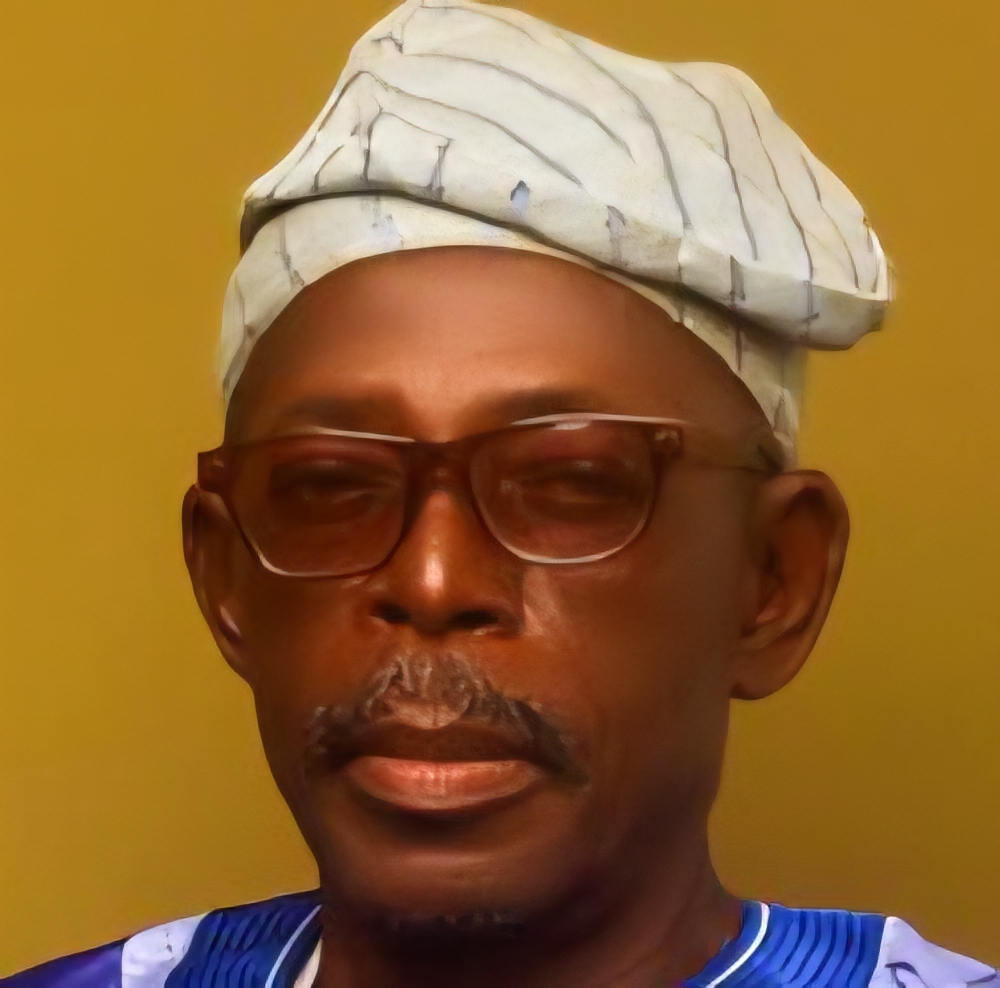
Tomorrow, Sunday, April 26, Akanni Aqib Iromini marks the milestone of his 70th birthday. Beyond the usual birthday platitudes, this septuagenarian turn offers a fitting opportunity to reflect on a journey that has been as remarkably beautiful as it has been purposeful.

Iromini is worthy of celebration, more so as he represents a living embodiment of a forgotten spirit of sacrifice – and even, as many sadly found, of self-flagellation. Born in Iwo, Osun State, the pro-democracy activist was a fierce presence in the struggle to kick the military jackboots off the nation’s throat. Like so many others, he made great sacrifices without the hope of personal emolument. That his example remains unrewarded is a detriment to those who wish to build a more just order.
Make no mistake: those who were involved in pitched battles of that era did not do so for reward, recognition or personal gain. They acted on the basis of principles, motivated by a desire to create a better society. Those who sacrificed so that society might advance and make irreversible gains based on equity should be recognized before it is too late, and compensated for their valour, which clearly interrupted careers and orderly advancement. If this is not done, opportunists will pose as activists – as they are already doing, carrying out acts of subterfuge and deceit in the name of activism.
Since no society can make progress on these opportunistic trajectories, it would be a grotesque disservice not to highlight the efforts of outstanding individuals such as Iromini, so that they may serve as role models and inspirational figures for succeeding generations of activists and those who desire a more decent way of human interaction. Here, we can look to the honourable example of the Vietnamese leader, Vo Nguyen Giap.
Giap is best remembered as the hero of Dien Bien Phu in 1954. In that year, ‘The Red Napoleon’, as he was fondly called, led a ragtag army of barefooted peasants against a French force equipped with the most advanced weaponry of the day and backed by formidable air power. Against all odds, that barefooted mob tore the mighty French army apart, leading to their withdrawal from Indochina. As fate would have it, Dien Bien Phu altered the conception of modern warfare forever. Today, the battle is studied in military academies all over the world and should be an invaluable case study for military and police academies in Nigeria, not least the Office of the National Security Adviser.
Here is the kicker: Giap – one of the most astute military strategists of all time, ranking alongside Alexander the Great and Napoleon Bonaparte – was not actually a trained professional soldier. He was an activist, a teacher and lawyer in the mould of our own Alao Aka-Basorun, Gani Fawehinmi, Bamidele Aturu and Femi Falana – one who grew tired of battling French colonialism in the courts and plunged into the guerrilla movement instead.
A man of immense honour, he consistently placed the liberation of Vietnam above personal titles or the trappings of power. His life proved a point: one does not take part in a struggle simply to reap personal rewards and advancement. This principle should be engraved in the portals of all offices linked to activism – be they trade unions, student unions, or human rights groups – as a constant reminder of a pathway based on honour and dedication.
Giap died some years ago at the age of 101 in a military hospital in Hanoi. He had famously maintained a modest profile despite his monumental victories, and it was evidence of his character that he shunned the personal vanities of high office. Whether his legacy was eventually burnished by the state with posthumous grandiosity or accepted by a reluctant family, the core truth remains: he lived for the cause, not the rank. This is activism in its most dedicated form.
People of valour and sterling qualities such as Iromini should be seen in this light. The state needs to quit its silence, recognize their efforts and edify them now as they move graciously into their advancing years. It is not just about an individual, but about motivating a new cadre of activists determined to fight for the creation of a more civilized and caring society.
_“Orí yeye ní mògún, t’àì ṣẹ̀ l’ọ́pọ̀.”_ (Many are the heads at the shrine, but the innocent among them are many). There are people who are still languishing in unjust incarceration stemming from the struggle against military dictatorship. Those who are today immensely benefitting from their efforts should be magnanimous enough to remember them, as an example to others that their sacrifices were not in vain. There are more of them than we think, wasting away across the six geopolitical zones.
Any support programme for these activists must include basic amenities and opportunities for their offspring, who served as indirect collateral damage, alongside meaningful restitution for their lost decades. This is a historical necessity, and the present government is in the moral position to justify and execute this. Previous governments, starting with the Olusegun Obasanjo regime in 1999, clearly lacked the organic affinity with the cause of the restoration of democracy, and certainly could not have been expected to exhibit such moral commitment.
The government currently at the helm is the total opposite. Its leadership personified the very commitment to the struggle. It therefore possesses the moral impetus to implement the policies necessary for rehabilitation and restitution. Restitution represents a balancing act – and for an important reason – because many of those currently enjoying the benefits of our restored constitutional government played no part in the battles that led to the formation of the New Republic. An example must be set before the history of that period goes stale.
Robert Kiyosaki likes to say that finding success – and even millions – is tied to doing what one is passionate about. For Iromini, however, passion never led to the bank; it led him instead into a crucible of sacrifice. The man paid in blood and sweat, involving losses and private grief far too deep for a Saturday column. The struggle demanded much of him, claiming vital pieces of his life and legacy.
Yes, Iromini might not have a bank account or a title to show for his 70 years, but he owns the history of every person who now walks free because of him. He represents an institutional memory of what the input of civil society should be in anchoring change and galvanizing the momentum for a better society. His life is the story of the constant tug-of-war between the corridors of power and the ordinary people who refuse to stay quiet. He bears the invisible scars of those amputated years, yet he remains standing – kept whole in spirit by a divine strength when his own had reached its limit. He gave up everything for the cause, yet in the ways that actually matter, he is the wealthiest man among us.
The important part of that story is that, having moved from the frontlines of protest to becoming the conscience of the movement, Iromini is now a street-smart elder who protects the very values he once fought to establish. Beyond peradventure, a figure of such unassailable integrity must remain a player of continuing relevance. We cannot allow a commitment which was proven at a decisive juncture in the history of the nation to go to waste. In today’s world, 70 is not that old!
May Comrade Akanni Iromini’s advancing years be characterized by incredible calm and physical vigour!
May the Lamb of God, who takes away the sin of the world, grant us peace in Nigeria!
Email: ijebujesa@yahoo.co.uk.
Mobile: 08033614419 SMS only.
© 2026 The Nation Newspaper Ltd.
All rights reserved.