by Tdka Maat Kilimanjaro
Some have asked my take on the waves of massacres and attacks on Black migrants, documented as citizens and undocumented. The fact is all Black South Africans are not behaving in this cowardly manner.
After researching the southern region of Africa for years over a decade, i have inferenced that South Africa is 20-25 years away from being a place to move to or invest in. Why? They have to clean up their own internal mess—letting Predatory White capitalism remain. with the Whites owning almost all the land and wealth, unmodernized backwards Black tribalism, Black cowardly fear of Whites, displacement of anger against the Whites onto Black migrants, weak class consciousness, and sheer lack of appreciation for the efforts of other Africans in helping Blacks in South Africa win their political freedom. These are factors.
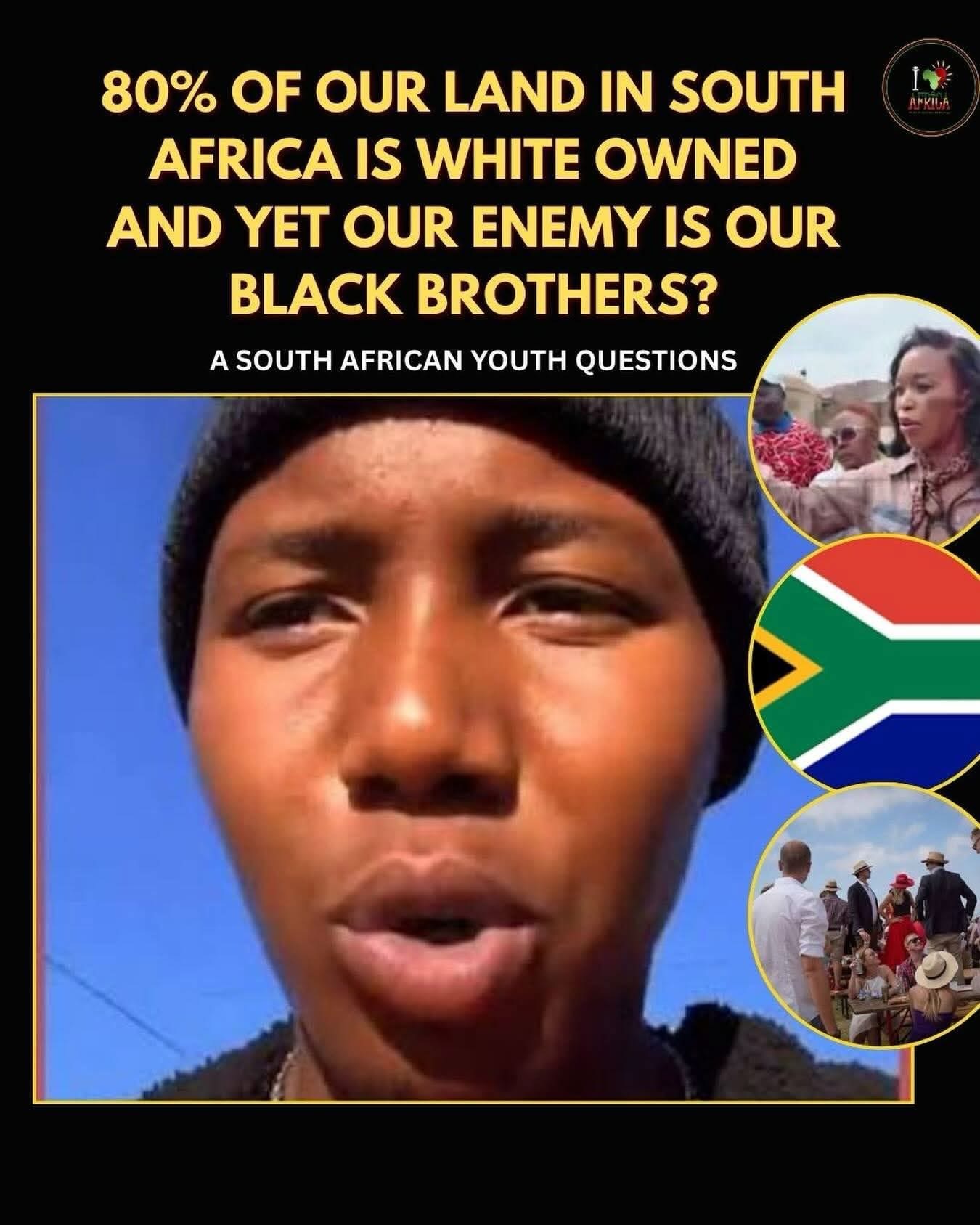
It’s shameful given the support other African nations and the African diaspora gave South African Blacks in their fight against these rotten predatory Whites under their garbage apartheid system. In short: You got political voting rights, but the White settlers kept the upto 90% of the best land and all of the wealth they stole.
Now Black folk are again fighting and killing each other over scraps the Whites left…
ANALYSIS
The recurring violent attacks in South Africa, particularly in Durban and other urban centers, against Black African migrants are not just the usual random eruptions of “tribal black hostility,” but the outcome of a long historical process rooted in White land theft, White predatory capitalist sesure of all the nation wealth leading to structural inequality with 90% of the Black population having lest than 3% of the wealthwhile 6% of the Whites own nearly 90% of the best land and wealth, uneven economic transformation, and localized competition (where Black impoverished workers fight each other for the leftover crumbs) within a deeply stratified society. A White enemy has done this and its playing out as these Whites scripted.
To understand the phenomenon clearly, it must be traced chronologically from the late apartheid period through the so called “democratic” transition and into the present, while examining the material conditions that shape both perception and action among the populations involved.
Under apartheid, Black South Africans were systematically dispossessed of land, excluded from skilled labor, denigrated, robbed of human dignity, and confined to filthy, unsanitary, marginal spaces within the national economy, while White ownership of land and wealth became entrenched at a structural level. With the end of apartheid in 1994, political power shifted, but the underlying distribution of economic resources did not fundamentally change. The Whites essentially kept all the economic wealth, and land that they stole. Those unprepared, lacking in courage, ignorant Blacks even let those rotten Whites go Scott free with that fraudulent “truth and reconciliation council”… None of those White murderers went to prison for all those near centuries of crimes. This is at the heart of why these cowardly Blacks attack other Blacks they call “foreigners” and let the Whites go Scott free. They are mortally scared of them. You cannot change political power and leave all economic power and wealth in the hands of 6% of the population.
At the same time Blacks begun voting, South Africa emerged as the primary economic center in southern Africa, attracting migrants from countries such as Zimbabwe, Mozambique, Malawi, Nigeria, Ghana, and Ethiopia. These migrants entered largely at the lowest levels of the economy, concentrating in informal sectors such as street vending, small retail shops, transportation, and low-wage labor. This placed them in direct and immediate competition with poor and working-class Black South Africans who were themselves struggling within conditions of high unemployment, inadequate housing, and weak service delivery. (This is the center of the Black South African on Black migrants attacks.) Fighting over scraps on the very bottom of the society. While the Whites keep everything.
By the early 2000s, these class pressures among impoverished Blacks with or without citizenship papers intensified. Urban townships became densely populated spaces where economic survival depended on access to extremely limited opportunities. The informal economy—i.e., selling/peddling stuff on the streets—became overcrowded, and tensions built steadily. This culminated in the nationwide explosion of violence in 2008, during which more than 75 Black people were killed and attacks spread across multiple regions, including Durban. The logic of the violence was already evident: migrants were targeted not because they controlled wealth or power, but because they were the most immediate competitors in everyday economic life. (The economic competition that Black South Africans were systematically losing was the underlying fuel.)
This pattern re-emerged with particular intensity in 2015, when Durban became a central place of escalation. Violence began there and spread nationally, involving looting, killings, burning of people and places, destruction of property, homes—in the process displacing thousands. Shops were burned, individuals were attacked in the streets, and entire communities of migrants were forced into police stations or temporary camps for safety. This period normalized a repertoire of actions that would recur in later years: mob violence, forced evictions, and the destruction of small businesses. It also coincided with increasingly inflammatory rhetoric from political figures and local leaders, which contributed to legitimizing hostility toward foreign Africans.
From 2019 onward, these dynamics became more entrenched and cyclical. Repeated outbreaks occurred in Durban, Johannesburg, and other urban centers, often linked to organized anti-immigrant campaigns. Narratives hardened around the idea that Black foreigners were responsible for unemployment and crime, despite the lack of consistent evidence supporting such claims. Notice that, Chinese, Jew, Arab, Indian, or White “foreigners” were not attacked. They did business freely because they were not seen as competition. And they were held at a higher esteem. Black self-hate and extreme cowardice and fear of Whites and others is unmatched in the world.
By 2022 and 2023, hundreds of incidents had been recorded, indicating that the phenomenon was no longer episodic but had become a normalized feature of social tension in certain areas. In addition to physical attacks, forms of institutional exclusion emerged, including the denial of services in clinics and hospitals, sometimes referred to as medical xenophobia, where even sick individuals were turned away based on nationality. These self hating negroes were seen dragging sick pregnant Black women out of hospitals because they were labeled “foreigners…”
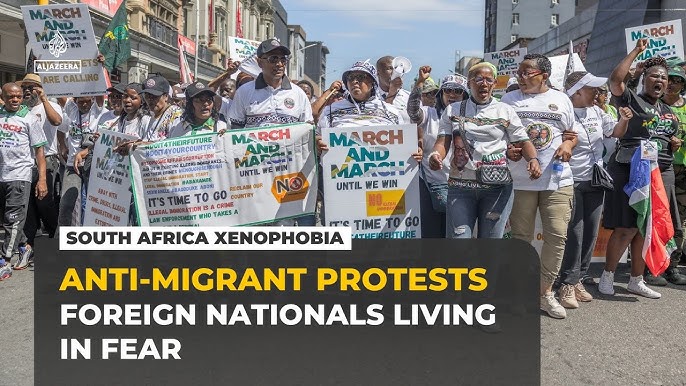
The most recent wave in March and April in 2026, again prominently involving Durban, reflects the continuation and intensification of this pattern. It is growing…Organized “clean-up” campaigns have targeted Black migrant-owned businesses, leading to looting, injuries, and displacement— documented and non-citizen. These actions are often framed as community enforcement against “illegal foreigners,” but in practice they affect a broad range of individuals, including documented migrants, long-term residents, and even those married to South African citizens. The persistence of such attacks demonstrates that legal status is not the determining factor; rather, visible difference and perceived competition are sufficient to trigger exclusion and violence.
Instead of the Black working class as a whole uniting against the predatory capitalist leeching Whites who own everything they stole, overturning that capitalist system, and building an economic system that equally distribute the national wealth—these ignorant negroes fight each other over the crumbs the Whites leave them to grovel in.
It is critical to clarify that these attacks are not primarily driven by discrete “tribes” acting in isolation. While in regions such as KwaZulu-Natal many participants may be Zulu-speaking due to demographic composition, the underlying driver is class position within urban and peri-urban environments. Participants are typically drawn from economically marginalized populations: unemployed youth, informal workers, and small-scale local business operators. In many cases, organized Black groups and movements have emerged to coordinate anti-immigrant actions, often intersecting with local business interests seeking to eliminate competition or with political actors mobilizing support during election cycles. The forms of violence described—beatings, shop burnings, forced removals, and exclusion from services—reflect a combination of spontaneous mob action and semi-organized enforcement.
The central contradiction in this phenomenon lies in the fact that those who control the majority of land and wealth are not the primary targets of violence. Instead, aggression is directed toward other marginalized groups. This can be explained through several interrelated processes:
First, competition occurs at the level where people actually interact economically. Migrants and local residents compete directly in the informal economy, whereas white-owned capital operates at a level that is socially and spatially distant from township life.
Second, migrants often rely on tight social networks, extended working hours, and lower profit margins, allowing them to offer goods at lower prices. This creates the perception that they are “undercutting” local businesses, intensifying resentment.
Third, the state’s limited capacity to provide services, enforce law, and prosecute perpetrators creates a vacuum in which communities turn to self-organized forms of enforcement, including vigilantism.
Fourth, political rhetoric frequently reinforces the idea that migrants are responsible for economic hardship, thereby redirecting frustration away from structural causes
Finally, the deeper historical condition remains one of incomplete economic transformation, where political liberation has not been matched by broad-based economic redistribution of material resources, leaving large segments of the population in conditions of persistent deprivation. That capitalist system must be jettisoned and the Whites must be stripped of the land rights and titles they stole with the national mineral wealth being nationalized and distributed equally—if this Black on Black destruction is to be ended. There is no other path.
The process through which violence unfolds tends to follow a consistent pattern. Economic pressure builds through unemployment, inequality, and urban overcrowding. Local competition intensifies within the informal sector. Narratives emerge that identify foreigners as the source of hardship. A triggering event—often a rumor, isolated crime, or political statement—ignites tensions. Collective violence then erupts in the form of looting, assaults, and displacement. State intervention temporarily suppresses the violence, but without addressing underlying conditions, the cycle resets and eventually repeats. This cyclical pattern is evident across the major waves of 2008, 2015, the late 2010s, early 2020s, and the current March, April 2026 period.
The effects of these cycles are severe and cumulative. In the immediate sense, they result in Black deaths, injuries, and the destruction of livelihoods. In the medium term, they destabilize the informal economy, disrupt regional migration systems, and strain relations between African countries. In the long term, they contribute to the normalization of mob violence, weaken the rule of law, and erode broader forms of social cohesion and solidarity. The fact that even legally recognized and socially integrated migrants are targeted underscores that the phenomenon is not governed by formal categories, but by social perceptions and economic pressures.
If current conditions persist, the most likely trajectory is the continuation of cyclical outbreaks, with increasing levels of organization among anti-immigrant groups and potentially greater intensity of violence. Over the medium term, this could either escalate into broader internal conflict among different segments of the population or be mitigated through significant structural interventions such as job creation, formalization of informal sectors, and stronger legal enforcement. In the absence of such changes, the long-term risk is that the pattern of violence, initially directed at foreign Africans, may expand to encompass other internal divisions, as the underlying pressures that generate conflict remain unresolved.
In its essence, this phenomenon reflects a situation in which a historically produced structure of inequality persists into the present, while the pressures it generates are displaced onto those who are most accessible and vulnerable. The violence does not move upward toward entrenched concentrations of wealth and power, but laterally across those who share similar conditions of precarity.
As a result, what appears on the surface as xenophobic hostility is, at a deeper level, a recurring expression of unresolved structural contradictions within the society.