By Farooq Kperogi
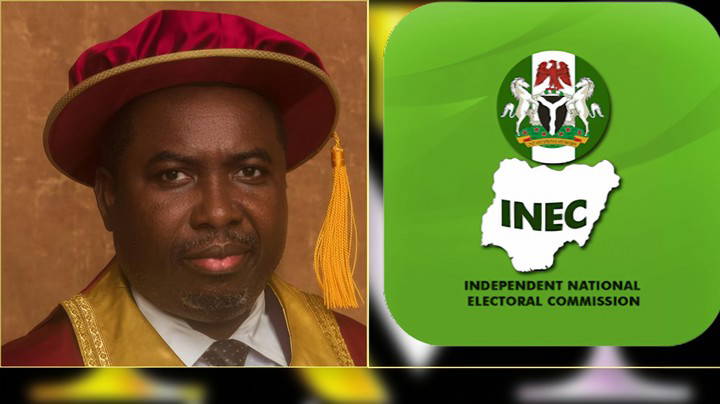
INEC said it investigated its chairman and found him not guilty of the allegation that he tweeted partisan support for Bola Tinubu in the 2023 election cycle.
If na you nko? How can you fail an exam you set and graded? How can you find yourself guilty in a court you established, where both the prosecution and the defense lawyers are your appointed minions and you are the judge?
There is a name for what INEC did. Self-exoneration. Some people call it self-exculpation. Others call it self-absolution.

It hides behind a blizzard of deceitful phrases without presenting a shred of evidence to support its self-exculpatory conclusions. It is shoddy for at least five reasons.
First, the claim that the timestamp of the “victory is sure” reply appeared earlier than the parent post, and therefore that it is “physically impossible,” ignores the fact that the parent post was edited, which altered its timestamp. The reply reflected the timestamp of the earlier version of the post before it was edited.
Second, as I pointed out in my April 13 post, independent, citizen-led account recovery efforts on the contested X account pointed to the phone number and email address associated with Amupitan’s official CV. If password recovery prompts consistently surface a masked version of a known phone number or email, that is circumstantial evidence of linkage.
Third, the “no archive trace before April 2026” claim actually says nothing. The Wayback Machine does not capture every account or every change in real time. Absence from the archive is not evidence of nonexistence.
The Wayback Machine is known not to archive low-traffic social media posts. Amupitan was an unknown quantity in 2023, so his reply attracted no eyeballs, which means the Wayback Machine had no reason to archive it.
Fourth, the self-exoneration tries to be clever by half by inverting the strongest circumstantial evidence that Amupitan tried to cover his tracks after he was caught pants down. The report said the change of the account’s name and locking it from public view after the partisan tweets were discovered was damage control by an impersonator. Hahaha! That was funny. These INEC “forensic experts” would have better success as comedians than as forensic analysts.
Anyone who is not a silly comedian knows that the most plausible interpretation of that action is that it is panicky, retroactive distancing by the original operator once scrutiny intensified.
Fifth, the fact that multiple fake accounts sprouted in Amupitan’s name after he was announced as INEC chairman says nothing about the authenticity of the X account he created in September 2022 when he was a barely known professor vegetating in obscurity. There were no multiple accounts in his name before he was appointed INEC chairman.
Finally, the threat to arrest and prosecute people who outed Amupitan introduces a frighteningly dictatorial element. That is an example of what in the United States we call a Strategic Lawsuit Against Public Participation (SLAPP).
As I have pointed out in many previous columns, SLAPP is a type of frivolous lawsuit whose ultimate goal is to intimidate critics into silence and self-censorship, not necessarily to seek redress for intentional injury to reputation because, in the case of Amupitan, there is, in fact, no basis to seek any redress since all evidence points to the fact that he did write the tweets he is denying.
When an institution under scrutiny moves quickly from denial to criminalization, it usually signals an attempt to paper over guilt.