

By abiodun KOMOLAFE
_(Published in THE NATION, Saturday, April 18, 3026)_
The current state of what passes for “activism” captures the dilemma and dysfunction of an underperforming post-colonial state. Nigeria once possessed a robust tradition of advocacy. This legacy is unambiguously illustrated by the November 18, 1949, Iva Valley massacre in Enugu, where miners were cut down simply for demanding labour conditions consistent with human dignity. The Iva Valley massacre – carried out under British watch – constitutes a war crime. Consequently, the British government must provide reparations, as it did for Kenya’s Mau Mau fighters.
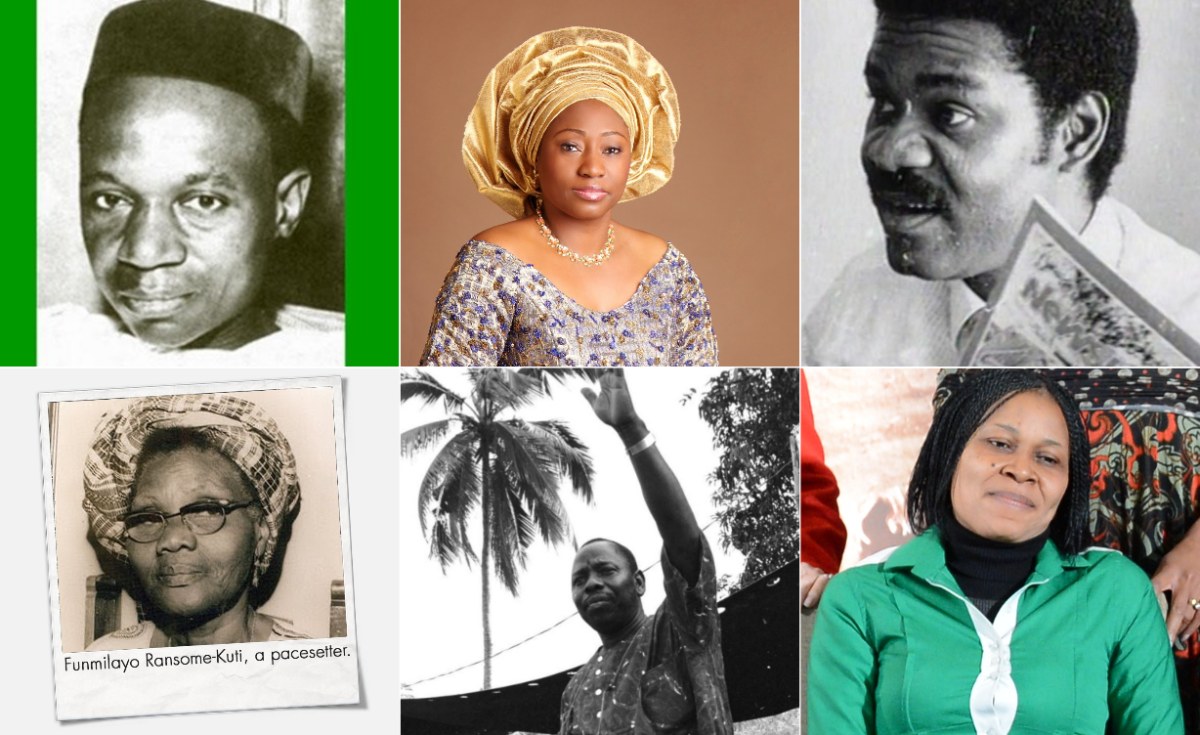
Unlike today’s “come-raids”, Nigeria once produced genuine activists like Michael Imoudu, Wahab Goodluck and Ken Saro-Wiwa, who etched their names into history by fighting for an equitable society. Nigeria’s political economy is currently defined by a systemic erosion of ethics.

Activism, once a noble pursuit of equity, has morphed into a transactional business model for self-aggrandizement. This collapse is mirrored in our status as the world’s poverty capital, now enmeshed in a seemingly intractable war. When a populace is reduced to cannon fodder for insurgents, it is the ultimate indictment of an inequitable social structure and a tragic symptom of a nation where even dissent has been commodified.
As the cerebral Pini Jason famously remarked in his Vanguard column over two decades ago: “We have constructed the ceiling of our standards so low in this country that you have to crawl to get out of the room.” That observation remains the definitive indictment of our persistent systemic dysfunction. May Pini Jason’s brilliant soul rest in perfect peace!
The hood does not make the monk! Karl Marx’s distinction between genuine activists and the “Aristocracy of Labour” has found its grim manifestation in modern Nigeria. Today, the prefix “comrade” has become a convenient camouflage – a charade of self-aggrandizement. True comradeship cannot exist amidst widening inequality. Ironically, those whose valiant efforts successfully narrowed inequality gaps in Brazil, India and South Africa never relied on the label to validate their work.
Comrades versus “Come-raids”! Activists versus “Hack-tivists”! Ajàfúnètó versus Aasáàjeun! Activism today has become a hustle. We see it in the shift from the “comrade” – the selfless advocate, to the “come-raid” – the opportunist. Leaders now threaten strikes merely to secure a payout, treating protests less as a pursuit of justice and more as a job interview. While the old-school activist fought for fundamental rights, the modern “come-raid” uses the public’s anger as a bargaining chip for a slice of the national cake.
In our fated clime, the state no longer needs to silence dissent through force; it simply buys it. By dangling government appointments or lucrative supply contracts, the state instantly transforms a ‘watchdog’ into a ‘lapdog.’ Furthermore, it exploits tribal and religious fault lines to ensure these voices never unite. Today, the state has realized it is far cheaper to pay off the loudest critics than it is to feed the hungry. It is a calculated, cynical strategy.
Unlike past activists like Imoudu, who anchored cost-of-living demands in a broader struggle for equitable social progress, today’s “Aristocracy of Labour” lacks a strategic vision. In that era, agitation for wages was inseparable from the fight for universal access to health, education and housing. Today, that mission has been hollowed out.
The mindset of today’s “Aristocracy of Labour” is dangerously short-term, lacking a roadmap for a productive society where output – not agitation – drives the reduction of inequality. For Nigerians, this is a tragedy; and we remain trapped! Only a strategic war against poverty can provide the necessary fulcrum for national development. To make progress, we must shed today’s deceptive “comradeship” and return to the principled advocacy of figures like Imoudu. We must learn from the UK’s 1945-1951 Labour government, which turned the Beveridge Commission’s vision into an enduring welfare state.
Locally, consider the 1957 Action Group minimum wage under Chief Obafemi Awolowo! By increasing purchasing power, it triggered a surge in investment, production and motivation. This stands in stark contrast to today’s fixation on short-term monetization, which has left the country stagnant. If today’s activists are truly committed to their cause, they have one clear mandate: break the cycle.
A handful of organizations, such as the Socio-Economic Rights and Accountability Project (SERAP) and BudgIT, are challenging the status quo, providing a practical blueprint for structural change that mass movements should emulate. It is a profound irony that those who eschew the labels of “comrade” and “activist” are the ones doing the heavy lifting in the fight for equity and social justice. They deserve our highest praise.
The danger of this diluted commitment is trickling down to the next generation. Unlike their forebears, today’s student unions are defined by a distorted, self-serving brand of activism that signals a bleak future. An “Aristocracy of Student Unionism” threatens to permanently replace the pursuit of genuine social equity. Therefore, we must intervene urgently, for these students are the next generation of state leaders.
To rebuild Nigerian activism, we must study global archetypes like Desmond Tutu, Jaime Cardinal Sin, and Karol Wojtyła. More importantly – transcending religion – we must examine the Liberation Theology movements that defied military dictatorships. Triggered by the 1973 overthrow of Salvador Allende in Chile, these movements not only challenged the neoliberal experiments that widened inequality, they demonstrated that principled, grassroots resistance remains the only effective response to state-sanctioned poverty.
Liberation Theology was more than anti-military. It pioneered concrete, alternative development. Echoing the spirit of Gamal Abdel Nasser’s “Free Officers Movement”, it centered progress on human empathy. Rebuilding Nigerian activism demands that same developmental thrust – a movement unapologetically pro-people and human-faced.
The current framework – defined by short-termism and monetization – has yielded nothing. We must chart a new path through a consortium of genuine activists, grounded in a clear philosophy. As long as “fighting for the poor” remains a vehicle for personal wealth, the people are mere collateral damage. When leaders sell out, hope dies. When no honest voices remain, the streets will eventually bypass their leaders to unleash raw, unmediated anger.
May the Lamb of God, who takes away the sin of the world, grant us peace in Nigeria!
Email: ijebujesa@yahoo.co.uk.
Mobile: 08033614419 SMS only.
©️ 2026 The Nation Newspaper Ltd.
All rights reserved.