By Okoi Obono-Obla
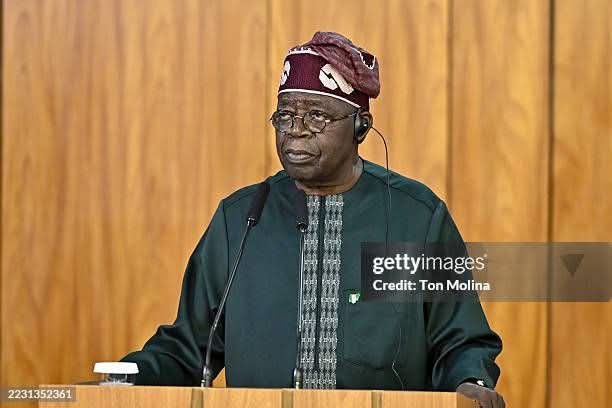
On 16 April 2026, President Bola Ahmed Tinubu, while receiving the Renewed Hope Ambassadors at the State House in Abuja, launched a sharp rebuke against the African Democratic Congress (ADC) for disobeying the directive of the Court of Appeal. The court had ordered that the status quo ante bellum be maintained in the suit brought against one of the ADC factions by Nafiu Bala Gombe. Tinubu emphasized:
“My government will not submit to the disobedience of a lawful order of the court. We must embrace the judiciary—whether it favors us or not. We submit to this principle of democracy, the separation of powers, and an understanding of its dynamics.”
This statement underscores his administration’s commitment to the rule of law and the sanctity of judicial authority, regardless of political convenience.

The Legacy of Privatization:
The President’s remarks also touched on Nigeria’s troubled history with privatization. The National Council on Privatization (NCP), once chaired by a prominent political figure, oversaw the privatization of more than 5,000 public enterprises, industries, factories, and development banks belonging to the Federal Government. These included major steel and automobile plants, airlines, and smelters.
Yet, today, the fate of these enterprises raises troubling questions:
Ajaokuta Steel Mill – dormant, never fully operational.
Ikot Abasi Aluminium Smelter Plant – inactive.
Delta Steel Mill – struggling, far from its intended capacity.
Jos Steel Rolling Mill – non-functional.
ANAMCO and Leyland – collapsed automotive assembly plants.
Volkswagen and Peugeot Nigeria – shadows of their former selves.
Nigeria Airways – defunct.
These once-promising ventures, intended to drive industrialization and economic growth, now stand as relics of failed policy execution. The privatization exercise, meant to invigorate the economy, instead left behind a trail of abandoned factories and dashed hopes.
Political Accountability:
President Tinubu’s blistering critique of the opposition highlights the irony of those who presided over these failed privatizations now positioning themselves as saviors of Nigeria. His words serve as a reminder that history cannot be erased, and accountability must be demanded from those who contributed to the nation’s economic stagnation.
Conclusion:
Nigeria’s industrial decline is a sobering testament to the consequences of poor governance and mismanaged privatization. As Tinubu insists on adherence to the rule of law, his broader message is clear: democracy thrives not only on judicial respect but also on political accountability. The failures of the past must inform the resolve of the present