


*The Case for the Resurrection: Exploring the Logic, the Evidence and the Argument*
by Moses Oludele Idowu
In the previous series of essay we examined the Jesus Story, the evidence and the period. These are:
* The Conspiracy Against Jesus (1)
* Jesus Christ, Myth or Reality: Exploring the Historical Evidence From Graeco-Roman Sources (2)
* Jesus’ Christ, Myth or Reality :Exploring the Jewish Sources (3)
* Jesus Christ Myth or Reality: The New Testament Sources (4)
* Crucifixion or Crucifiction?: Was Jesus Nailed on the Cross: The Logic, the Evidence (5)
* The Crucifixion: Between Myth and Reality – A Response to Contemporary Academic Scepticism (6)
* Did Jesus Resurrect From the Grave: The Case for the Resurrection (7)
Some of these are not yet in the public domain. I am building a body of work, an apologia, argument that may be used especially by people of Faith who due to lack of a proper scholastic training and education find it difficult to answer contemporary scepticism and doubts.
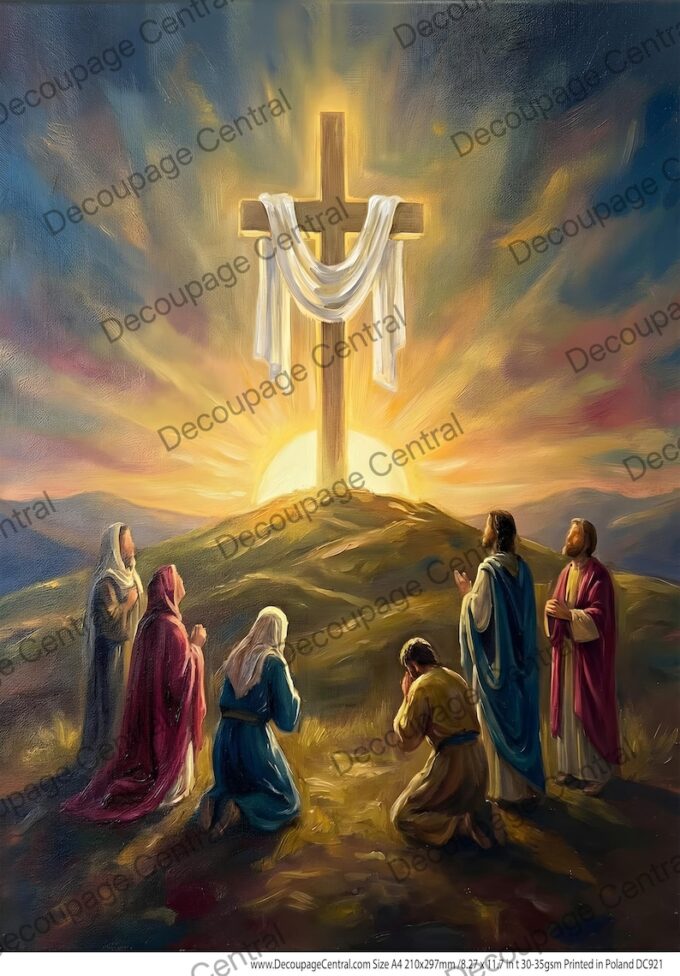
In this last and final essay of the series I want to examine the real crux of all, the apogee of the Faith and the bedrock of belief and revelation – the Resurrection. This is the ultimate. If it is a fraud then Christianity – in all it’s traditions, varieties and forms – is a fraud. If it is true and if indeed Christ actually resurrected then Christianity stands on a firm footing, a solid foundation and stands shoulder higher than all the 7000 names of Babylon – the numberless quasi- philosophical – religions and cults that dot the social landscape of the world. If it is true that there is indeed an Empty Grave in Jerusalem and the Body of Jesus Christ is not there then there are indeed only two religions on Earth: Christianity and the others.
In this essay I want to just play the role of an impartial judge, an assessor, a scholar. I am neither for the Resurrection nor against it. I want to present an argument, a case and logic based on the evidence and proofs some of which my own readers can investigate and which I have investigated myself. And my readers can then judge for themselves.
I want to present 10 points here for our considerations and examination and questioning. I have placed the Bible in the last categories for obvious reasons. Many won’t accept the Bible witness for obvious reasons even though, as I will soon show the witnesses of the Bible and of his Disciples are credible.
Unlike in the death and crucifixion which have substantial validation from official Graeco-Roman Sources ( see Essays 2-4) the Resurrection has no official sources directly for obvious reasons. Rome would never admit that the same “rebel” or “outlaw” or “bandit leader” they executed is alive again. No government will admit that. So the lack of official sources for the Resurrection is no impediment. There are other sources we shall examine and through which we can make a honest assessment.
The evidence presented here may be wholly circumstantial and rightly so. But circumstantial evidence, when strong enough constitutes a proof.
I want my readers to examine these facts carefully and see whether they are strong enough and cogent to believe in the Resurrection or otherwise.
Certain understanding of the First Century Palestine, its history, culture and the Jewish religious behaviour – is needed to make sense of certain things here. They have been provided where necessary and the reader can cross check this from historical literature. The points cannot be fully exhausted because it is not a book but in brief.
1 *. The Early Spread of Christianity*
The very first case we want to examine is the early widespread diffusion and profusion of Christianity in the Graeco-Roman world. Jesus lived between 5/4 BC – 29 AD. We know this from the confirmation from extant Roman sources. He was born during the taxation/ census in the era of Augustus Caesar and died under Tiberius Caesar. These are dated in the Roman Annals.
Thus, Jesus left the scene before 30 AD. We know that by 50 AD the Jesus Movement had began its progressive march and spread everywhere beginning from Jerusalem, Judea, Antioch, Syria, and even the capital of the Empire in Rome. We know this because official archival sources confirmed it.
In 49 AD there were so many Christians, followers of Jesus in Rome that an imperial Decree had to be issued to expell all Jews from the Capital city because of disturbance. The disturbances were caused because most Christians then were still Jewish and they worshipped together in the same synagogues and this led to problem about doctrine and beliefs and traditions. The point then which is established in History is that Christians had become so numerous just by 49 AD that an imperial Decree had to be issued to curtail them.
One of the perplexing facts for historians of Rome is the quick spread of Christianity. What caused this spread, this wide diffusion of a Faith whose leader was known to be executed by official sanctions; and worse still, the execution through the cross – the most ignoble form of execution in First Century? Several historians have raised this puzzle and query because it cannot be denied.
Suetonius raised it and acknowledged it in his books on Caesar. ( See _Life of Claudius_ quoted in the previous essay. ) Pliny the Younger imperial legate of Bithynia also confirmed in a letter that still survives to his Emperor Trajan asking for advice about what to do with the Christians who had become too numerous everywhere and who would not swear to the gods of Rome or bow before any image of Caesar.
So how do we account for this reality?
The death by the cross was so ignoble that it was reserved for only slaves, outlaws, hardened criminals during that era. We have account of Cicero, a Roman senator who lived just around the era telling another that the cross was not meant for the Roman citizens. Only outsiders could die by the cross not a Roman citizen. That was how contemptible it was.
Thus in the light of this it is perplexing that a leader who died and was executed publicly through the same cross would have attracted so numerous followers. The Cross was not a thing of pride or glory in First Century Graeco-Roman world, it was a thing of shame, a stumbling block.
Thus, what then accounted for the mass conversion to Christianity all across the empire? CHRISTIANITY did not engage in violence nor carry the sword unlike its opposite counterpart from the Arabian desert and its warrior prophet.
How do we account for this phenomenon?
There is only one reasonable answer: the Resurrection.
The Early Christians continued to emphasize that their leader and Lord was crucified and He arose and has appeared to them and they testified of this. Virtually all their messages, sermons and witnesses in this earliest time contained an account of the Resurrection. They were so sure of it and many of them died with this affirmation, some as cruelly as their Master. They testified of it before kings, princes, congregation before the same generation of people who witnessed the Crucifixion.
The point should be raised, if this claim was a lie why did the people who saw and were eyewitnesses not dispute it? Why were they not contradicted that they were lying? If indeed there was no Empty Grave and the body of Christ was still in the grave why would the Apostles and disciples be so bold to testify of this in Jerusalem where their claims could be investigated, verified and disproved?
Why were the people of their day and generation silent when they made the claim about His Resurrection? You don’t keep quiet when a lie is told in public, a lie that affects everyone, you disprove it. Why were the disciples of Jesus not disproved?
Why did the Authorities – Jewish and Roman – not disprove them but always to threaten them to be silent ; and when they would not be silent, started executing them? If it was a lie wouldn’t it be easy to bring the body of Christ from the grave as proof?
The apostles and followers of Jesus spoke in language so bold and unmistakable that the people believed them. They spoke with great conviction, boldness, authority bearing witness to the Resurrection. Is it possible or logical that any person or collective can speak on an issue that is not true with such authority and boldness even before kings and majesties?
Thus, there is only on plausible answer to the Early Spread of Christianity in the Roman Empire between the first three centuries before Constantine: there was a believable fact, argument which the Disciples possessed and which their enemies could not gainsay or parry. We submit that this fact, this evidence, this winning edge is the Resurrection.
There is no other answer to account for the reality of the widespread diffusion of Christianity and its subsequent takeover of the Roman Empire outside of it. The mass conversion of people to Christianity cannot be due to or accounted for by persuasive argument. What argument would illiterate fishermen uneducated men have had before a culture or society that produced Plato, Socrates, Cicero, Virgil and what oratory would the illiterate followers of Jesus have had comparable to meet the students of Demosthenes and Areopagus and students of Aristotle?
Thus we submit that the only argument that the apostles had which silenced all their enemies and their adversaries was the Cross and the Resurrection. No one could answer this, no philosopher could evade or parry it. Or even discredit it.
If indeed Christ was raised from the dead as several eyewitnesses affirmed then He is not only Man, He is also the Lord of Glory and King of Creation. Rome had no answer to this; Greece had no logic to counter it. The Jews had no answer but to ignore it and consider it a stumbling block.
This is the first argument that makes a case for the Resurrection.
2 *. The Testimony of Early Christians*
Arising from the first is the testimony and preaching of the Early Christians. The Early Christians did not preach like the mealy- mouthed, over – fed, unserious Christians of today. They knew that they lived between death and life and merely been identified as a Christian is enough crime for death. To testify of Jesus openly after the Name had been banned attracted dire consequences. They did, all the same. They testified of his death and of his Resurrection.
Virtually all the preaching, testimony, argument, apologia, before kings, sovereign and lords contained the statement of the Resurrection. Why would human beings give testimony to a lie on this scale – a lie that could lead to their physical destruction? If they were not so sure of His Resurrection why would they continually risked their lives and leave their children as orphans for what they knew was a lie?
Most of these testimonials have survived. We have accounts of Polycarp, bishop of Antioch before his martyrdom and his testimony. Archive is full of this rich testimony before they were martyred. If a man is not true and never true he will be at his death. The Testimony of a dying man is reliable because he is at the point of no return.
Here are beautiful lines from Shakespeare:
“They say the tongue of dying men enforce attention like deep harmony,
Their words are scarce, they’re seldom spent in vain
For they breath truth that breathe their words in pain.”
So true and so real from the father of all dramatists.
The last testimony of many Christians have survived and they testified of the Resurrection to the end. They didn’t deny it. That is a case for their believability.
3 *. The Martyrdom of Countless Christians*
The next case we shall examine and arising closely from the last is the Martyrdom of Early Christians in their thousands. Numerous Christians were killed for their Faith in the Early centuries of the Chrisitan Faith. We know this and it is documented. In 64 AD for instance Nero caused a fire 🔥 to be set on Rome and blamed it on the Christians, a body hated by everyone. The Great Fire of Rome is well described by Cornelius Tacitus in his Annals of Rome and also by Suetonius in his _Life of Nero._ Both affirmed that countless Christians were executed for this grievous evils that they knew nothing about. Countless were killed just for their Faith. Christianity was regarded as _religio illicita_ ( illegal religion) in the empire.
Today it is possible to be carefree about the Faith, any faith because there are no consequences. But in a day when identifying as a Christian means death you have to be careful. The Chrisitans of those days lived between life and death.
They knew that even the mere identification of being a Christian could attract death in the Empire. It was that bad. We know from History and even logic that no man gives himself and willingly for what he knows to be a lie.
The puzzle then is why would many Early Chrisitans willingly give themselves up to die when there is opportunity to escape by denying the Faith if they were not sure of what they were saying?
Even to the last hour in the Roman Theatre where hundreds gathered to watch the spectacle as Chrisitans were thrown to the lions or covered with skins of wild beast and thrown to the dogs to rend them, even up to the last time they were still given the opportunity to recant and deny Jesus and be free from ignoble death; still they refused preferring to die for the Truth than living for a lie.
They were mocked, beaten, ridiculed, made the objects of gladiatorial shows, thrown to wild beasts, set ablaze and used as candles to light the city… What ignoble death can be more than this, I do not know.
Yet, in fairness to Rome, they were given an escape route: deny Christ and bow to Caesar and the gods of Rome and be free. They refused preferring to die the same ignoble death as their Master.
One of the wonders which Roman History affirm was the serenity, confidence and composure of Christians as they were thrown to lions and marched to their death. Even soldiers would be proud of this. Any emperor would give anything to have heroic souls like this in his Army. They weren’t afraid of death because they insist their Lord Jesus Christ had conquered death and death could not harm them but a means to a better resurrection. They even rejoiced and showed no sign of sorrow because they said it was their coronation not death. They ridicule death, they laughed at those who mocked them and pray even in their last hours for Rome, its heathen wicked kings, and their persecutors.
This factor more than anything troubled Rome and cases of this have been responsible for many who witnessed their final hours to also be converted to Christianity.
If as Shakespeare said above that a man’s last words are rare but true words, how do we account for this?
Why would thousands of Christian and their leaders go willingly to death and the grave if they were not sure that their Lord who resurrected and had power over death would raise them too in the Last Day?
The Martyrdom of many Christians and their last witness under the pain of death insisting on their victory over death is a proof that they didn’t see death as tragedy but as the gateway to victory. Death could not hurt the one who has passed from death to life. But then, from where did this belief come from and from where did this knowledge sprang from?
Again we submit that it is the Resurrection. Knowing that their Lord rose from the dead, they realize that the grave has no power over them and death could not hurt them because it could not overcome the One in Whom they believed.
*4. The Conversion of Zaul of Tarsus*
Another strong evidence which I ask all scholars and even laymen to consider is the conversion of a man named Zaul of Tarsus popularly known as Paul. This is one of the greatest evidences that have been brought supporting the Resurrection of Christ.
Let us examine this evidence thoroughly.
Paul was the first known evidence of a conversion to Christianity from among the scholarly elites. Trained under Gamaliel, the highest Jewish authority and scholar of the First Century Judaism, a citizen of Rome from Tarsus who had a thorough education in the Classics and Hebrew Scripture and Literature and Jurisprudence. A Pharisee of the highest class and strictest regimen; a Hebrew by both parentage of the tribe of Benjamin but a Roman by birth because Tarsus was a Roman city but inhabited by many Jews. A polyglot by the standard of his day who could write and speak in Latin, Greek, Hebrews – the major languages of the era.
Perhaps you don’t understand what I am saying here. For someone to be a Paul today he must be able to speak and write in English, French, Chinese, Arabic and Russian. If you know anyone like that in your universities or outside then you have someone close to Paul.
To study under Gamaliel is like going to Harvard University or Oxford today. Gamaliel was not just the best he was the greatest in First Century Judaism.
Paul would have been familiar with Plato, Socrates, Sophocles, Aristotle, Antigone, Homer, Virgil etc.On Mar’s Hill he could address the scholars of Athens in their own logic even quoting their own poets to them. That was Paul. If you know any professor today who could address the Academy of Science in America, the Royal Society of Letters in UK, the Russian Academy, the French Academy, the Nobel Foundation in Sweden etc in their own language then you have someone close to Paul. I personally don’t know anyone yet like that in our day or in the generation before us.
This is the intellectual eminence of the man called Paul – short- statured, zealous, brilliant, a genius.
Now here was a man who on the way to Damascus had an encountered that he described several times before his death.
The letters of Paul have survived and they constitutes today what became half of the New Testament. Hundreds of original manuscripts attestation dating to as far back as 3rd century are in the British Museum and Libraries attesting to their validity. One of these documents was incidentally handed over by Communists seized from the Russian Orthodox Church – one of the earliest church traditions from Eastern Orthodox Church -and sold to the British Government. Authentic documents dating as far as the earliest sources.
Now in all these letters we have an account by a man of letters and a man of learning, a scholar, lawyer, polyglot describing his own experience in his own writings.
That on his way to Damascus a light shined from heaven and he was knocked to the ground and couldn’t see for the brightness. And he heard a voice of One talking to him called Jesus Christ – the same Jesus that he knew was crucified.
Paul went to Damascus and remained there for days and months. As a scholar and lawyer he would have thoroughly examined this experience in his mind that he was not losing his mind and that he was not a victim of hallucinations. He would have carefully examined the details. Since he never met Christ in his lifetime he would have investigated the details. He would have thoroughly investigated the claims by cross examining the Apostles of Jesus – Peter, James and John etc and cross- examined them to corroborate his own experience.
Notice that no one preached to Paul about Christ. Christ Himself appeared to him according to his own testimony which he gave at every occasion and which he ultimately paid the supreme sacrifice.
Here then are questions awaiting our answers:
* Would a man of Paul’s standing, education, training and logic have accepted the truth of Resurrection if he was not sure of its veracity?
* Would a man of Paul’s standing and learning and parentage brought up in the strictest sense of the Law and Jewish customs have abandoned those to propagate a Faith of most absurd form and that attracted the worst persecution and ridicule from Jewish society?
* Would a man of Paul’s training not know the difference between a fact and a conjecture? Would a man who wrote the Book of Romans with its argument and elegance not know the difference between truth and delusion?
* If Jesus appeared to Paul on the way and spoke to him ( as he has done to several) isn’t that a proof that he is alive? And if he is alive, seeing he was crucified as Rome itself admitted, then does that not presupposes a resurrection? Only the living can talk to the living, the dead as we know do not talk.
* The Crucifixion – death by the Cross – is the worst thing that could happen in Judaism, it was even recognized as a curse. To say a Messiah died through the Cross is indeed a stumbling block, to the Greeks it is foolishness because it is contrary to learning and prevailing scholarship. For Paul a man of learning and expert in Jewish Law and custom to agree to propagate this when he has not lost his mind requires some explanation. It could only be accounted for by the supernatural experience such as Damascus Journey. So how do we account for this? That one of the greatest minds of all time concocted a story that would ridicule him and put him to death? That is silly, unbecoming of even a learned mind. The alternative is to assume that Paul was telling the truth and if so then Christ must be alive to speak to him. If he is alive then he is not in the Grave; it means the Resurrection makes sense. It is not folly, it is wholly logical.
* Paul was on an official errand when the incident happened. He spoke of this in all his disputations. If it is a lie why did the Jews not disprove him?
* What would result in a dramatic conversion of a man of learning to pursue the same Cause he once fought against if not a revelation of a Dramatic Category and we submit this is the Resurrection.
* Paul would defend and argue this fact all his life till he met his death under Emperor Nero.
So far we have seen 4 points, in the second and third part we shall examine the remaining.
The Resurrection seems to be believable and logical. It makes sense.
In the latter part of this argument we shall consider the objections of Science so-called.
©️ Moses Oludele Idowu
April 5, 2026
All Rights Reserved












Leave a comment