


By Okoi Obono-Obla
Politics as Warfare: Lessons from Nigeria’s Party Crises-
Is there any law in Nigeria that has stopped the opposition from being vibrant currently? The answer is in the negative. Therefore, nobody—the government or the governing party—would make the opposition vibrant. Politics is warfare in another form, and in warfare, combatants deploy intelligence and strategic maneuverings to overwhelm the enemy. Likewise, in politics, when parties or politicians fight to win the hearts and minds of the electorate, they must be on top of their game, deploying the best intelligence and strategy to succeed.
Some argue as if they expect the APC to help the opposition become vibrant, organize itself, or settle its internal squabbles. There is no such thing. The messy and chaotic situation the ADC has unfortunately found itself in is self-inflicted. Volenti non fit injuria—translated into English, it means that when someone voluntarily jumps into a furnace, he cannot blame anyone for the injuries he suffers.
All the conspiracy theories woven around the ADC’s unfortunate situation cannot be blamed on INEC, APC, or the Federal Government, but on the ADC itself. It is the consequence of desperation, lawlessness, impunity, or lack of leadership—when party leaders bury their heads in the sand like the ostrich. Too often, Nigerian political parties have institutionalized a culture of impunity.
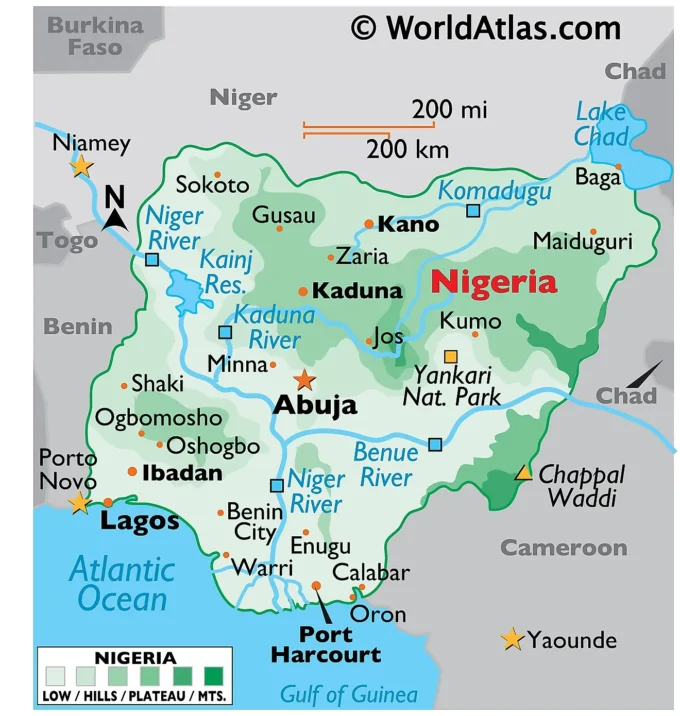
For example, when a party refuses to sell a form to an aspirant seeking to contest in its elective convention, the aggrieved aspirant may go to court. If the court nullifies the convention, who should take the blame? We saw such a messy situation in APC Rivers State in 2019, when the party engaged in a senseless war of attrition against itself. The consequence was that the Supreme Court disqualified APC Rivers State from fielding candidates in the general elections, giving the PDP a walkover.
One would have thought APC would learn from Rivers State in 2019, but alas, it did not. The bad experience was repeated in Zamfara State. In 2019, a desperate faction of APC seized the party structure, appropriating all tickets for governorship, state, and national assemblies, excluding other factions. The aggrieved factions went to court, but the dominant faction, buoyed by the sitting governor, refused to reconcile.
The case dragged to the Supreme Court. By then, the dominant faction had contested and won all seats in the 2019 elections. Yet, six months later, the Supreme Court ruled against them, ordering that all their victories—including the coveted governorship—be vacated for PDP candidates who had lost at the polls.
But do political parties in Nigeria learn? The answer is no. Recently, in Cross River State, APC conducted its ward and local government congresses, and the Rivers and Zamfara scenarios repeated themselves. In my local government area, one faction, backed by powerful interests, hijacked all ward and local government executives, excluding 70% of APC members.
This garrison approach to democracy, institutionalized during Obasanjo’s presidency, must end. Nigerian politicians and political parties must purge themselves of authoritarian mindsets and embrace dialogue, consensus-building, democracy, and civility.
Conclusion-
The vibrancy of opposition or ruling parties in Nigeria is not determined by laws or external forces but by their internal discipline, leadership, and respect for democratic principles. Until parties abandon impunity and factionalism, they will continue to suffer self-inflicted wounds that weaken democracy itself.











Leave a comment