


NYSC and the Future of Nigerian Youth: Time for Bold Reform
March 9, 2026
By Idowu Ephraim Faleye +2348132100608
The National Youth Service Corps was created with a noble idea. It was meant to bring young Nigerians together after the painful experience of the Nigerian Civil War and help rebuild trust across the country. The goal was simple but powerful: allow young graduates from different ethnic, religious, and cultural backgrounds to live together, work together, and understand one another. In theory, this would strengthen national unity in Nigeria.
For many years, that idea carried hope. Graduates travelled across regions. A young person from the south could live in the north. Someone from the north could serve in the east or west. The experience opened minds and created friendships that crossed ethnic lines. It was also a period when the Nigerian economy could absorb many graduates after service. The service year often became a bridge into employment and public service.
However, Nigeria has changed. The country now faces challenges that were not present when the NYSC was created in 1973. Security threats have increased. Youth unemployment has risen sharply. The structure of the economy has also shifted. These realities now raise a difficult but necessary question: can the NYSC continue in its present form, or must it be boldly reformed to meet today’s realities?
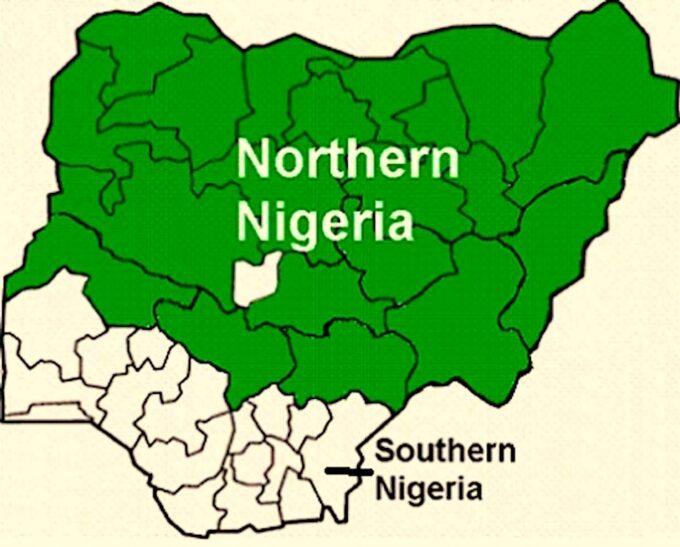
One of the most urgent concerns is security. Many parts of the country are currently affected by violence, kidnapping, insurgency, and banditry. Parents now worry deeply when their children receive postings to unfamiliar regions. What was once an opportunity for cultural exchange can now feel like a dangerous gamble.
In the North-East, insurgency linked to Boko Haram has created long-term security challenges. In the North-West, armed banditry has turned many highways and rural communities into dangerous zones. Meanwhile, kidnapping and violent attacks have become more frequent in parts of the South-East. These threats make it difficult to guarantee the safety of young graduates who are often far from home and without strong protection.
For a parent, the fear is real. Imagine a family whose child studied in one geopolitical zone but is posted to another region where security is uncertain. The child travels long distances on highways known for kidnappings. The child lives in communities where security forces are overstretched. In such a situation, the original intention of national integration becomes overshadowed by fear for personal safety.
No nation should build its youth policy on fear. When parents begin to see the national service scheme as a risk to the lives of their children, confidence in the program inevitably declines. That is why the government must confront this security reality with honesty and urgency.
Yet security is only one part of the challenge. Another issue is the declining economic value of the service year itself. When NYSC started, Nigeria had a stronger job market. Industries were expanding, and government institutions were recruiting graduates. The service year often gave young people valuable work experience that helped them transition into employment.
Today the story is different. Many corps members are posted to offices where they have little meaningful work to do. Some spend months performing routine tasks that do not develop their professional skills. Others struggle with inadequate supervision or lack of equipment.
At the same time, the Nigerian job market has become extremely competitive. Thousands of graduates enter the labour market every year, but available jobs remain limited. As a result, many young people complete their service year only to face long periods of unemployment.
This situation creates frustration and wasted potential. A program that was meant to prepare young people for national development now risks becoming a ceremonial routine that adds little to their future prospects.
In response to these challenges, the government sometimes considers increasing the monthly allowance paid to corps members. While this may appear helpful, it does not solve the deeper problem. A higher allowance may ease the cost of living during the service year, but the payment ends once the program is over.
In practical terms, it is a temporary benefit. It does not provide lasting income. It does not create jobs. It does not build productive capacity for the economy. For many Corp members, the allowance is spent on transportation, feeding, and accommodation, leaving little behind when the year ends.
Therefore, increasing the allowance alone may be described as a cosmetic approach. It treats the symptoms without addressing the structural problem facing Nigerian youths.
What young Nigerians need is not just temporary stipends. What they need is preparation for a future where traditional jobs are becoming scarce and new forms of economic activity are emerging.
This is where bold reform becomes necessary. Instead of maintaining the current structure, Nigeria should transform the NYSC year into a national youth skills and enterprise development program *[NYSD]*. The service year should become a period where graduates receive intensive training in areas that are directly relevant to the modern economy.
Such training could include digital technology, artificial intelligence, data analysis, renewable energy, metal fabrication, agriculture processing, manufacturing, and creative industries. It could also include entrepreneurship, business management, and financial literacy. The aim should be simple: by the end of the service year, every participant should possess a practical skill that can generate income.
However, training alone is not enough. Skills must be supported by access to start-up capital. Without tools, equipment, or startup resources, even the best training may not translate into real economic activity.
This is why the current spending pattern should be reconsidered. Instead of focusing mainly on monthly stipends, part of the funds allocated to the scheme could be pooled and converted into startup support for trained participants.
At the end of the program, graduates who have completed their training could receive support in the form of equipment, machinery, or operational resources rather than cash alone. For example, a group trained in digital technology could receive computing equipment and software infrastructure. A group trained in agriculture could receive processing machines and farming tools. A group trained in manufacturing could receive production equipment suited to their trade. This approach transforms the service year from a consumption program into a production program.
Furthermore, young participants should be encouraged to work in cooperative enterprise clusters. Instead of each graduate struggling alone, individuals with similar skills could form small teams that share resources and responsibilities.
Working in groups reduces the risk that often discourages young entrepreneurs. It allows them to combine ideas, divide tasks, and support one another in building sustainable enterprises. Over time, these small ventures could grow into local industries that produce goods that are usually imported and services needed by communities.
The economic impact could be significant. Every year, thousands of trained youths would leave the program not as job seekers but as job creators. They would establish small and medium enterprises across different sectors of the economy. These enterprises would generate employment, expand local production, and reduce dependence on imports.
In this way, the NYSC would evolve from a symbolic national ritual into a powerful engine for youth productivity and economic growth.
Security concerns must also be addressed in the reform process. Participants should be deployed to places within their regions where safety can be reasonably guaranteed. Advanced digital platforms could also allow many training activities to take place without unnecessary travel to high-risk areas.
In addition, partnerships with universities, technical institutes, private companies, and innovation hubs could strengthen the training system. Nigeria already has many talented professionals and institutions capable of delivering high-quality skill development programs. What is needed is coordination, political will, and a clear policy direction.
The truth is that Nigeria stands at a crossroads. The country has one of the youngest populations in the world. This youth population can become either a powerful economic advantage or a serious social challenge.
If young people remain unemployed and unproductive, frustration may grow and social instability may increase. However, if the same young population is properly trained and empowered, it can drive innovation, entrepreneurship, and economic transformation.
The NYSC offers a ready platform to achieve this transformation. But the program must adapt to modern realities. Another criticism often heard in the labour market is that many Nigerian graduates are not considered readily employable. This concern has been reinforced by situations where major projects, including the Dangote Refinery, have relied on a significant number of foreign technical workers from countries such as India.
Whether fully justified or not, this perception reflects a gap between what many graduates learn in school and the practical skills industries require. The national service year should therefore be used to close this gap. Rather than allowing the year to pass with limited professional growth, it should function as a consolidating period after the many years spent in universities and other higher institutions.
The founders of the scheme created the program to heal a divided nation. That mission remains important. Yet unity alone is not enough in today’s world. National unity must be accompanied by national productivity. Hence, during that time, young graduates can receive practical training, hands-on exposure, and industry-relevant skills that prepare them for the realities of the modern economy. By the end of the year, participants should be better equipped either to secure meaningful employment, to become self-reliant entrepreneurs, or even to create jobs that provide opportunities for others.
Young Nigerians need safety, opportunity, and a pathway to economic independence. They need policies that prepare them not just for service, but for leadership in the economy of the future.
Reforming the NYSC will require courage from policymakers. Some traditions will need to change. Some assumptions will need to be reconsidered. However, bold reform is often the price of progress.
Nigeria cannot afford to maintain systems that no longer serve their original purpose. The country must be willing to redesign its institutions in ways that match present realities.
The future of Nigeria will be determined largely by the opportunities available to its youth. If the NYSC is reimagined as a national platform for skills, enterprise, and productivity, it can once again become one of the country’s most important nation-building programs.
The choice is clear. Nigeria can continue with a system that produces temporary stipends and uncertain outcomes. Or it can transform the service year into a powerful launchpad for a generation of skilled, confident, and productive young citizens. For the sake of the nation’s future, the time for bold reform has arrived.
*@ 2026 EphraimHill DataBlog. Idowu Ephraim Faleye is a freelance writer promoting good governance and public service delivery. +2348132100608*


















Leave a comment