
By Dr. Joel Ademisoye, United States
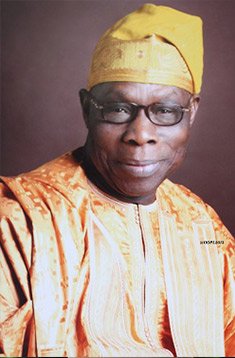
I found former President of Nigeria, Olusegun Obasanjo, who is known to be a hawk, critic and anti- Nigeria’s rising public external debt.
Initially, my thinking is that President Obasanjo is beating the drum of his antigonism and opposition to the Nigeria’s public external debt, for the political reasons, because the country is in the presidential election season. However, this writer is forced to examine, analyze and discuss why the President Obasanjo’s interest in, concern and crusade against the Nigeria’s unpopular, increasing external debt. His great interest in and concern over the Nigeria’s growing external debt isn’t a recent phenomenon and found love in Nigeria. Going down the memory lane, you might recall that President Obasanjo played a major, historic role, intervention and negotiation about the Nigeria’s external debt (which stood roughly at $36 billion in 1999), which led to a write off by the Paris Club in 1999. Imagine that the country was spending $3.5 billion in service charge per year as of 1999. As president of Nigeria, Obasanjo, became a ‘globe trotter’, who left no stone unturned to present and make the country’s case to the world’s leaders in Washington, D. C. and London, in view of the claims of economic injustice and unfair treatment of Nigeria. Obasanjo’s leadership, action, dedication and commitment to getting a relief from the Nigeria’s huge external debt in 1999, was a success in a few years later.
But, in the recent political environment, experience and government in Nigeria, the President Muhammadu Buhari administration has pushed the country’s envelope of the public external debt by the addition of $36.6 billion in its 8 years in office. It is worth noting that on his assumption of office, President Buhari inherited a public external debt of $10.3 billion from the President Goodluck Jonathan government in June 2015. I think this is a low figure for the Nigeria’s external debt recorded by the Jonathan administration, which did not serve two terms in the office.
Nonetheless, Nigerian citizens and taxpayers should ask the bitter and difficult question of where are all the oil Naira revenues going to, over the years since the Paris Club wrote off $18 billion of the country’s external debt on October 20, 2005? More importantly, Nigeria as an oil producer, exporter and a member of the OPEC, where is all the oil revenues gone? Why is the country’s insatiable appetite for the foreign loans, such as the China, The World Bank and International Monetary Fund (IMF) loans?
Also, President Obasanjo took a strong, bold action in the political lobbying and arm- twisting of incentivizing, appeasing and encouraging the lending nations and multilateral institutions like the International Monetary Fund (IMF) and The World Bank, then President Obasanjo made the promise of reforms to the lenders, to fight corruption in Nigeria. About 21 years later, the country is back in the same whole shit of the accumulated public external debt for Nigeria.
What went wrong? Many factors might have contributed to the uncontrolled condition of spiral in the Nigeria’s public external debts. For example, the failure of the domestic reforms which served as the impetus and driving force for the Obasanjo administration to creating institutional transparency by establishing the watchdogs- the anti- corruption and graft agencies, the Economic, Financial Crimes Commission (EFCC) and Independent Corrupt Practices Commission (ICPC) in the country.
Against this backdrop of former President Obasanjo’s past historical role and intervention in securing the Nigeria’s external debt write off, 27 years after, I think that Obasanjo’s concern over the increasing external debt of Nigeria, is understandable, warranted and it should be taken seriously, because the country’s public external debt is $54.52 billion as of June 30, 2026. It is worth noting that President Tinubu administration has increased the Nigeria’s public external debt by $9.4 to $11.4 billion since coming to office in the mid 2023. Imagine that Nigeria spent $1.82 billion as a service charge on its public external debt during the first half of 2026. This is a significant amount of service charge being paid on the Nigeria’s external debt. Assuming that Nigeria is able to save and capture this huge amount of service charge of $1.82 billion, it could be harnessed and allocated to implementing other government development projects or other forms of social or health care programs in the country. But, unfortunately, this was not the case for Nigeria.
Nonetheless, the reality of the national revenue situation in the country is a shortfall. It is necessary and important that the Nigerian governments – Federal, State and Local governments meet their financial and budget obligations to the civil servants in the country. Plus, fulfilling the goals of the implementation of development projects across Nigeria, which are currently stalled, because of the lack of adequate funding.
But, I think there is no country in the world that is debt free, even the rich and wealthy countries, like the United States, which still borrowed money or take huge loans and it is a perpetual national debt.
However, many factors have been identified and advanced as the contributing to the rise in the Nigeria’s public external debt under the President Tinubu’s administration: 1. Persistent fiscal budget deficits, 2. Large-scale infrastructure and development projects financing requests, 3. the currency depreciation of the Nairas and 4. the prevailing high rate of political corruption in the government, which serves as a leakage and a waste in the Nigerian economy. given that a country’s government is allowed to borrow money to finance or fund its bloated civil service and capital development projects, such as infrastructure, because of the shortage of the Internally Generated Revenue (IGR), which are fraudulently, misappropriated and looted from the government treasury by the political elites, appointees and senior government officials across Nigeria, like the Accountant- General of the Federation, Ahmed Idris, who the EFCC accused of political corruption and misappropriating of public funds in the huge amount of N109.5 billion in 2022. Similarly, the EFCC accused the former Governor of Kogi State, Yahaya Bello of criminal breach of trust, fraud and money laundering in two separate cases involving one in the amount of N110.4 billion and the second case involving the whopping amount of N80.2 billion money laundering scheme, looting the Kogi State funds while he was in office. However, many Nigerians are leery and concerned that the Governor Bello’s criminal cases and trials appear to be dragging on and taking too long. Considering the Nigeria’s political culture and its corrupt judiciary and system, If Governor Bello plays the political card properly by offering huge money or crossing the political carpet and joining the ruling APC Party, who knows whether the Governor Bello’s criminal cases before the EFCC and the court, might be forgiven?
Nonetheless, the critics and economic observers of the foreign loans by the Federal Government of Nigeria, which have warned about the increasing debt sustainability risks, higher debt service charge to revenue ratios and the lack of transparency concerning the impact of new loans, if not effectively and efficiently used for purposeful and impactful developments in the rural areas, towns and cities across Nigeria. Hence, there is need for a paradigm shift in taking the foreign or external loans without using and committing them, to implement the development projects, such as the infrastructure – road projects across Nigeria. Otherwise, Nigeria’s practice of the uncontrolled borrowing or taking foreign or external loans from China or the multilateral financial institutions like The World Bank and IMF, is tantamount to mortgaging the Nigerian economy, citizens and its future for the generations to come.