

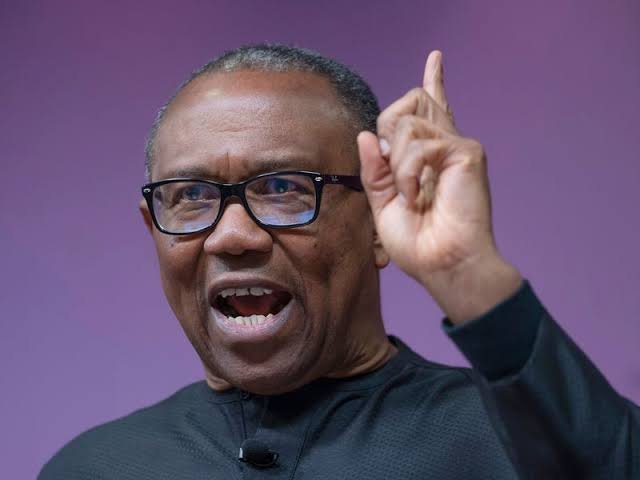
Ozodi Osuji Ph.d
No one from Igbo land has served as the executive President or prime minister of Nigeria (Nnamdi Azikiwe was a ceremonial president, and Aguiyi Ironsi was a reluctant military leader who did not know what to do with power).
The executive leaders of Nigeria were all from the other tribes of Nigeria. They are Abubakar Tafawa Balewa, Yakubu Gowon, Murtala Mohammed, Olusegun Obasanjo, Shehu Shagari, Muhammadu Buhari, Ibrahim Badamosi Babangida, Ernest Shonekan, Sani Abacha, Abdulsalami Abubakar, Olusegun Obasanjo, Umaru Musa Yar Adua, Goodluck Jonathan, Muhammadu Buhari, and Bola Ahmed Tinubu. The proof of the pudding is in the tasting; if those fellows had done a spectacular job, Nigeria would not be among the countries that President Donald Trump of the United States of America calls shithole countries.
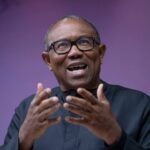
I believe that if you want to be a leader, you throw your hat into the hopper, compete with other folks for the same leadership position, and let the people choose who they want to govern them. In this light, I do not like to ask for an Igbo to be allowed to govern Nigeria; I would like any Igbo who desires that position to compete for it. However, given the political realities of Nigeria where people vote on the basis of their tribal affiliation, I am going to depart from my philosophy and ask Nigerians of all ethnic groups to vote for Peter Obi and let us see if he has what it takes to be an outstanding leader who moves Nigeria forward.
Most people agree that Nigeria is the corruption and poverty capital of the world; In Nigeria, nothing is done without money changing hands; Nigeria is a country where incompetent persons are given jobs while competent ones are ignored primarily because of their tribal affiliation.
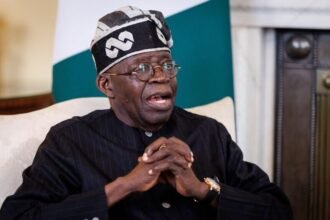
Thus, despite my resentment of allocating leadership positions based on ethnicity and not merit, I am appealing to Nigerians to vote for Peter Obi and let us see if he really can be effective in governing Nigeria. Most other so-called leaders of Nigeria have failed the country. Tinubu, the chap with no known place of birth, family, education, certificates, and reported involvement in the illegal drug business while in the USA, is not even fit to be a supervisor of dog catchers; so, why don’t Nigerians give Peter Obi the opportunity to prove himself?
Mr. Peter Obi was the governor of Anambra State for two terms and did a decent job; his administration was corruption-free; so, why don’t we see if he can do the job of being the President of Nigeria, a job he has been campaigning for during the past three election cycles.
I do not know Peter Obi personally, but from the manner he seems to excite Nigerians at his various campaign stops, he appears to have what it takes to motivate the people and get them excited to work hard towards stated goals and objectives. A fantastic leader, among other qualities, tends to have charisma, an almost spiritual quality that gets people to follow him in going in the direction he wants to go. John F. Kennedy had such charisma.
Upon perceiving that the USSR had sent a man, Yuri Gagarin, to space, “On May 25, 1961, President John F. Kennedy delivered a “Special Message to Congress on Urgent National Needs” in which he set the ambitious goal of landing a man on the Moon and returning him safely to Earth before the end of the decade. In the speech, Kennedy said: “I believe that this nation should commit itself to achieving the goal, before this decade is out, of landing a man on the Moon and returning him safely to the Earth. No single space project in this period will be more impressive to mankind, or more important for the long-range exploration of space; and none will be so difficult or expensive to accomplish.” NASA.

Kennedy set a national goal to place a man on the moon, motivated his people and gathered resources to work towards landing a man on the moon before the end of the 1960s; the country mobilized its resources and accomplished that goal in 1969.
Maybe Peter Obi has the capacity to tell Nigerians what he wants to accomplish for them, set a timeline for doing so, such as what Lee Kuan Yew, the founding Prime Minister of Singapore, did for his country, and did so in a few decades: modernize and industrialize his country. What have Nigerians got to lose?
Nigerians have a fairly good understanding of the other presidential candidates: Tinubu and Atiku; those are retail and transactional politicians; they scratch your back if you scratch their backs; they have no desire to industrialize the country; they are not transformational leaders; what Nigeria needs at this juncture is a transformational President.
“A transformational leader is someone who inspires and motivates people to exceed expectations by creating a clear vision, fostering innovation, and supporting individual growth, using behaviors such as idealized influence, inspirational motivation, intellectual stimulation, and individualized consideration.” AI
Peter Obi professes a fervent desire to modernize the country; maybe he can do it? Last night, I stayed up following the trajectory of Peter Obi’s electioneering. I was impressed by his campaign music videos, such as: NDC, NDC Kama! Party Peter Obi, Party Obi Kama! Party Kwankwaso, Party Kwankwaso Kama!” and “Tinubu must go protest chants.” Any campaign outfit capable of putting together those enchanting slogans, accompanied by viscerally arousing music, ought to be a thoughtful campaign and could govern the country well.
What Nigeria needs to become part of the modern world is known to all Nigerians, and we do not need to keep flogging the obvious; the issue is who is going to bell the cat. Briefly, Nigeria needs massive infrastructural development: roads, railways, seaports, airports, schools, hospitals; Nigeria needs deliberate industrialization, especially heavy industries such as iron and steel, manufacturing of cars, buses, trains, airplanes, radios, televisions, smartphones, microwave ovens. Nigeria needs to produce most of its food rather than importing it (when oil revenue dries up and the country has no money to import food, the people will starve to death; a stitch in time saves nine; if Nigeria embarks on producing most of the food it needs to feed its people, it will prevent the starvation of its people).
Although I have made the following points elsewhere, let me summarize them. The thirty-seven state governments in Nigeria eat up most of the oil revenue from which Nigeria pays for its activities.
Nigeria needs to be restructured into no more than twelve states (Yoruba state, Igbo state, Edo state, Efik state, Ijaw state, Benue state, Plateau state, Niger state, Hausa state, Borno state, Adamawa state). The country should practice true federalism, with each state being in charge of its economy (giving the federal government fifty percent of revenue from petroleum and other resources obtained from nature); each state should be responsible for providing all its children with publicly paid education through universities and vocational schools. The federal government should be responsible for providing all Nigerians with publicly paid health care.
A rigorous anti-corruption regime is implemented so that if you take bribes, you are sent to prison, and if you kill someone, you are executed by the state. Public services should not be where people go to steal money and become rich, but a place people go to serve the public.
I have written tons of material on leadership (books and articles). Below is an AI Overview of leadership.
“Leadership is the ability to guide, influence, and inspire individuals or groups to achieve shared goals, often involving collaboration, vision, and adaptability.
Core Definition. Leadership is commonly defined as the action of leading a group of people or an organization or the office or position of a leader. It involves influencing others, providing direction, and fostering collaboration to accomplish objectives that individuals could not achieve alone. Leadership is not limited to formal authority; it can emerge in any context where individuals guide, motivate, or inspire other people.
Leadership as a Social Process
Modern perspectives emphasize that leadership is a social process, where effectiveness depends on interactions among people rather than solely on one individual’s position or traits. It involves creating alignment, direction, and commitment within a team or organization, enabling collective problem-solving and innovation. This relational approach highlights that leadership is co-created and dynamic, adapting to changing environments and diverse team needs.
Key Qualities and Behaviors
Effective leaders typically demonstrate traits such as integrity, empathy, resilience, decisiveness, and vision. They inspire trust, foster collaboration, and empower team members to contribute their skills and perspectives. Leadership also requires communication, adaptability, problem-solving, and the ability to make complex decisions.
Unlike management, which focuses on planning, organizing, and controlling resources, leadership emphasizes innovation, motivation, and guiding others toward a shared vision.
Summary
In essence, leadership is both a role and a set of behaviors that enable individuals or groups to achieve goals collectively. It is about influencing, guiding, and inspiring others, fostering collaboration, and adapting to challenges, making it a critical component of organizational and social success.” AI
DISCUSSION
I saw a little bit of Biafra from a boy’s perspective, not from the perspective of the key actors in it. I observed the unbelievable energy unleashed by that war. All of Alaigbo became one beehive of creative activity, everybody doing his best to contribute to the war effort. People believed that their enemies were coming to kill them and their backs were against the wall, and if they were going to survive, they had better do whatever was in them to contribute to the war effort.
People cooperated and did incredible things that, to the best of my knowledge, no other African group has done.
Consider, the Nigerian army fought their way from Port Harcourt to Owerri and conquered the town. The city was evacuated, and we lived in my grandparents’ village, a few miles from the city center. The Nigerians fought the Biafrans towards my village, and folks ran away to safety. The Nigerians were essentially behind my father’s house. Every person in the villages of Umuohiagu left for other villages. The Biafrans, however, soon reconquered Owerri.
The Biafran army decided to turn my town into a kind of military camp. There were soldiers everywhere. The 63rd Infantry Brigade of the Biafran army was stationed in our village elementary school (Saint Michael’s Catholic School). At another school was the 14th Division of the Biafran Army. In another school were the Biafran Army training grounds. In another was their military hospital where wounded soldiers were brought from the battlefields and treated.
While all this was going on, the older boys in our town, those who had completed secondary school before the war broke out, organized a makeshift secondary school for the rest of the secondary school kids. Thus, in the morning, my friends and I would go to an elementary school that was converted into a makeshift secondary school. Our teachers were anywhere between the ages of 18 and 20 and had their GCE Advance Level. They taught us physics, chemistry, biology, algebra, geometry, trigonometry, Arithmetic, history, Geography, and English. This makeshift school by untrained school leavers was actually more educational than the education we got from our expensive secondary boarding schools.
The point I am making is about Igbo ingenuity. The entire town was converted into a kind of primitive factory town. Biafran university students before the war were busy putting what they learned at the University of Nigeria, Nsukka, University of Lagos, and University of Ibadan to practical use. These twenty-something-year-old undergraduates and their professors, believe it or not, were building cars, transforming vans like Land Rovers into tanks by building around their bodies thick iron plates (armor) and rigging chain wheels that the tanks moved on. They were refining petroleum right there in the village. Those of them who were studying chemistry were putting their knowledge into practical function. They literally refined crude oil into petroleum and kerosene. Some of these wonder boys tried manufacturing rifles, such as the AK 49. They built grenades and landmines. It is unbelievable what these college boys accomplished.
Of course, the Nigerians got information on what was going on in the town. Thus, almost every day, usually around 10 AM, Nigerian bombers and jet fighters came around, flying at rooftop heights, spraying bullets on anything they saw that seemed like industrial activity or where people gathered in large numbers (Chinua Achebe, in his book, There Was a Country, 2012, wrote about the Nigerians bombing and jet fighter bullets spraying at Afo Umuohiagu, our market, where over five hundred market women were killed and thousands wounded).
I am not here seeking your pity; I do not want your pity; the point I am trying to make, albeit crudely, is the amazing transformation of our village into an industrial hub by a bunch of university students doing whatever they could to contribute to the war efforts. And who was organizing all these activities? That part I do not know, but certainly there was organization, management, and leadership that coordinated the whole activities. I have never in my entire life seen an entire people put themselves to productive use as what happened in my town during the war.
I narrated the above story to tell you what happened in the little corner of Biafra of which I was aware. A supposed primitive African group worked as if driven by an inner irresistible force and accomplished within a period of three years what no other African group has since or before accomplished.
I am trying to say that if an Igbo is allowed to govern Nigeria, I can actually see him transform Nigeria into what Biafra was, a workshop for Africa. I can see him put to work all the unemployed university graduates in Nigeria, inventing stuff and manufacturing stuff. There is no doubt in my mind that if Biafra had survived, no Asian country today would be as developed as it is. There is something in Igbos that makes them work hard. I believe that Igbos can help other Africans work as hard as they do.
CONCLUSION
Peter Obi, being another driven Igbo over-achiever, could do for Nigeria what the Igbos did in their short-lived country called Biafra; these people, out of nowhere, almost industrialized their neck of the African woods. I am not saying that Igbos are special. All human beings are the same and equal, but each human group has a culture; their children are socialized into their group’s culture.
Igbo culture does not accept you unless you work hard and are trying to achieve something. This conditional acceptance of its children has a downside (in psychoanalytic language, it makes such children neurotic, with fear of failing…psychologists encourage parents to accept and love their children unconditionally).
I am not talking about ideal psychologically functioning people, here. I am talking about social realism. Igbo social realism is that they work as if the devil possesses them. I believe that an Igbo leader with the Igbo character shown during the Biafran War can get Nigerians to behave as if they are driven by unknown forces, and they transform the country into a developed country within two decades.
Therefore, let Nigeria give Peter Obi an opportunity to deploy his Igbo-driven character in the leadership of Nigeria, and maybe that is what Nigeria needs to kick-start it.
It is really depressing that after almost seventy years of independence from Europeans, only Rwanda can be said to be well governed.
Maybe under Peter Obi, Nigeria can be well governed; maybe he can help push Nigerians out of their present stupor into productivity.
Thank you for considering my appeal.
Ozodi Osuji, PhD
November 14, 2026