By Okoi Obono-obla
There are parties that lose elections. And there are parties that arrive at an election already defeated by their own contradictions.
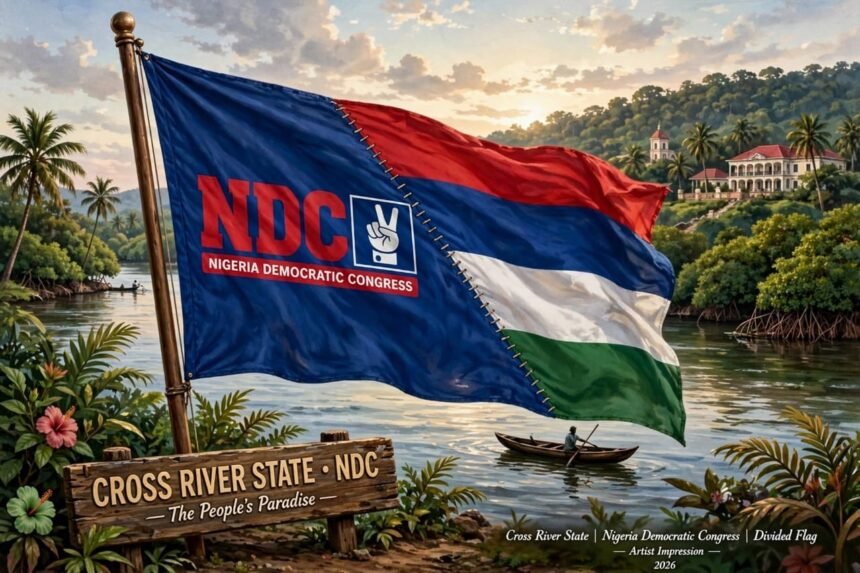
The Nigeria Democratic Congress, NDC, in Cross River State belongs to the second category.
It is not merely facing strong opponents. It is caught in a pincer — legal on one side, political on the other, and organisational in the middle. Unless something fundamental changes, it will not do well in Cross River State, not because its governorship candidate lacks ambition, but because a governorship candidate cannot carry a party that cannot carry itself.

The first jaw: the law
The NDC’s first problem is not political. It is constitutional.
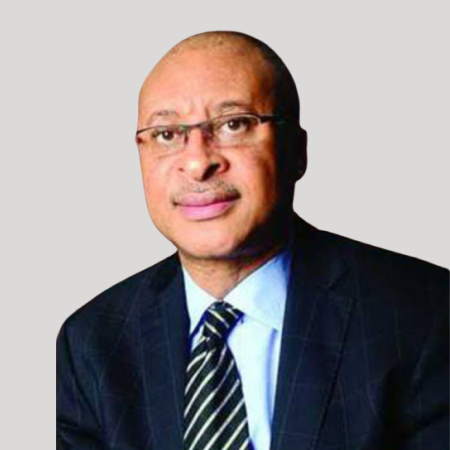
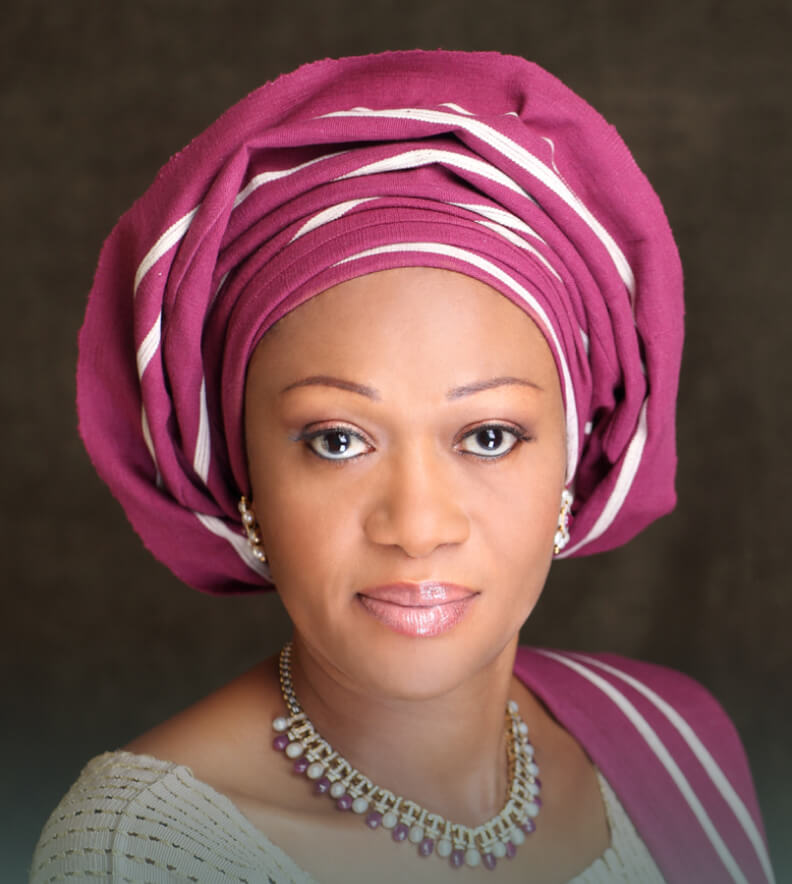
John Upan Odey is the party’s governorship candidate. His deputy, Dr. Stella Charles Archibong, is not. She has withdrawn from the ticket and defected to the All Progressives Congress, APC, declaring support for Governor Bassey Edet Otu’s re-election.
Let the record be clear: Odey did not defect. Archibong did.
But that correction does not save the NDC. It exposes its vulnerability.
Under Section 187(1) of the 1999 Constitution, a candidate for Governor “shall not be deemed to have been validly nominated” unless he nominates another candidate as his associate, who is to occupy the office of Deputy Governor.
A governorship ticket is therefore not two candidacies. It is one joint ticket. Remove one leg and the ticket cannot stand.
The NDC can, in principle, replace Archibong. The Electoral Act permits substitution where a candidate withdraws. But the law also imposes deadlines, and Archibong’s withdrawal came late — on 11 November 2026, close to the governorship election of 6 February 2027.
If INEC refuses a late substitution, Odey will be left with a ticket that is legally incomplete. If INEC accepts a substitution, the new ticket will still carry the stain of having been assembled after its own deputy publicly abandoned it.
Either way, the NDC enters the election under a legal cloud.
That cloud was already forming before Archibong left. INEC’s final list of 10 October 2026 omitted both the ADC and NDC governorship candidates in Cross River. Odey described the omission as a bureaucratic error. The party protested. An updated list later included him.
But the damage was done. A party that must beg to be seen on the ballot has already told the electorate that it is not yet a serious contender for power.
The second jaw: zoning
The second jaw of the pincer is Cross River’s most deeply felt political understanding: zoning.
Zoning is not in the Constitution. No court will disqualify a man merely because he comes from the wrong Senatorial District. But in Cross River, zoning is felt as a moral covenant. To break it is not merely to make a tactical mistake. It is to offend a sense of fairness that the people take personally.
The history is well known.
In 1980, leaders of the movement for the creation of Cross River State entered into the Calabar-Ogoja Accord. It was an agreement to share political power between the old Calabar and Ogoja blocs in the event that the present Akwa Ibom State — then known as Mainland — was carved out of the old Cross River State. Akwa Ibom was created in 1987. In the new Cross River that emerged, Calabar became the Southern Senatorial District, while Ogoja was divided into the Northern and Central Senatorial Districts.
In 1999, that old understanding was given a new and simpler form: the governorship would rotate every eight years between the three Senatorial Districts.
From 1999 to 2007, Donald Duke from the South was Governor. From 2007 to 2015, Liyel Imoke from the Central was Governor. From 2015 to 2023, Senator Ben Ayade from the North was Governor. In 2023, the arrangement was re-enacted when Bassey Edet Otu from the South was elected Governor under the APC.
On that logic, the South is entitled to eight years: 2023 to 2031.
John Upan Odey’s candidacy runs directly against that logic. He is not merely from the North. He is from Obudu Local Government Area — the same Local Government Area as Ayade, the immediate past Governor from the North.
That is why his candidacy does not resonate. To the Cross River voter who believes in zoning, Odey is asking the State to do two things at once: to cut short the South’s turn, and to return power to the very Local Government Area that has just held it for eight years.
It is no accident that Archibong framed her defection in zoning language. She did not present herself as a deserter. She presented herself as a defender of the “Back to South” movement. Her defection was therefore more damaging than an ordinary defection. It was a public judgment, by the NDC’s own deputy governorship candidate, that the NDC’s ticket was inconsistent with the political morality of Cross River State.
When your own deputy uses your opponent’s strongest argument against you, you have lost more than a running mate. You have lost the moral argument.
The third jaw: no cohesion, no grassroots
The third jaw is the most fatal, because it is the least visible.
A governorship candidate is not merely a name on a ballot. In Nigerian politics, he is the anchor of his party. He is supposed to give the party what it cannot give itself: leadership, direction, resources, morale, and a grassroots machine.
He opens offices. He reconciles factions. He recruits ward leaders, youth leaders, women leaders. He gives local politicians a reason to believe that the party has a future. He provides the cohesion that turns a collection of ambitious individuals into a party.
The NDC in Cross River does not have that.
Its leadership is not speaking with one voice. Its governorship candidate was omitted from INEC’s first final list. Its deputy has left and joined the ruling party. Its candidate has had to spend precious time explaining his own ballot status instead of campaigning across the State. A party that cannot keep its own ticket together cannot persuade voters that it can keep a State together.
Grassroots politics is built on confidence. A ward chairman will work for a candidate he believes can win. A youth leader will mobilise for a candidate he believes will remember him. A woman leader will organise for a candidate she believes is serious.
What does the NDC offer them today?
A governorship candidate whose deputy has endorsed his opponent. A ticket whose legal status has had to be fought for. A candidacy that offends the zoning consensus. A leadership that appears divided at the top and absent at the bottom.
That is not a party. That is a label.
The APC and PDP, for all their faults, have something the NDC does not have: a governorship candidate who can avail his party of a grassroots structure. Otu can call on the machinery of incumbency. The PDP, even in opposition, has old networks, old loyalties, old structures. The NDC has none of these. It has a candidate without a deputy, a deputy without a party, and a party without a base.
A party without a centre
This is the meaning of the pincer.
Legally, the NDC must prove that its ticket is valid. Politically, it must prove that its ticket is legitimate under Cross River’s zoning covenant. Organisationally, it must prove that it exists at all below the level of press statements.
It is failing on all three fronts at once.
A party can survive one of these problems. A strong candidate can overcome a legal technicality. A popular candidate can sometimes defy zoning. A well-organised party can sometimes survive the loss of a deputy.
But no party can survive all three at the same time: a legally incomplete ticket, a politically unacceptable zoning proposition, and a leadership without cohesion or grassroots.
That is why the NDC may not do well in Cross River State. It is not because Cross River voters are hostile to new parties. It is because Cross River voters are asking a simple question: if a party cannot hold its own ticket together, how will it hold a State together?
Until the NDC can answer that question, it will remain what it is today — a party caught in a pincer of its own making, squeezed by the law, by zoning, and by its own lack of cohesion.