

By Idowu Ephraim Faleye
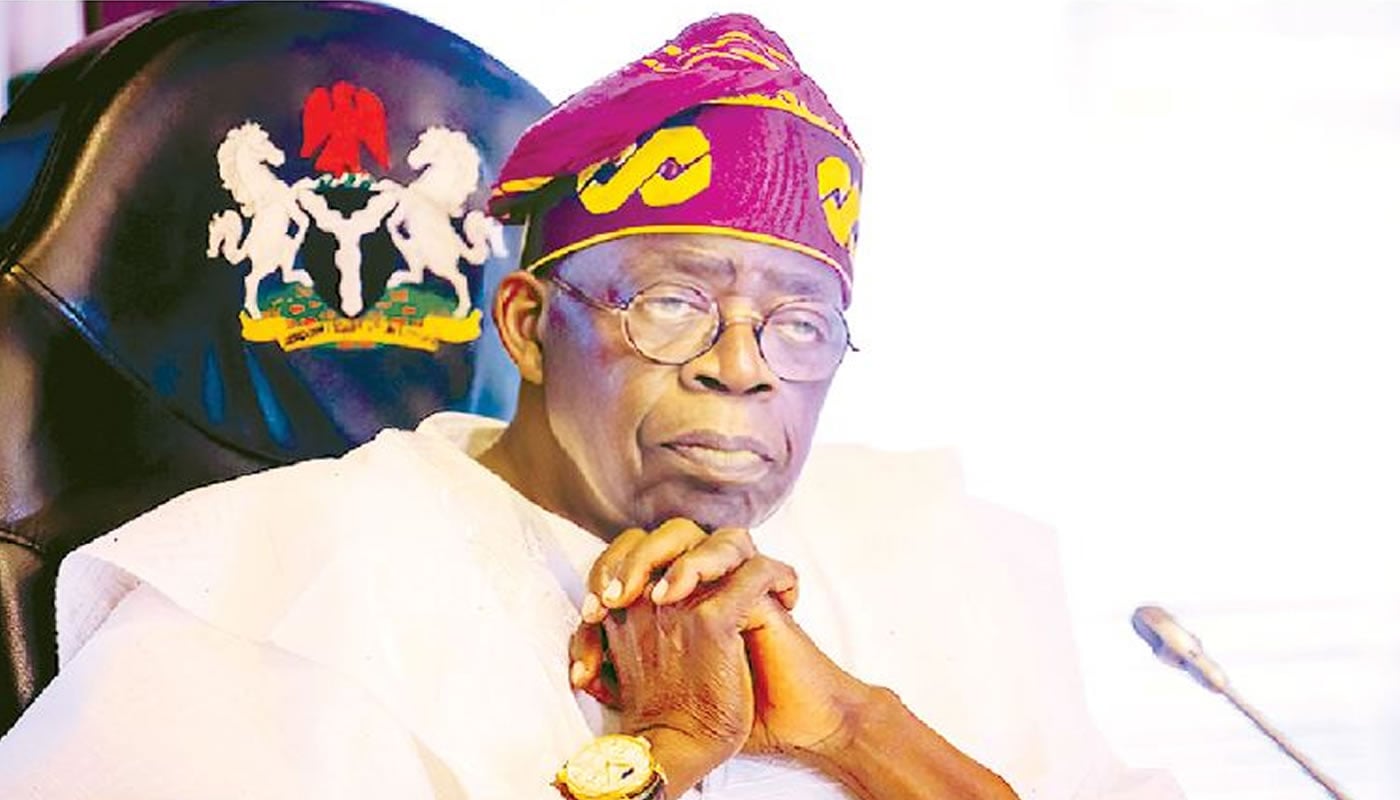
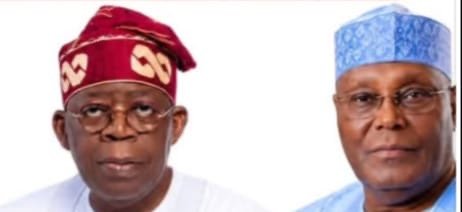
Nigeria’s North-South power rotation arrangement is facing an important test, and the outcome could have consequences far beyond the 2027 presidential election. The question is not simply whether Atiku Abubakar or another Northern politician has the constitutional right to contest against President Bola Tinubu. It is whether the Northern political establishment still considers the political understanding that has guided presidential succession since 1999 worthy of respect. If the South cannot trust the North to honour an eight-year rotation arrangement today, what assurance will Northern politicians have that the South will support their return to power in 2031?
To understand the significance of this question, we must return to the political circumstances surrounding Nigeria’s return to democracy in 1999. The annulment of the June 12, 1993 presidential election, widely believed to have been won by Chief MKO Abiola, created a crisis of national confidence. The subsequent struggle for democratic restoration demonstrated the need for political accommodation. Against this background, zoning and power rotation became important instruments for managing Nigeria’s regional interests during the transition to the Fourth Republic.
The Peoples Democratic Party adopted an arrangement under which presidential power would alternate between the North and South, with other important political offices also reflecting geographical balancing. It was a political understanding, not a constitutional provision, but its purpose was clear: neither region should feel permanently excluded from the country’s highest political office.

The emergence of Olusegun Obasanjo, a Southerner, as president in 1999, with Atiku Abubakar from the North as his vice president, reflected this understanding. Atiku benefited directly from the geographical balancing principle that shaped the formation of the Obasanjo administration. Their eight-year administration demonstrated how political accommodation could provide representation for different regions without denying either the opportunity to participate in national leadership.
Subsequently, Umaru Musa Yar’Adua emerged as president in 2007, with Goodluck Jonathan as his vice president. Following Yar’Adua’s death, Jonathan assumed the presidency and won the 2011 election. Muhammadu Buhari then occupied the presidency for eight years between 2015 and 2023, before power returned to the South under Tinubu. The broader political expectation has therefore remained that presidential power should alternate between the two regions in eight-year cycles.
This history makes Atiku Abubakar’s position particularly relevant to the present debate. He is not an outsider to the political establishment that developed and benefited from the zoning arrangement. He served as Vice President for eight years under a Southern president and understood the political considerations behind the arrangement. More importantly, in March 2022, Atiku publicly acknowledged that he and other party leaders had invented and formulated the zoning policy to ensure that every part of Nigeria had a sense of belonging.
His constitutional right to contest the presidency is not in question. However, there is a distinction between constitutional eligibility and political responsibility. The fact that the Constitution permits a qualified Northern candidate to contest in 2027 does not remove the responsibility of political leaders to consider the consequences of abandoning an established understanding designed to promote national inclusion.
The fundamental question is this: If Atiku benefited from a political arrangement that accommodated Northern representation under a Southern president, why should the same principle become dispensable when the South expects to complete its eight-year presidential tenure?
The Northern political establishment must understand that the presidency is not merely an office to be reclaimed whenever political circumstances appear favourable. In a diverse country like Nigeria, the manner in which political power is acquired and transferred has consequences for national confidence. If Northern political leaders support returning presidential power to the North in 2027, before the South completes its expected eight-year turn, they must also consider what happens when the North expects Southern support in 2031.
By 2031, Northern political leaders may expect the South to support a Northern candidate. But what political or moral argument would they advance if Southern politicians question why they should respect an arrangement that the North helped abandon earlier?
This is the problem of political reciprocity. An agreement cannot command lasting respect if its participants honour it only when they stand to benefit. Once one region establishes the precedent that political convenience takes priority over an existing understanding, the other region can invoke the same argument when circumstances favour it. The result could be a cycle in which neither side considers itself bound by previous agreements.
The consequences would extend beyond the immediate presidential contest. Nigeria’s political stability depends partly on the confidence different sections of the country have in the fairness of its political arrangements. Zoning may not be constitutionally enforceable, but it has served as an important mechanism for managing regional expectations and encouraging political inclusion. Weakening that understanding could make future political negotiations more difficult and increase regional suspicion.
It is also important to distinguish the Northern political establishment from ordinary Northern Nigerians. Northern Nigeria is politically diverse, and the ambitions of established political figures do not necessarily represent the priorities of millions of ordinary citizens. Many Northerners are more concerned about economic development than the presidential ambitions of political elites. The desire of certain politicians to regain the presidency should not automatically be presented as the collective aspiration of the entire North.
The purpose of power rotation should be to promote national inclusion, not to protect the political interests of established elites. Northern Nigerians deserve presidential leadership, just as Southern Nigerians do. However, that opportunity should be pursued within a framework of mutual understanding that recognises the legitimate expectations of other regions.
Those who oppose zoning can reasonably argue that Nigeria is a constitutional democracy in which every qualified citizen should be free to contest. Indeed, the Constitution does not reserve the presidency for either region at particular intervals. But constitutional permission does not automatically settle questions of political responsibility. Political agreements and conventions derive their value from the willingness of participants to respect them, even when they are not legally compelled to do so.
The South must also recognise its responsibility. It cannot demand that the North respect an eight-year presidential arrangement today and then disregard the same principle when power is expected to return to the North. The argument is not that the South should permanently control the presidency or that Northern politicians should be prevented from contesting. It is that both regions should respect the established understanding and allow each to complete its expected eight-year turn.
Nigeria therefore needs a renewed commitment to political reciprocity, regional inclusion and responsible political succession. Political leaders must recognise that winning an election is not the only measure of political success. The long-term stability of the country also depends on maintaining confidence among its different regions.
Ultimately, the 2027 presidential election presents a question that goes beyond Tinubu and Atiku. Can the North expect Southern cooperation in 2031 if its political establishment supports abandoning the existing arrangement in 2027? Can the South continue to trust an understanding that may be respected by one region but discarded by another when political opportunities arise?
Nigeria belongs equally to the North and the South. Power rotation was never intended to divide the country permanently between two competing regions, but to ensure that neither felt excluded from national leadership. If that understanding loses its credibility, Nigeria may retain its Constitution and continue conducting elections, but an important source of political confidence will have been weakened.
A political agreement that one region is expected to honour while another is free to abandon is no longer an arrangement based on mutual trust. It is merely an agreement waiting to be broken.
*Idowu Ephraim Faleye is a freelance political writer based in Nigeria. +2348132100608*