


By Ibrahim Bunu | ibrahimbunu2520@gmail.com
History has moments when the powerful discover that the people they once governed have longer memories than they imagined. Some seasons, the loudest voices in government become whispers in the corridors of detention. And there are days when the men who once wielded authority with the confidence of invincibility discover that power, however formidable, is never permanent.
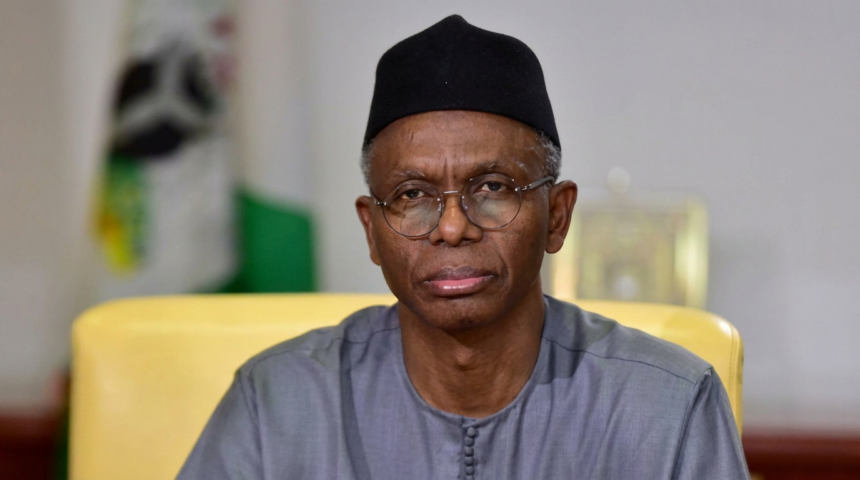
Reuben Buhari’s diary of Mallam Nasir Ahmad El-Rufai, the former Governor of Kaduna State, is more than a record of days spent in detention. It is an uncomfortable journey through a state’s memory, a confrontation with the politics of power, and a reminder of the people whose suffering became footnotes in the grand narratives of governance.
Buhari’s central message is devastating in its simplicity: the man whose government once exercised extraordinary authority over others now faces the helplessness that comes with prolonged detention.

But this is not merely a story about El-Rufai. It is about the Adara elders, Steven Kefas, Luka, the late and living victims of communal violence, the traditional institution of Piriga, and the communities of Southern Kaduna whose grievances were repeatedly overshadowed by the machinery of government.
It is about what happens when a political leader becomes so accustomed to issuing orders that the pain of those receiving them begins to look like an administrative inconvenience.
And it is about the danger of confusing power with justice.
As Reuben Buhari’s diary invites us to revisit these memories, the question is no longer simply how long El-Rufai has remained in custody. The more disturbing question is this: What did Kaduna remember about his years in power, and what lessons must be drawn from the contrast between yesterday’s authority and today’s vulnerability?
⸻
WHEN THE GOVERNOR’S WORDS BECAME THE PEOPLE’S WOUNDS
To understand the significance of Reuben Buhari’s diary, one must return to the years when El-Rufai occupied the Kaduna Government House, particularly the period between 2015 and 2023.
El-Rufai was not an ordinary governor. He was a combative administrator, a fearless political communicator in his own estimation, and a man who cultivated the reputation of a leader who would rather confront his critics than appease them. His supporters celebrated his decisiveness; his critics accused him of arrogance, intolerance, and an excessive reliance on coercive authority.
That contrast defined much of his political legacy.
For some, he was a reformer prepared to make unpopular decisions. For others, he represented a government that too frequently treated dissent as defiance and community grievances as challenges to be subdued.
Southern Kaduna became one of the most painful theatres of this disagreement.
The communities of Southern Kaduna were not simply asking for political favours. They were mourning their dead, demanding protection, seeking accountability for attacks, and insisting that their lives mattered as much as those of other citizens.
For families who lost relatives, the debate was never merely about government policy. It was about survival, dignity, and the state’s fundamental obligation to protect its people.
Yet the political atmosphere often became adversarial. In an interview on Channels Television, El-Rufai responded to concerns that some Southern Kaduna residents felt he treated them harshly, declaring, among other things, that he did not tolerate nonsense and that he had dealt with people he believed were acting as though they were entitled to special treatment.
Those words deserve to be remembered, not because a governor must tolerate lawlessness, but because the language of power carries a special responsibility when spoken by someone who controls the institutions capable of depriving citizens of their liberty.
A governor may insist that he is enforcing the law. A citizen may insist that the law is being applied selectively. In a constitutional democracy, the answer cannot simply be that the governor has spoken. Evidence, independent scrutiny, and the courts must establish it.
That is precisely where the victims’ stories must be heard.
⸻
THE NINE ADARA ELDERS: WHEN DETENTION BECAME A QUESTION OF JUSTICE
Among the most consequential episodes in this history was the detention of nine Adara community elders following the killing of their traditional ruler, Agom Raphael Maiwada Galadima, in 2018.
The elders were detained in 2019 amid investigations surrounding the killing. Their prolonged detention became a major human-rights controversy, with their community and supporters questioning the legality and fairness of their treatment.
Years later, the matter returned to public attention in court.
On May 27, 2025, the Federal High Court in Kaduna awarded ₦900 million in damages against El-Rufai and five others over the unlawful arrest and detention of the nine elders. The judgment, reported on May 28, 2025, found that the elders’ rights had been violated.
This is not merely an accusation made by political opponents. It is a judicial outcome that deserves the seriousness it commands, subject to the applicable legal process.
Imagine what those months meant to the elders and their families. Consider the humiliation of seeing respected community figures deprived of their liberty while their families struggled with uncertainty. Consider the fear that settles over a community when its elders become entangled in a detention process that its members regard as unjust.
And consider the symbolism when a court subsequently rules that their detention was unlawful.
The central question is not whether the former governor was entitled to investigate a murder. Of course, the state had a responsibility to investigate the killing of a traditional ruler and pursue those responsible.
The question is whether the state exercised that responsibility within the limits imposed by the Constitution and the law.
A serious government must be able to investigate grave crimes without trampling on the rights of people who have not been proved guilty.
The law must protect the community from murder, but it must equally protect the community from unlawful detention.
The tragedy is that the elders had to wait years for a judicial determination that addressed their grievances.
Today, as El-Rufai himself faces prolonged custody and legal battles, the Adara case has acquired a powerful place in the public conversation. But the elders’ suffering should never be reduced to a convenient political instrument.
Their rights mattered when they were detained, and they matter regardless of what happens to the former governor today.
Justice does not become meaningful because the powerful eventually encounter difficulty. Justice becomes meaningful when the law is applied consistently, regardless of who stands before it.
⸻
STEVEN KEFAS: THE PRICE OF SPEAKING ABOUT POWER
Steven Kefas belongs in this historical record because his experience raises another fundamental question: what happens when a citizen’s public commentary becomes entangled with the state’s coercive power?
Kefas, a journalist and human-rights activist, was arrested in Rivers State on May 8, 2019, and taken to Kaduna. His detention followed his publication of material relating to the abduction and killing of the Adara traditional ruler. His case became a concern for press-freedom advocates and human-rights organisations.
Reuben Buhari’s diary records Kefas’s incarceration at 162 days. That figure should be understood as the diary’s reported calculation rather than an independently established day count here.
The larger issue, however, remains important.
A government may disagree with a journalist. It may challenge inaccuracies, demand corrections, initiate lawful proceedings where evidence suggests an offence, or defend its record publicly.
What it must not do is treat criticism itself as proof of criminality.
The test of democratic leadership is not how comfortably a governor receives praise. It is how fairly the administration responds when confronted with criticism, embarrassing questions, and allegations of failure.
El-Rufai’s public image was built in part on his willingness to speak bluntly. He was never a politician who appeared especially troubled by confrontation.
But the same democratic culture that protects a governor’s right to speak must protect a journalist’s right to question him.
A profound difference exists between being criticised and being unlawfully silenced.
And there is a profound difference between possessing the authority to order an investigation and possessing the legal justification to detain a particular person.
Kefas’s experience therefore belongs in any serious assessment of the political climate under El-Rufai. It is not necessary to assume that every accusation against the former governor is true to recognise that the use of state power against journalists and critics demands exceptional scrutiny.
A government that wants the public to trust its decisions must submit those decisions to public scrutiny.
⸻
LUKA AND THE FORGOTTEN ARITHMETIC OF HUMAN SUFFERING
Reuben Buhari also recalls Luka, whose periods of detention in 2017 and 2020 are reported in the diary as 96 days and 98 days, respectively.
According to the diary, the combined total was 194 days.
These figures do not establish a mathematical equivalence between different cases. Each case has its own facts, legal circumstances, and consequences. Rather, the figures remind us that detention does not affect only those whose names dominate national headlines.
For an ordinary citizen, detention can mean lost income, damaged relationships, interrupted education, deteriorating health, emotional distress, and a family forced to survive without the person on whom it depends.
For the individual, each day may feel interminable.
For the institution holding that person, the same day may appear as another entry in a file.
This difference in perspective is precisely why due process matters.
When the powerful exercise authority, they can become insulated from the human consequences of their decisions. An arrest becomes a procedure. A curfew becomes a security measure. A deposition becomes an administrative action. A detention order becomes paperwork.
But for the person affected, these are not abstractions.
They are days of uncertainty, nights of anxiety, and months of wondering whether anyone with authority is listening.
That is why Luka’s reported 194 days deserve to be remembered alongside the experiences of the Adara elders and Steven Kefas.
The point is not to suggest that all the cases were identical. It is to insist that every exercise of state power should be judged against the same fundamental standards of legality, necessity, fairness, and accountability.
The rights of an unpopular citizen are still rights.
A critic’s rights are still rights.
And the rights of a person who has fallen out of political favour are still rights.
⸻
JONATHAN ZAMUNA AND THE THRONE THAT THE COURTS RESTORED
Perhaps one of the most striking examples of the limits of gubernatorial power concerns Jonathan Paragua Zamuna, the traditional ruler of Piriga Chiefdom in Lere Local Government Area of Kaduna State.
On May 18, 2023, the El-Rufai administration deposed Zamuna.
The matter subsequently went before the National Industrial Court of Nigeria. On June 14, 2024, the court declared the deposition irregular, unfair, unconstitutional, and contrary to good conscience, and ordered Zamuna’s reinstatement, together with his salaries, allowances, and other entitlements.
The judgment was a significant reminder that a governor’s powers, however extensive they may appear, are not unlimited.
A governor may possess the authority to make appointments and take administrative decisions under the law. That authority does not confer an unrestricted right to disregard due process.
The Piriga case matters because traditional institutions carry significance beyond the individual who occupies a throne. They represent community history, identity, continuity, and social organisation.
Removing a traditional ruler can therefore have consequences that extend far beyond a government announcement.
Zamuna’s reinstatement followed on January 22, 2025, under Governor Uba Sani, in compliance with the court’s judgment.
Consider the timeline: a deposition in May 2023, a judicial ruling in June 2024, and reinstatement in January 2025.
Those dates tell a story of authority exercised, authority challenged, and a court ultimately intervening.
Reuben Buhari’s diary compares El-Rufai’s detention with the 611 days Zamuna reportedly spent deposed before his reinstatement. The comparison is a political metaphor, not a claim that the two experiences were legally identical.
Yet the symbolism is unmistakable.
A man who once held the highest political office in Kaduna State exercised government power over a traditional ruler. The courts later found the deposition unlawful. Zamuna eventually returned to his position.
The lesson is not that one person’s suffering cancels out another’s. No officeholder should mistake temporary authority for permanent immunity from judicial review.
A throne can be occupied. A government can issue an order. A governor can sign a document.
But when the law finds that an exercise of power was unlawful, the officeholder’s wishes cannot be the final word.
⸻
SOUTHERN KADUNA AND THE CURFEW THAT DEFINED AN ERA
To understand why these comparisons resonate so strongly, we must return to December 2016, when El-Rufai’s administration imposed curfews in parts of Southern Kaduna following deadly communal violence.
On December 21, 2016, a 24-hour curfew was announced in Zangon-Kataf, Kaura, and Jema’a local government areas amid escalating tensions and reports of deaths. The restrictions were later relaxed for Christmas, allowing movement between 6 a.m. and 6 p.m. on the affected day.
The circumstances were serious. People had died. Communities were fearful. The government had a responsibility to protect lives, restore order, and prevent further violence.
No honest assessment should pretend otherwise.
But a security emergency does not end the debate over how government responds. It begins another debate: whether the response protects innocent people, whether it is proportionate to the threat, whether accountability accompanies enforcement, and whether all affected communities receive equal protection.
For people whose homes and livelihoods were disrupted, a curfew was not simply an announcement on the radio. It altered daily life, restricted movement, and reinforced the feeling that their communities were living under exceptional conditions.
The diary’s comparison between El-Rufai’s reported detention and the curfew period is a powerful rhetorical device. But the two situations must not be confused. A curfew restricting movement across an area is not the same legal measure as an individual’s detention.
The comparison’s political power lies in the question of perspective.
When a governor imposed restrictions, the state spoke the language of order, security, and necessity. When a former governor later found himself in custody, the public conversation shifted towards due process, bail, the conditions of detention, and the length of time spent behind bars.
Both sets of questions deserve serious answers.
The people of Southern Kaduna were entitled to ask whether the restrictions imposed upon them were necessary, proportionate, and fairly administered. El-Rufai is equally entitled to have his present detention assessed under the Constitution and the law.
The mistake would be to insist that one person’s rights matter less because another person’s rights may have been violated.
That would simply reproduce the very injustice the victims want corrected.
The proper demand is that the same legal standards apply to everybody.
⸻
“I DON’T CARE”: THE BANTER, THE CONFIDENCE AND THE BURDEN OF PUBLIC MEMORY
El-Rufai’s political persona was reinforced by his public exchanges, sharp remarks, and apparent willingness to disregard criticism.
In January 2019, he said he did not care whether he won re-election, saying his priority was to govern and pursue what he regarded as fairness and justice.
In March 2024, after visiting the Social Democratic Party’s national secretariat, he was heard responding, “I don’t care,” when someone cautioned against posting footage of the visit on social media.
People can interpret such statements in different ways. Supporters may view them as signs of confidence and independence. Critics may see them as evidence of a political style that dismisses objections too readily.
But the public record becomes especially interesting when a leader’s words are revisited in a different political season.
The man who projected fearlessness in public now faces the uncertainty of court proceedings. The politician who once spoke with the authority of the Kaduna Government House now has to make arguments through his lawyers. The former governor whose administration made decisions affecting thousands of people must now rely on the judicial system to determine the legality of the proceedings against him.
The circumstances have unmistakably reversed.
Yet it would be intellectually dishonest to suggest that an earlier declaration of indifference to criticism automatically proves anything about the merits of his present case. Political banter is not evidence of criminal guilt, and a sharp tongue is not a legal offence.
The stronger argument is about the limits of political self-confidence.
No politician can afford to confuse the freedom to speak with the freedom to escape accountability.
A leader may dismiss criticism today, but tomorrow’s historians, journalists, judges, and citizens may revisit the decisions made during that period.
Public memory is patient. It waits until the noise of power subsides, then begins asking questions that political authority may once have discouraged.
⸻
FEBRUARY 18, 2026: WHEN THE FORMER GOVERNOR BECAME THE DEFENDANT
The present chapter of El-Rufai’s story began on February 18, 2026, when the Independent Corrupt Practices and Other Related Offences Commission (ICPC) took him into custody.
By October 2026, his legal troubles had spread across several proceedings, including allegations of financial misconduct and a separate case over the alleged interception of telephone communications involving National Security Adviser Nuhu Ribadu.
El-Rufai has denied the allegations and pleaded not guilty in the relevant proceedings. He has also challenged aspects of his continued detention in court.
On October 10, 2026, the Court of Appeal in Kaduna upheld the refusal of his bail application, finding no sufficient basis to overturn the lower court’s decision.
These developments must be described accurately. An allegation is not a conviction. A denial is not proof of innocence. A refusal of bail is not a final determination of guilt.
The courts must determine the cases on the evidence and applicable law.
But the length of custody has inevitably become part of the wider public debate.
Reuben Buhari’s diary gives 244 days in one passage and 241 days in another. Those figures conflict and do not match the calendar count as of October 26, 2026.
Counting from February 18 to October 26 gives 250 elapsed days, or 251 days if you count both the first and last dates.
That correction matters. A powerful political commentary should not need an inaccurate number to make its point.
The duration is already significant enough to raise legitimate questions about the relationship between detention, bail, fair-trial rights, and the pace of proceedings. Those questions must be asked without prejudging the charges.
El-Rufai’s lawyers have argued that continued detention affects his ability to prepare his defence and consult with his legal team. The courts, in turn, have considered the applications before them and ruled based on the proceedings and applicable legal standards.
The appropriate response is neither automatic sympathy for the powerful nor automatic hostility towards a man who has become politically controversial.
It is insistence on a justice system that can withstand public scrutiny.
If the prosecution has a case, it should prove it in court. If the defence has legitimate grounds for relief, the courts should consider them fairly. If detention continues, the legal basis should remain clear and subject to judicial oversight.
That is what a constitutional democracy demands.
⸻
THE KARMA ARGUMENT: A POWERFUL METAPHOR, NOT A SUBSTITUTE FOR JUSTICE
For many people who remember El-Rufai’s years in office, his present predicament feels like karma.
They remember the Adara elders. They remember Steven Kefas. They remember the disputes surrounding Jonathan Zamuna. They remember the curfews, the communal violence, and the controversies over how the government responded to Southern Kaduna’s grievances.
Now they see the former governor confronting state institutions, arguing for his rights, and waiting for judicial decisions.
To them, the reversal is almost poetic.
The governor who once wielded power now experiences its absence. The man who once stood at the centre of state authority now depends on judges’ decisions. The politician whose administration drew fierce criticism now finds his own treatment under public scrutiny.
It is tempting to call this poetic justice.
But there is a distinction between the moral symbolism of events and the legal meaning of justice.
Karma may be a compelling political metaphor, but the Constitution must remain the actual standard.
If El-Rufai committed an offence, the prosecution must establish it through the legal process. If he did not, he must not be punished merely because his former administration was controversial or because people who suffered under it believe he deserves to suffer in return.
A society cannot repair past injustice by manufacturing a new one.
Nor should the suffering of the Adara elders be forgotten simply because their former governor is now in detention. Their case already has its own significance, including the court’s judgment in their favour. Their dignity does not depend on whether El-Rufai receives bail, is convicted, or is acquitted in an unrelated proceeding.
Likewise, other victims’ rights must not be reduced to instruments of political revenge.
The strongest moral argument is not that El-Rufai should experience whatever he once imposed on others. No leader should be allowed to impose unlawful suffering on citizens, and no citizen should be subjected to unlawful treatment by the state.
That standard must apply to governors, ministers, traditional rulers, journalists, activists, and ordinary people alike.
⸻
WHAT HAS CHANGED, AND WHAT HAS NOT?
The difference between the El-Rufai of the Government House and the El-Rufai of the courtroom is striking.
Then, he was the governor of Kaduna State, with executive authority and influence over state institutions. Today, he is a former governor facing legal proceedings, where his lawyers must argue his case before judges.
Then, his administration defended government decisions affecting communities in the language of security, order, and public interest. Today, questions about detention, bail, and the fairness of proceedings are being debated in relation to his own circumstances.
Then, the victims of controversial decisions had to pursue remedies through advocacy, journalism, and litigation. Today, El-Rufai himself is using legal procedures to challenge decisions affecting him.
The institutions have not necessarily changed their formal responsibilities. What has changed is who the person is whose liberty is at stake.
That contrast should concern every Nigerian, because it reveals how easily political loyalties can distort our understanding of justice.
When a political opponent is detained, some people celebrate. When their preferred politician is detained, they invoke constitutional rights. When a community complains of injustice, some dismiss its grievances as political agitation. When the same person later seeks relief from the state, those grievances suddenly become useful rhetorical ammunition.
Nigeria must break this cycle.
Human rights cannot be conditional on party membership. Due process cannot depend on religion, ethnicity, or political influence. The law cannot be celebrated when it harms one’s opponents and condemned when it protects one’s allies.
The victims of El-Rufai’s administration deserve justice. El-Rufai deserves a fair legal process.
Neither proposition cancels the other.
⸻
THE FINAL VERDICT BELONGS TO HISTORY—AND THE COURTS
Reuben Buhari’s diary has opened a door into Kaduna’s difficult political memory. It has reminded the public of people whose experiences might otherwise be forgotten amid the spectacle of a former governor’s detention.
The Adara elders deserve to be remembered for the rights the court found had been violated. Steven Kefas deserves to be remembered in discussions of press freedom and the use of state power. Luka’s reported periods of detention deserve to be considered as part of the wider record of individual liberty. Jonathan Zamuna’s reinstatement demonstrates the importance of judicial review.
The communities of Southern Kaduna deserve a history that takes their losses, fears, and demands for equal protection seriously.
None of these stories should be erased by the political fortunes of the man who once governed the state.
And none should be distorted to create a verdict before the courts have reached one in the cases now confronting him.
El-Rufai may ultimately be convicted or acquitted of the allegations against him. The legal process must determine that outcome.
But his political legacy will be assessed through a broader collection of decisions, controversies, reforms, grievances, and consequences that extend beyond the charges presently before the courts.
That is the burden of public office.
A governor does not own the state. A government does not own the law. No politician, however intelligent, influential, or combative, can dictate how future generations remember his administration.
The ultimate question is not whether El-Rufai is now experiencing a reversal of fortune. It is whether Nigeria will learn to protect citizens before they become victims, enforce the law without discrimination, and ensure that those who wield public authority remain answerable to the institutions they are sworn to uphold.
For the victims, justice delayed is a wound that continues to ache.
For the powerful, authority is temporary.
For the courts, the obligation is to apply the law without fear or favour.
And for history, the record remains open.
The throne may fall silent, the governor may leave the Government House, and the political season may change—but the people remember.
Ibrahim Bunu is a Nigerian political commentator and public-affairs writer.