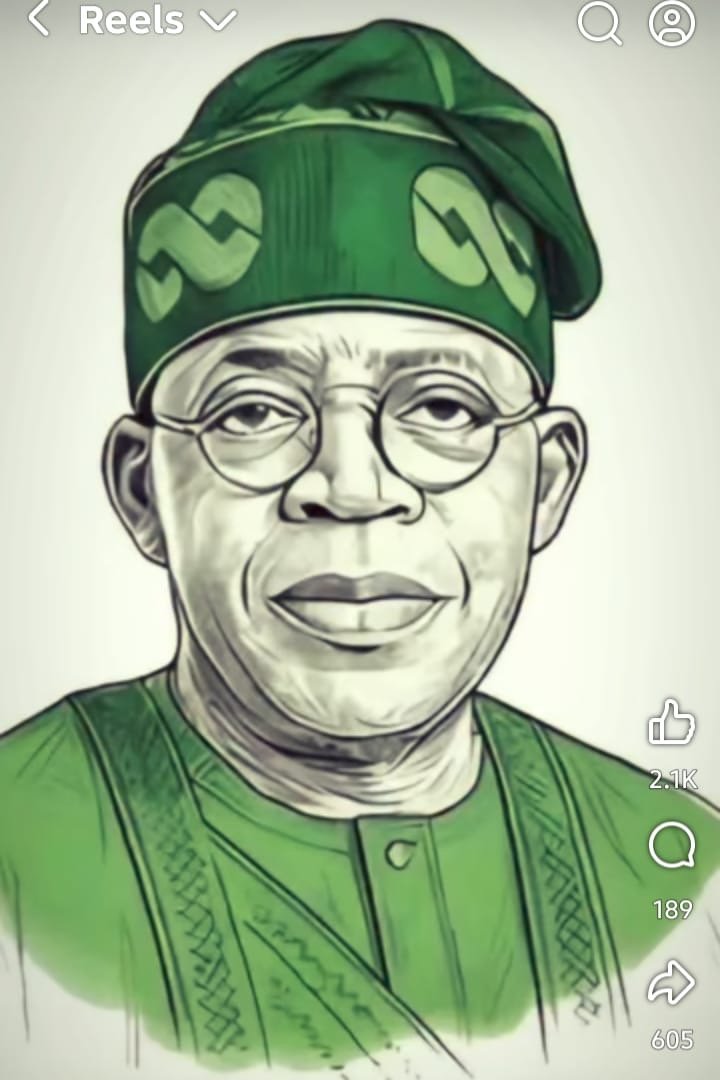
By Idowu Ephraim Faleye | +2348132100608
In ancient Israel, a young shepherd named David stood before Goliath, a terrifying Philistine giant. Before that public confrontation, David had faced deadly encounters in the wilderness, where a lion and a bear attacked his father’s flock. He did not flee. He confronted the beasts and rescued the sheep from their jaws.
Those battles forged the courage David later displayed against Goliath. His confidence rested not on borrowed armour or conventional wisdom, but on past victories and faith in God, who had delivered him from the lion and the bear. He had strong faith in God, who had helped him overcome dangers in the past. This story illustrates a powerful principle: the battles won in the past often prepare us for the challenges we must confront in the future.
In the political journey of Bola Ahmed Tinubu, three qualities stand out: audacity, defiance, and persistence. Together, they offer insight into his political character, his relationship with power, and his approach to governing Nigeria.

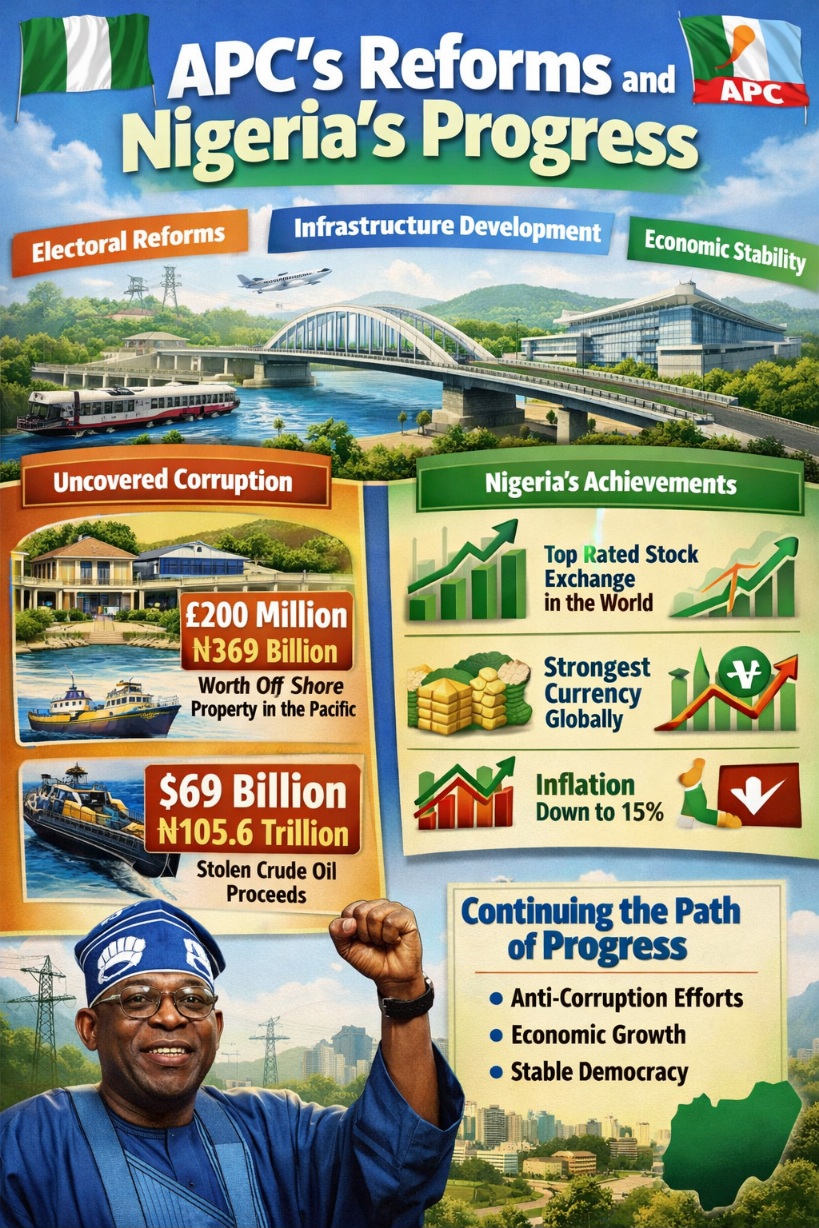
During the inauguration of his presidential campaign council, President Tinubu narrated how the ocean had ferociously threatened to swallow the whole city of Lagos during his tenure as governor. Rather than accept defeat, his administration dared the ocean and pursued the development of Eko Atlantic City, turning the challenge of coastal erosion into an ambitious urban development project.
Tinubu’s reflection on the audacity to dare the Atlantic is a revealing illustration. This was more than a reference to land reclamation. It offered a glimpse into his political psychology: the tendency to see formidable obstacles not as final barriers, but as challenges that demand new solutions.
This mindset has three dimensions. First is resistance to overwhelming forces, whether entrenched political interests, powerful institutions, or circumstances that appear impossible to overcome. Second is the ability to turn adversity into opportunity by finding alternatives where others see dead ends. Third is the willingness to make bold structural changes despite the political costs.
These qualities help explain Tinubu’s repeated confrontations with powerful interests. His political career suggests a willingness to challenge established arrangements, take calculated risks, and pursue controversial decisions even when the outcome remains uncertain.
One of the clearest examples was the confrontation between his Lagos State government and the federal administration of President Olusegun Obasanjo. The creation of additional local government development areas triggered a major constitutional dispute. The Federal Government subsequently withheld statutory local government allocations due to Lagos State, creating a serious financial and political crisis.
Tinubu responded by taking the dispute through the courts and sustaining a prolonged confrontation with the Federal Government. The significance of that episode extends beyond the legal dispute itself. It demonstrated his willingness to challenge institutional power when he believed his position was justified. Rather than retreat under pressure, he treated the conflict as a test of endurance.
His pursuit of Nigeria’s presidency offered another demonstration of audacity. His ambition encountered resistance, scepticism, and competing interests, including within his own political camp. His emergence as the All Progressives Congress presidential candidate in 2022 followed an intense struggle involving powerful party figures and rival ambitions.
The outcome was never guaranteed. Yet Tinubu refused to abandon his ambition. He navigated the political contest, committed his political capital, and pursued the highest office despite the risks. His victory demonstrated the determination of a politician prepared to stake decades of political influence on a defining ambition.
That same willingness to confront difficult choices became evident immediately after he assumed office. On May 29, 2023, during his inauguration as president, Tinubu announced the removal of the petrol subsidy. The declaration intensified public debate about fuel prices, inflation, fiscal sustainability, and the growing hardship faced by households.
The decision confronted an arrangement that successive administrations had struggled to dismantle. Supporters viewed it as a necessary step towards addressing longstanding fiscal problems, while critics questioned its implementation, timing, and consequences for ordinary Nigerians.
Whatever the competing assessments, the announcement demonstrated his willingness to confront a politically sensitive issue that previous leaders had repeatedly postponed. It reflected a preference for decisive structural intervention over continued delay.
Tinubu’s own words about assuming the presidency further illuminate his philosophy of responsibility. At the Presidential Inauguration Banquet on May 28, 2023, he reportedly declared that nobody should pity him because he had applied for the job. Having campaigned vigorously and won the presidency, he accepted that delivering on his promises was his responsibility.
That statement carried a straightforward message: seeking power is a conscious choice, and those who pursue it must accept the burdens that accompany it.
A leader cannot demand the authority of office while avoiding responsibility for its difficulties. By acknowledging that he had applied for the job, Tinubu effectively rejected the idea that the challenges of governance should become an excuse for failure.
Genuine innovation requires something more: the willingness to question inherited assumptions, explore unconventional solutions, and build better systems. It combines courage with sound judgement, strategic thinking, and the capacity to learn from results.
That is where Tinubu’s approach to leadership presents its most important test. The same determination that helped him confront political opponents and pursue difficult reforms must translate into policies that improve the lives of Nigerians.
The biblical story of David offers a fitting parallel, not because political leadership is identical to a battle against a giant, but because both stories illustrate the relationship between preparation, courage, and confrontation.
David’s victory over the lion and the bear prepared him to face Goliath. Similarly, Tinubu’s years of political struggles shaped a disposition that appears comfortable with confrontation and calculated risk. From the Lagos federal dispute to his presidential ambition and the removal of the petrol subsidy, his journey reveals a recurring readiness to challenge formidable obstacles.
Tinubu’s political character can therefore be understood through three defining qualities: the audacity to dare, the will to confront, and the courage to decide. These qualities help explain his journey to power and his readiness to undertake controversial reforms.
True leadership requires the courage to face seemingly impossible circumstances without surrendering.
But history will ultimately judge not only the storms he dared to face, but also the solutions he delivered, the institutions he strengthened, and the lives his decisions improved.
As the waves of uncertainty continue to crash against our country’s shores, the journey is far from over, and the vessel of our great nation still requires a steady, fearless hand at the wheel. We still need Asiwaju Tinubu: Nigerian problems still need a leader who has stared down the fiercest storms, who audaciously seized the wheel of the nation’s leadership when we were plunging into the abyss, and who bravely yanked the ship back to the surface to chart a completely new course.
This is not the time for timid hearts who cowardly privatised the nation’s patrimony when the nation needed an overhaul, plunging it into the abyss of youth unemployment that the nation is battling today. Nor is it the time for uncertain footsteps from those who lack an understanding of where the shoe of the nation pinches but hide under the canopy of fake statistics. The time is for the continuity of that same unbreakable courage that turns impossible tides into triumphant arrivals. That fierce, unwavering audacity is the very compass that will safely guide Nigeria across the remaining waters and finally bring our nation home to a peaceful, prosperous shore.
*Idowu Ephraim Faleye is a freelance political writer based in Nigeria. +2348132100608*