By Monday Nas Ozoya, MCIMSPA, MEASM, MIEEE, FIFA Guardians Safeguarding Platinum, Director, UK Coordinator and General Grassroots Councillor, African Coaches Connect (ACC)
Introduction
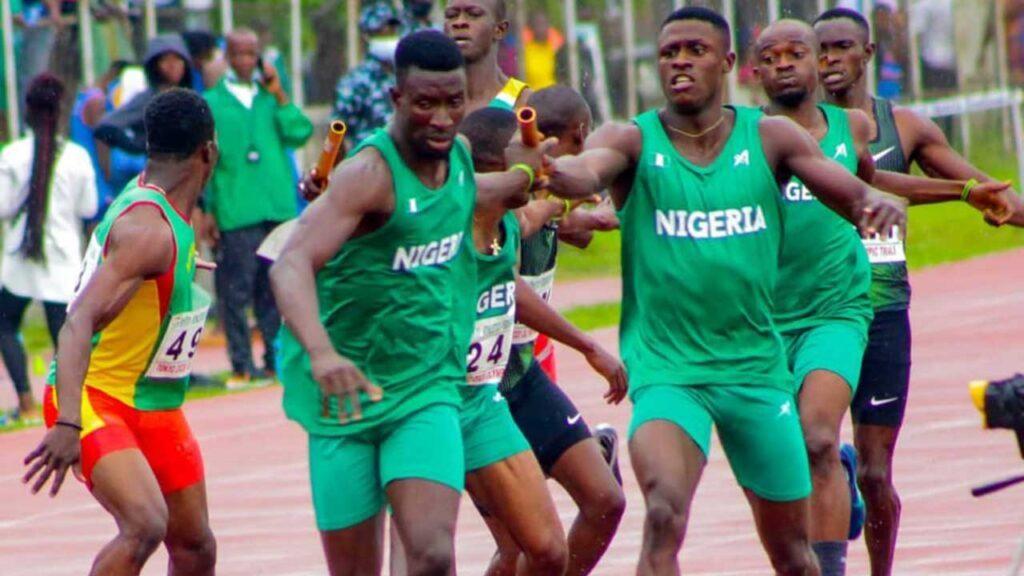
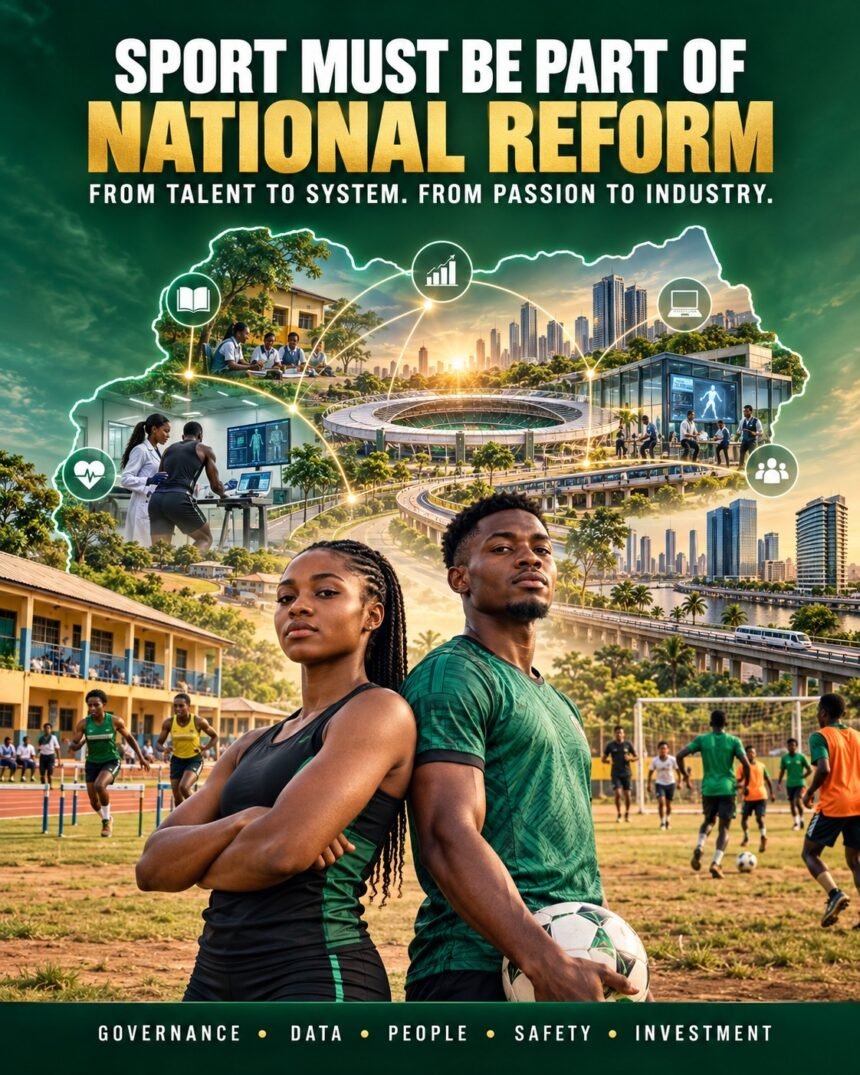
Nigeria is pursuing reforms centred on economic diversification, employment, human capital, digital transformation and private investment. Sport should be part of this national agenda, not treated as an occasional source of medals, entertainment and political publicity.
Sport can create jobs, attract investment, improve public health, strengthen communities and provide structured opportunities for young people. However, these benefits will not emerge automatically. They require competent leadership, enforceable regulation, reliable data, sustained funding and measurable outcomes.

Nigeria must therefore connect two important objectives:
• The development of sport, covering facilities, coaching, competitions, athlete pathways and elite performance.
• Sport for development, using participation to improve health, education, inclusion, community cohesion and economic opportunity.
A credible national strategy must deliver both.
1. Recognise sport as an economic sector
Nigeria cannot build a sports industry while managing sport mainly as a government programme.
A functioning sports economy generates income through broadcasting, sponsorship, ticketing, merchandising, tourism, athlete development, facility use, technology, manufacturing and professional services. These activities also support employment in coaching, officiating, healthcare, media, marketing, event management, security, hospitality and logistics.
The government should create clear investment rules, suitable financing, tax incentives and transparent partnership arrangements. Investors also need credible institutions, enforceable contracts and dependable competition calendars.
The important question is not simply how much money is allocated to sport. It is how effectively public investment attracts additional capital, creates employment and builds institutions capable of surviving changes in government.
2. Make governance reform the foundation
Sports development cannot progress sustainably under weak governance.
Federations and publicly supported sports bodies should publish development plans, audited accounts, procurement decisions, selection policies and annual performance reports. Leadership appointments should be based on competence, integrity and relevant experience.
Every organisation receiving public or international funding should be able to answer five questions:
1. What was planned?
2. What funding was received?
3. What was delivered?
4. Who benefited?
5. Where can the evidence be independently verified?
Accountability should extend beyond national federations to state associations, leagues, clubs, academies and other organisations responsible for delivering sport.
3. Build a national sports data system
Nigeria cannot plan, regulate or evaluate a sector it has not properly measured.
The country needs reliable information on participants, athletes, clubs, coaches, officials, facilities, competitions, injuries, safeguarding, sponsorship and employment. A national sports data system should connect federal institutions, states, schools, universities, federations and recognised sports organisations.
Technology can also improve player registration, facility management, ticketing, fan engagement, talent monitoring and commercial decision-making. However, collecting data is not enough. It must be accurate, protected, regularly updated and used to guide investment.
Every major sports policy should begin with credible baseline data and include annual public indicators against which progress can be measured.
4. Professionalise the sports workforce
Athletes cannot develop within an underdeveloped professional system.
Nigeria needs qualified coaches, referees, administrators, sports scientists, medical practitioners, safeguarding officers, analysts, grounds personnel and commercial specialists. Their education should not depend entirely on personal finances or irregular training programmes.
A national workforce strategy should provide:
• recognised professional standards;
• accessible qualification pathways;
• continuous professional development;
• licence renewal requirements;
• mentoring and practical experience;
• transparent recruitment;
• career progression and welfare support.
Universities, professional institutes, sports federations and private providers should work within an agreed national framework. Training must lead to credible employment opportunities, not certificates without pathways.
5. Replace occasional tournaments with development systems
Nigeria organises many competitions but maintains too few structured development pathways.
Grassroots development requires regular school, community, and age-group leagues connected to state, regional, and national competition. Children need repeated participation, qualified coaching and safe environments. One tournament cannot replace a season.
The pathway should connect:
Schools and communities → registered clubs and academies → state leagues → national competitions → elite and professional sport
State sports commissions and sports associations should have clearly defined responsibilities. Assess their performance through functioning leagues, registered participants, qualified personnel, safe facilities, and published development outcomes.
6. Protect participants through safeguarding and welfare
Treat safeguarding as a leadership and governance obligation.
Every recognised sports organisation working with children or vulnerable adults should have:
• a written safeguarding policy;
• trained safeguarding officers;
• safer recruitment procedures;
• confidential reporting channels;
• codes of conduct;
• health and safety arrangements;
• clear referral and investigation procedures.
Athlete welfare must also cover contracts, insurance, medical care, mental wellbeing, education and preparation for life after competition.
A system that produces medals while exposing participants to abuse, exploitation or avoidable injury cannot be described as successful.
7. Make inclusion measurable
Women, persons with disabilities, rural communities and economically disadvantaged participants must not appear only as statements of intention within policy documents.
Measure inclusion through participation, leadership representation, funding, facility access, coaching provision, and competition opportunities. Every publicly funded programme should publish who participated, where they came from and what outcomes were achieved.
Equal opportunity is not simply a social obligation. It expands the talent base, audience, workforce and commercial reach of Nigerian sport.
8. Build accountable partnerships
Government cannot transform the sector alone. Neither can federations, private investors or community organisations working independently.
Nigeria needs coordinated partnerships involving government, education, health, sports bodies, financial institutions, technology companies, investors and community organisations.
Public and private partnerships should be based on transparent contracts, defined responsibilities, realistic revenue models and public reporting. Private investment should complement public responsibility, not replace it.
Experienced practitioners, athletes and coaches must also be involved when policies are designed. Consultation after decisions have already been made is not meaningful stakeholder participation.
From ambition to measurable reform
Nigeria already has policies, programmes and institutional commitments. The urgent challenge is implementation.
Every major sports initiative should have:
• a defined budget;
• a responsible institution;
• measurable targets;
• a clear deadline;
• published baseline data;
• annual independent evaluation;
• corrective action when targets are missed.
Success should not be measured only through medals and national team results. It should also be assessed through five outcomes:
1. Physical wellbeing
2. Mental wellbeing
3. Individual development
4. Social and community development
5. Employment and economic growth
The real national reform question
Nigeria does not lack sporting talent, policy ambition or public interest. It lacks a consistently governed system that can convert these assets into sustainable value.
Aligning sport with the national reform agenda requires more than describing sport as a business. It requires building the structures that allow it to function as one.
The future of Nigerian sport will not be determined by another policy launch. It will be determined by whether policies produce functioning leagues, safe facilities, qualified professionals, protected participants, credible institutions and measurable economic value.
The question is no longer whether sport can contribute to Nigeria’s national development.
The question is whether Nigeria is prepared to govern, finance and measure sport seriously enough to make that contribution possible.