By George Ogunjimi Esq.
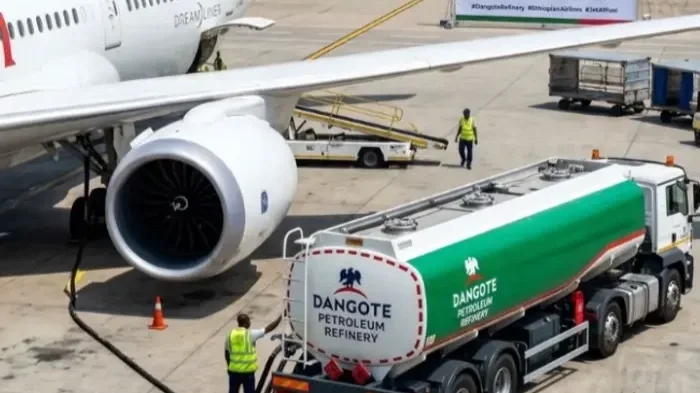
There are moments when economic transformation can be captured in a single image: a tanker carrying Nigerian-made aviation fuel to Europe.
For decades, Nigeria exported crude oil while importing much of its refined petroleum products. That pattern is now changing, with the Dangote Refinery playing a central role and government reforms creating a different policy environment.
The U.S. Energy Information Administration reports that Nigeria’s petroleum-product exports averaged about 350,000 barrels per day in the second quarter of 2026, compared with 46,000 barrels per day in 2023. Exports to Europe also increased sharply, while imports declined.
The rise in Nigerian jet-fuel exports is particularly significant. It signals that Nigeria is moving beyond simply exporting raw materials toward producing and selling higher-value products internationally.
President Bola Ahmed Tinubu’s administration deserves recognition for reforms aimed at changing the incentives around the petroleum sector, including petrol-subsidy removal, foreign-exchange reforms and measures supporting crude supply to domestic refiners. These policies have also imposed significant economic costs on Nigerians, making their ultimate success dependent on whether they deliver sustainable improvements in living standards.
The Dangote Refinery, meanwhile, represents a major private-sector investment and demonstrates what domestic capital and industrial ambition can achieve when supported by an enabling policy environment.
Nigeria’s opportunity now extends beyond Europe. Growing refined-product exports to African markets could strengthen the country’s position as a regional energy and refining hub.
This is therefore bigger than jet fuel. It is about whether Nigeria can finally move from exporting resources to exporting value.
The transformation is unfinished. Nigeria still needs better infrastructure, reliable electricity, stronger institutions, more manufacturing and broader economic opportunities.
But when Nigerian-made aviation fuel reaches international markets, it represents a meaningful reversal of an old pattern: crude once left Nigeria and finished products came back; increasingly, Nigerian refined products are going out to the world.
That is a development worth recognising—and building upon.
George Ogunjimi Esq
jurisrepubliclegal@gmail.com
27/09/2026.