

By Chief Odekpe
One of the most dangerous conditions in any democracy is when poverty stops being treated as a national emergency and begins to function as a political advantage.
Poverty should be something leadership fights relentlessly. But where political systems become excessively dependent on patronage, handouts and desperation, poverty can become politically convenient because a citizen struggling to survive today may have less freedom to demand accountability about tomorrow.
This does not mean every programme for poor citizens is manipulation. Social assistance, food support and emergency relief can be legitimate and necessary. The danger begins when temporary assistance replaces sustainable empowerment, or when vulnerability is exploited for political loyalty.
A government should fight poverty, not benefit politically from its persistence.
THE POLITICS OF DESPERATION
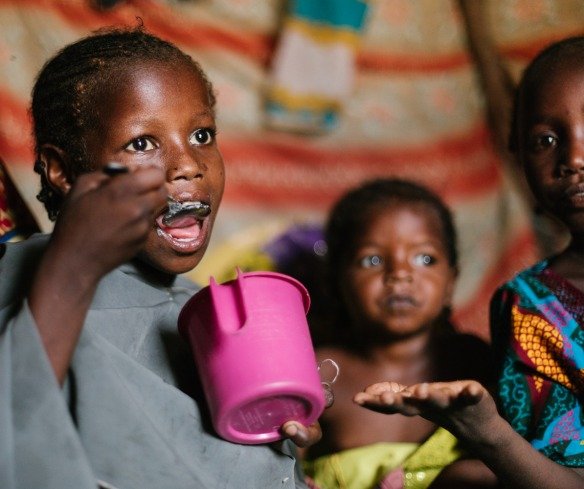
A hungry person thinks first about food.
A parent unable to feed children worries about tonight before thinking about policies for the next four years.
An unemployed young person desperate for income may naturally place immediate survival above long-term political calculations.
This is human reality.
And that is precisely why poverty must never be exploited politically.
When election periods suddenly produce bags of rice, wrappers, small cash gifts and other temporary benefits while communities have lacked sustainable development for years, citizens are entitled to ask:
Why does political generosity become greatest when votes become most valuable?
Compassion should not have an electoral calendar.
POVERTY CAN WEAKEN POLITICAL INDEPENDENCE
Economic independence strengthens democratic independence.
A citizen with a sustainable livelihood can more easily say:
“I don’t need your rice. Tell me your policies.”
A successful farmer can ask about agricultural infrastructure.
A business owner can ask about taxation, electricity and investment.
An employed graduate can examine economic policy.
A financially secure family can evaluate candidates based more freely on competence, character and performance.
But where poverty is severe, politics can become dangerously transactional.
The poorer and more desperate citizens become, the cheaper political manipulation can become.
That should trouble every democratic society.
DO NOT GIVE PEOPLE CRUMBS AND CALL IT EMPOWERMENT
There is nothing wrong with giving food to someone who is hungry.
But there is something profoundly wrong when leadership repeatedly gives citizens temporary relief while failing to address the conditions keeping them poor.
A bag of rice is not an economic policy.
A wrapper is not women’s empowerment.
A small stipend is not employment.
A motorcycle is not an industrial policy.
A few farming implements are not agricultural transformation.
True empowerment means creating conditions where citizens can provide for themselves with dignity.
The greatest empowerment is not what government gives citizens to consume today. It is what good governance enables citizens to produce tomorrow.
THE POLITICAL VALUE OF DEPENDENCE
A dangerous political system may prefer citizens who constantly need access to politicians.
Need money? Find a politician.
Need employment? Find a politician.
Need school fees? Find a politician.
Need medical assistance? Find a politician.
Need a contract? Find a politician.
Need access to government? Find a political connection.
When this becomes normal, citizenship gradually gives way to patronage.
People stop asking, “What are my rights?”
They begin asking, “Who do I know?”
That is dangerous because public resources begin to look like personal generosity from politicians rather than resources belonging to the people.
Government assistance is not a politician’s private charity when it comes from public resources.
POVERTY CAN TURN DEMOCRACY INTO A MARKETPLACE
Where desperation becomes widespread, elections risk becoming transactions.
Candidates bring immediate benefits.
Citizens bring votes.
After the transaction, accountability weakens.
The citizen who should be demanding four years of responsible governance may be encouraged to exchange political power for something that lasts only days.
This is why vote buying is so destructive.
It reduces citizenship to a transaction and encourages politicians to calculate how cheaply political loyalty can be obtained.
A vote determines who may control enormous public resources and make decisions affecting years of people’s lives. It should never be reduced to the price of temporary relief.
THE MOST POWERFUL CITIZEN IS AN EMPOWERED CITIZEN
A genuinely empowered population is harder to manipulate.
Educated citizens ask questions.
Economically independent citizens have greater freedom of choice.
Prosperous communities demand performance.
Informed young people compare promises with evidence.
Strong institutions reduce dependence on personal connections.
This is why genuine development strengthens democracy.
It changes the relationship between politician and citizen from:
“What will you give me?”
to:
“What will you do with our public resources?”
That is a democratic transformation.
WHEN POLITICAL LEADERS FEAR EMPOWERED CITIZENS
A responsible leader should want citizens to become independent.
A successful government should be proud when fewer families need emergency assistance because more people have sustainable livelihoods.
It should celebrate when farmers become commercially successful.
It should celebrate when young people build businesses.
It should celebrate when workers earn enough to live with dignity.
It should celebrate when communities can challenge government intelligently.
Why?
Because the purpose of leadership is not to manufacture dependence. It is to expand human possibility.
Any political culture that quietly benefits from keeping citizens permanently vulnerable is working against the very people government exists to serve.
POVERTY ALSO CREATES POLITICAL GODFATHERS
Where institutions are weak and opportunities are scarce, access to powerful individuals becomes extremely valuable.
The politician who provides employment, contracts, school fees or medical assistance may gradually be treated as a personal benefactor.
Citizens may feel obligated to defend that politician regardless of performance.
This creates personality politics.
People defend individuals rather than principles.
They protect political benefactors rather than institutions.
They may attack fellow citizens for questioning the person from whom they receive assistance.
And democracy becomes increasingly dependent on patrons rather than rights.
Strong democracies build citizens. Weak political systems build dependants.
THE CONSEQUENCES FOR THE NATION
The long-term consequences are devastating.
Poverty becomes normalised.
Vote buying becomes easier.
Merit can lose importance.
Political godfatherism grows.
Public accountability weakens.
Young people may begin seeing politics as the fastest route to wealth.
Citizens become divided according to political patrons.
Public resources can be used to maintain loyalty rather than create development.
And politicians may focus more on maintaining political structures than building productive economies.
Worst of all, democracy can continue conducting elections while gradually losing its developmental purpose.
BREAK THE CYCLE
The cycle must change.
Instead of rice alone, create food-producing economies.
Instead of stipends alone, create sustainable jobs and businesses.
Instead of ceremonial farming implements, provide roads, irrigation, mechanisation, storage, processing and access to markets.
Instead of political connections determining opportunity, build institutions where citizens can succeed through competence and merit.
Instead of waiting until elections to remember communities, provide development throughout the entire term.
Instead of keeping citizens dependent on politicians, build a society where citizens can stand economically independent of politicians.
That is genuine empowerment.
A MESSAGE TO THE CITIZEN
Citizens also have responsibility.
Take lawful assistance when genuinely needed, but never surrender your conscience.
Ask questions.
Study performance.
Examine promises.
Demand accountability.
Your temporary hardship should never become somebody else’s permanent political capital.
A bag of rice may feed your family for days.
A small cash gift may solve today’s immediate problem.
But the consequences of poor leadership can remain for years.
Never allow the desperation of today to completely mortgage the opportunities of tomorrow.
A MESSAGE TO POLITICAL LEADERS
Do not measure your political strength by the number of people dependent on you.
Measure your leadership by the number of people who no longer need to depend on you personally because your policies have helped them stand on their own feet.
That is leadership.
The greatest testimony of a government should not be:
“Look how many people came to collect assistance from us.”
It should be:
“Look how many people no longer require emergency assistance because they now have sustainable opportunities.”
Leadership should reduce poverty, not organise it.
Leadership should destroy desperation, not harvest votes from it.
Leadership should create independence, not manufacture dependence.
CONCLUSION
There is something morally troubling about any political culture where citizens remain poor for years but suddenly become valuable when elections approach.
Poverty must never become an electoral weapon.
Hunger must never become a campaign opportunity.
Unemployment must never become a recruitment tool for political dependence.
Public resources must never become personal instruments for purchasing loyalty.
And citizens’ desperation must never become the foundation upon which political power is built.
A hungry population may be easier to manipulate temporarily, but an empowered population is far better for building a prosperous and stable nation.
Let government fight poverty with the same determination politicians fight elections.
Let politicians search for jobs for citizens with the same urgency with which they search for votes.
Let development reach communities with the same determination that campaign vehicles reach them.
Let citizens receive opportunities throughout the political term, not merely gifts during election season.
Because the greatest political achievement is not creating millions of people who depend on politicians.
It is creating millions of citizens who are educated, productive, prosperous, independent and free enough to choose their leaders without hunger determining their conscience.
When poverty becomes politically convenient, democracy becomes vulnerable.
But when citizens become economically empowered, democracy itself becomes stronger.
I come in peace, as always, for the benefit of mankind.
By
Chief Odekpe
Iyase of Onicha-Uku Kingdom
(De Traditional Prime Minister)