
By Okoi Obono-Obla
Why do some people feel bad when we tell the history of the old Eastern Region of Nigeria? Yet the same people want us to listen to the history of how the Nigerian Civil War started and how Biafra was born.
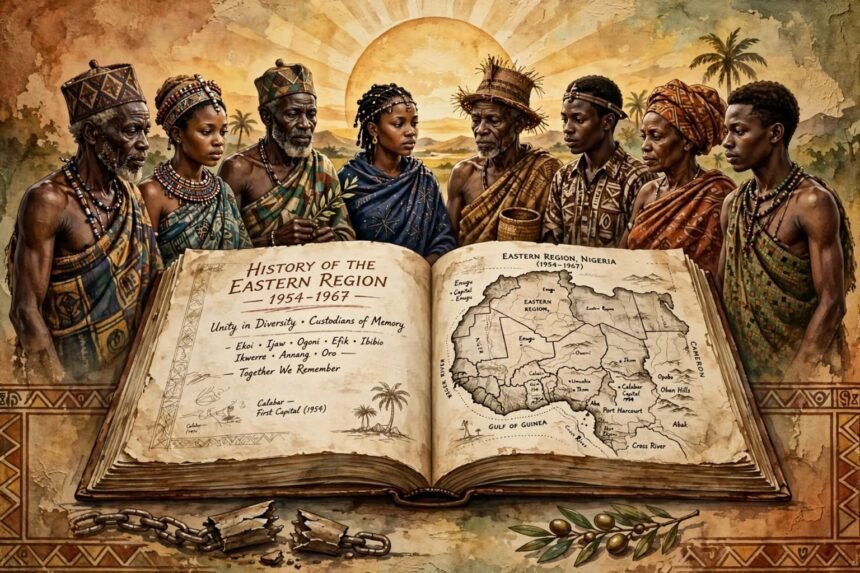
Even more, they feel uncomfortable when we want to tell the history of how the Biafran Army treated some supposedly Biafran people who were regarded as second-class citizens. When the pogroms in the North started – which was one of the remote factors that contributed to Eastern Nigeria’s decision to break away from Nigeria – they conveniently forget that the Ekoi, Ijaw, Ogoni, Efik, Ibibio, Ikwerre, Annang, Oro, and indeed everyone who was then regarded as an Easterner, also suffered unspeakable horrors.
They only remember who they want to remember – those they proclaim as the majority – as if the minority does not matter.
But we must tell our story; the history of what happened in the distant past, not because we seek revenge, but so the present generation will know where we are coming from. This knowledge will enable us to make today a better place by avoiding the mistakes and errors made by past leaders. This is very important as we continue to trudge along the path of nation-building.
History is not a revenge-seeker, but a preserver of the past to enable us to do better in the future. Is this not why some people are seeking reparations today for the atrocious acts of slavery committed hundreds of years ago?
In conclusion, no single group owns the memory of our shared pain. A complete and honest history that includes the experiences of minorities and majorities alike is the only foundation upon which true healing, justice and national unity can be built.